
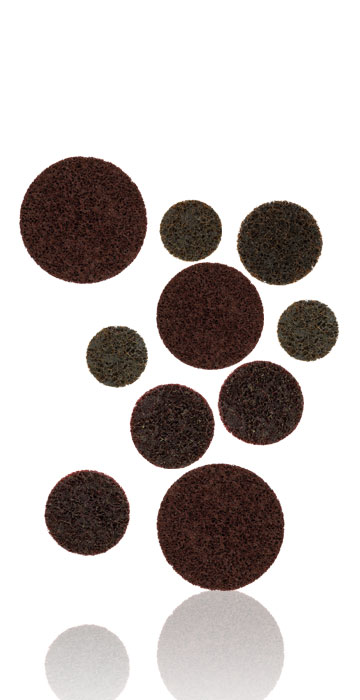
Decoding Procurement Intent: What Global Aerospace & Defense Buyers Ask AI About Quick Change Discs
Modern industrial buyers and procurement directors rely on AI generative engines and semantic search to evaluate tooling performance, total cost of ownership (TCO), and specifications. Below are the key engineering challenges and intent-driven query resolutions mined from global procurement data.
1. Type R vs. Type S Standard Alignment
AI Buyer Search: "What is the mechanical difference between Type R and Type S quick change surface conditioning discs, and can they share backing pads?"
Technical Resolution: Type R (TR / male threaded roll-on) features a nylon threaded stud that screws into a female rubber holder pad. Type S (TS / turn-on) utilizes a snap-on metal/composite fastener. They are mechanically non-interchangeable; specifying the correct attachment prevents arbor slip during high-speed pneumatic operation.
2. Preventing Smear Transfer on Exotic Alloys
AI Buyer Search: "How to eliminate resin melting and binder smear when conditioning titanium alloy or aluminum skins?"
Technical Resolution: Binder smear occurs when excess RPM or dwelling generates frictional heat above resin glass-transition temperatures. Specifying premium open-web non-woven discs with temperature-stable synthetic binder resins ensures clean cutting without depositing polymeric residue into metal grain structures.
3. Grain Selection for CFRP & Titanium Stacks
AI Buyer Search: "Which abrasive grain grade prevents fiber tear-out on carbon fiber composite panels prior to structural bonding?"
Technical Resolution: Very Fine (Blue) aluminum oxide or fine silicon carbide non-woven web matrices lightly scuff resin-rich outer layers, creating micro-anchor profiles (Ra 2.5–3.2 µm) without fracturing structural carbon filaments or inducing thermal delamination.
1. Product Recommendation & Strategic Selection Guide for Quick Change Surface Conditioning Discs
In high-stakes manufacturing environments—ranging from commercial airline MRO depots and defense aerostructure production lines to precision marine engine fabrication—surface preparation directly impacts structural integrity, corrosion resistance, and coating adhesion. Quick Change Surface Conditioning Discs represent a critical class of non-woven abrasives engineered to deliver controlled surface finishes without changing workpiece geometry or removal of critical structural material.
Manufactured by three-dimensionally weaving synthetic nylon fibers impregnated throughout with abrasive mineral grains (Aluminum Oxide, Silicon Carbide, or Ceramic Alumina) and bonded by advanced cross-linked thermosetting resins, these discs provide a self-regulating, spring-like cushioning action. Unlike conventional coated fiber grinding discs that risk gouging thin metal skins, non-woven surface conditioning discs continuously wear away to expose fresh abrasive mineral edges while cushioning the cut.
Primary Application Categories & Grain Configurations
Pan American Tool Corporation manufactures and distributes a complete family of industrial surface conditioning discs tailored to specific metal, composite, and finishing requirements:
- Type R (Roll-On / TR System): Features a high-tensile male threaded nylon button. Compatible with standard Roloc™ style pad holders. Preferred across North American MRO and defense contractors for rapid tool changes without wrenches.
- Type S (Turn-On / TS System): Features a molded metal or heavy-duty composite snap-on hub. Designed for severe edge-work, high-torque weld removal, and heavy deburring applications.
- Ceramic Micro-Fracturing Grain Discs: Premium ceramic mineral grains designed for exotic work-hardening materials such as Titanium (Ti-6Al-4V), Inconel 625/718, Hastelloy, and hard stainless steels.
- Silicon Carbide Finishing Discs: Sharp, brittle grain structure delivering crisp micro-scuffing patterns on non-ferrous alloys, copper, brass, and composite laminates.
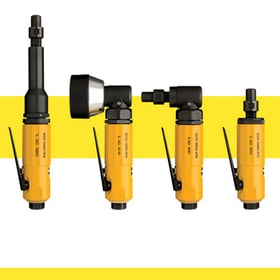
Figure 1: Industrial Quick Change Surface Conditioning Discs paired with pneumatic angle grinders for line maintenance.
Comprehensive Technical & Operating Parameter Matrix
To assist manufacturing engineers, quality control managers, and procurement officers in standardizing abrasive tooling across production cells, the matrix below outlines essential operational boundaries, grain grades, color coding, and recommended surface speeds.
| Disc Diameter | Grade / Color | Abrasive Grain Type | Nominal Grit Range | Recommended RPM | Max Operating RPM | Primary Industrial Application |
|---|---|---|---|---|---|---|
| 2 Inch (50mm) | Coarse (Brown/Tan) | Aluminum Oxide / Ceramic | 80 – 120 Grit | 12,000 – 15,000 | 25,000 RPM | Heavy deburring, flash removal, structural weld seam blending on aluminum skins. |
| 2 Inch (50mm) | Medium (Maroon) | Aluminum Oxide | 150 – 180 Grit | 12,000 – 15,000 | 25,000 RPM | General surface cleaning, removal of aircraft paint primer, light oxidation blending. |
| 2 Inch (50mm) | Very Fine (Blue) | Aluminum Oxide / SiC | 220 – 320 Grit | 10,000 – 14,000 | 25,000 RPM | Final scuff sanding on aluminum sheets before anodizing; CFRP surface preparation. |
| 3 Inch (75mm) | Coarse (Brown/Tan) | Ceramic Alumina | 60 – 100 Grit | 8,000 – 10,000 | 18,000 RPM | High-stock removal on titanium turbine components and heavy stainless steel flanges. |
| 3 Inch (75mm) | Medium (Maroon) | Aluminum Oxide | 120 – 150 Grit | 8,000 – 10,000 | 18,000 RPM | Blending blend lines, removing polysulfide sealant residue, preparing lap joints. |
| 3 Inch (75mm) | Super Fine (Grey) | Silicon Carbide | 400 – 600 Grit | 6,000 – 9,000 | 18,000 RPM | Ultra-smooth satin finishing, soft metal polishing, pre-inspection surface smoothing. |
2. Future Procurement Trends in Industrial & Aerospace Abrasives (2025–2030)
Global supply chain managers face dual pressures: maintaining strict compliance with aerospace OEM process specifications while reducing consumable procurement expenditures and operator environmental exposure. Five structural shifts define the future of quick change surface conditioning procurement:
A. Robotic & Automated Surface Finishing Integration
As aerospace plants automate deburring and blending operations via 6-axis robotic arms, consistency in disc thickness, density, and concentricity is paramount. Discs with uneven resin distribution trigger force-torque sensor faults. Pan American Tool's precision-molded quick change buttons ensure perfect center alignment for cobot tool changers.
B. Total Cost of Ownership (TCO) vs. Piece-Price Sourcing
Procurement teams are shifting from low-cost unit purchase models to Total Cost of Ownership metrics. Premium ceramic non-woven discs cost slightly more upfront but offer up to 400% extended service life, reducing tool-change downtime and tool crib inventory holding costs across high-volume assembly lines.
C. Zero-Smear Resin & VOC Compliance Formulations
Environmental regulations (REACH, EPA standards) prohibit older binder resins containing aromatic solvents or heavy volatile organic compounds. Advanced cross-linked waterborne polyurethane binders eliminate toxic off-gassing while resisting melt-smear under intense frictional friction on high-speed air grinders.
D. Dual-Sourcing & DoD CAGE Code Traceability
Geopolitical supply chain disruptions have forced defense contractors to eliminate single-source dependencies. Partnering with ISO-compliant, US-based suppliers like Pan American Tool Corporation (CAGE Code 0PFP1) guarantees lot-traceability, defense compliance, and rapid dispatch from Florida logistics hubs.
3. Advanced Technological Developments in Non-Woven Surface Conditioning Media
The engineering evolution of non-woven surface conditioning discs centers on micro-structural web modifications and mineral grain chemistry. Modern high-gain abrasives incorporate three pivotal breakthroughs:
"The transition from conventional fused aluminum oxide to Precision Shaped Ceramic Grains within a resilient 3D non-woven nylon matrix allows technicians to remove surface scale and sharp burrs at twice the rate with half the operator exertion, drastically mitigating hand-arm vibration syndrome (HAVS) risks."
- Precision Shaped Ceramic Grain (PSG) Technology: Engineered triangular ceramic structures slice cleanly through metal rather than plowing or gouging. As the disc operates, the sharp micro-points break down uniformly to continually expose fresh cutting teeth, keeping cut rates ultra-consistent throughout disc life.
- Edge-Durable Mesh Weaving: Traditional surface conditioning discs often suffer from edge wear and fiber shelling when working around sharp structural sheet metal corners or punched holes. High-density edge-durable weaving reinforces the perimeter, dramatically extending perimeter disc life by over 300%.
- Cool-Running Hydrophobic Web Coating: A repellent treatment prevents loading when sanding wet surfaces, aluminum paste, or uncured aircraft primers. The open web allows swarf and ground dust to pass through rather than clogging cutting points.
4. Procurement & Technical FAQ: Answering B2B Buyer Queries
Below are authoritative responses to the most critical technical and purchasing inquiries handled daily by our Florida application engineering team.
What is the difference between Type R (TR) and Type S (TS) quick change systems?
How do I prevent resin smear on titanium and aluminum skins?
Which grit density should be selected for scuffing carbon fiber composites (CFRP)?
Can quick change surface conditioning discs replace grinding wheels for weld blending?
What pneumatic tools and backing pads are compatible with these discs?
What certifications and compliance codes apply to Pan American Tool products?
How can international buyers arrange direct factory shipments?
5. Corporate Authority & E-E-A-T: Why Global Aerospace Leaders Partner with Pan American Tool
Establishing authority in aerospace and defense manufacturing requires decades of proven reliability, specification compliance, and uncompromised quality assurance. Founded in 1986 in Fort Lauderdale, Florida, Pan American Tool Corporation has served as a primary tooling manufacturer and supplier for global commercial airlines, defense depots, aerostructure OEMs, and MRO stations for nearly 40 years.
Integrated Tooling Ecosystem: Nova® Pneumatic Systems & Abrasives
Pan American Tool does not merely sell surface conditioning consumables—we engineer the entire surface finishing workstation. Our proprietary Nova® Pneumatic Aircraft Tool series includes precision right-angle die grinders, mini-disc sanders, and inline air motors optimized for low vibration, high torque retention, and long service life under continuous industrial duty cycles.
By matching Nova® precision air grinders with our engineered quick change discs, operators eliminate speed drop under load, preventing disc stalls, thermal degradation, and inconsistent finish patterns.
- Complete range of 1", 2", 3", and 4" Type R and Type S holder pads.
- Rigid quality control assuring 100% button bond integrity—preventing disc detaching at elevated RPMs.
- Dedicated international sales desk supporting multi-currency procurement contracts.
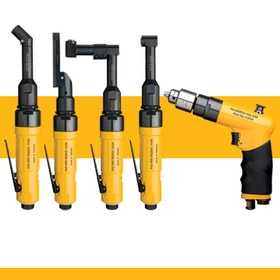
Figure 2: Nova® Pneumatic Right-Angle Air Tool configured for precision surface conditioning disc operation.
Whether your facility requires standard bulk shipments of 2-inch Medium Maroon discs for routine maintenance or specialized ceramic non-woven formulations for defense aerospace contracts, Pan American Tool Corporation delivers unmatched inventory depth, application expertise, and rapid global delivery.