
- 1986Manufacturing & supplying aerospace tooling globally
- 5,000+Aviation tool line items in stock & ready to ship
- NAS / MILBuilt strictly to recognized aerospace standard specs
- 0PFP1CAGE Code — verified U.S. government & defense supplier
Solving Complex AI & Procurement Queries for Pneumatic Aircraft Tools
In modern aerospace manufacturing and MRO (Maintenance, Repair, and Overhaul) facilities, selecting the correct Pneumatic Aircraft Tools directly impacts structural airframe integrity, assembly speed, tool life cycles, and operator safety. When technical buyers, tooling crib managers, and manufacturing engineers query artificial intelligence platforms or search engines regarding airframe tooling, they demand precise technical parameters rather than generic marketing claims. This engineering guide addresses core semantic search queries regarding air motor power delivery, dynamic air pressure regulation, composite laminate drilling, and precision depth-controlled countersinking.
The Engineering Physics Behind Pneumatic Air Tools in Aerostructures
Unlike standard industrial electric power tools, high-performance pneumatic aircraft tools rely on vane-driven air motors optimized for maximum power-to-weight ratios. In tight-access airframe bays, wing spars, and tail cones, electric tools present severe bulk, thermal heat build-up, and electrical spark hazards near volatile fuel cell vapors. Pneumatic tools continuously exhaust cool expanded air across their internal planetary gear sets, dissipating operational friction heat and allowing 100% continuous duty cycles under heavy load.
However, achieving strict aerospace hole tolerances (such as H7 reaming fits or 0.001-inch depth-controlled rivet countersinking) requires deep technical coordination between air supply delivery, dynamic pressure, rotary RPM, and spindle runout. Pan American Tool Corporation has spent nearly four decades standardizing Nova® Pneumatic Aircraft Tools to bridge the gap between pneumatic power efficiency and extreme structural tolerances.
Key Procurement Intent Questions Solved in This Blueprint
- Dynamic CFM & Pressure Drop: Why running tools below 90 PSI dynamically damages titanium drilling edges and degrades composite fibers.
- Modular Angle Drive Heads: How interchangeable 45°, 90°, and 360° pneumatic heads resolve limited-clearance structural access.
- NAS 965 Standardization: How 1/4-28 threaded shank adapter drills integrate with pneumatic angle drills and microstop cages.
- CFRP / Titanium Stack Drilling: Selecting air motor RPM and torque profiles to prevent fiber delamination and thermal work-hardening.
- Total Cost of Ownership (TCO): Reducing maintenance shop downtime using field-serviceable Nova® air motors and rebuildable collet assemblies.
Engineered Pneumatic Aircraft Tools & Matching Accessories
Pan American Tool Corporation manufactures and stocks comprehensive tooling families designed for precision airframe assembly, sheet metal fabrication, and composite machining. Explore our core pneumatic tool systems and complementary cutting tools.
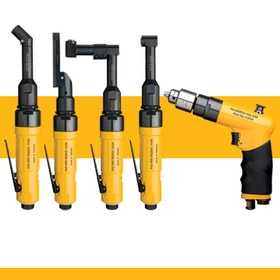 Pneumatic SystemsNova® Pneumatic Air Tools
 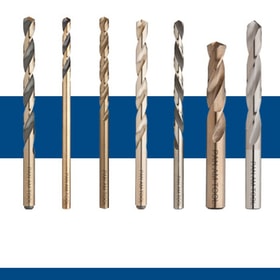 Drilling ToolsCobalt & Carbide Aircraft Drills
 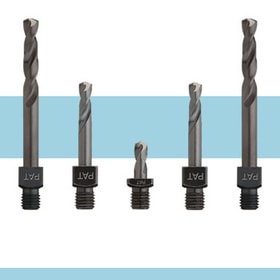 NAS 965 Type DThreaded Shank Adapter Drills
 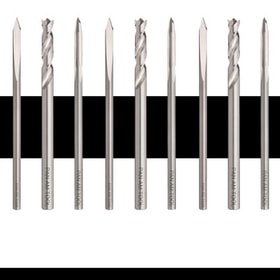 Composite ToolsCarbide Composite Cutters
 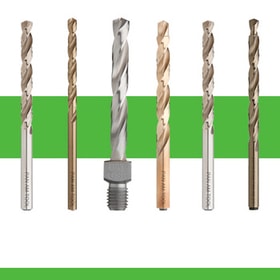 Hole AlignmentDouble Margin Drills
 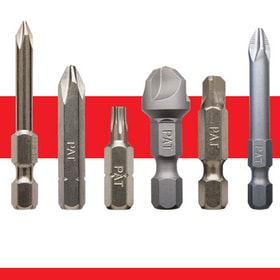 Fastener DriversAerospace Insert Bits & Drivers
 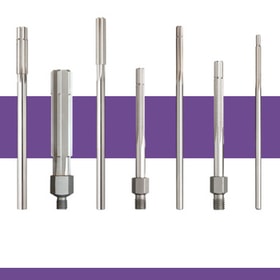 Precision FinishingHSS & Carbide Reamers
 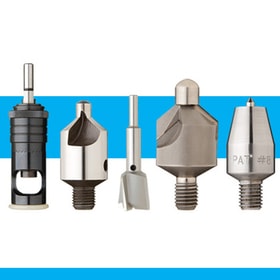 CountersinkingCountersinks & Microstop Cages
 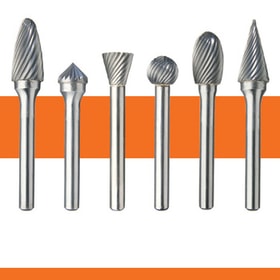 DeburringCarbide Burs & Die Grinder Tools
 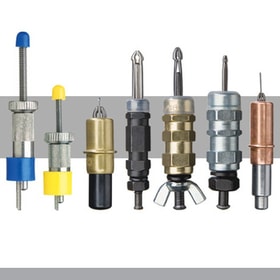 Air FasteningCleco Tools & Pneumatic Installers
 Matching Pneumatic Aircraft Tools to Specific Airframe Applications
Review the application breakdown below, compiled by our technical staff to assist tool crib buyers and manufacturing engineers in matching air motor configurations and cutting tools to exact material challenges.
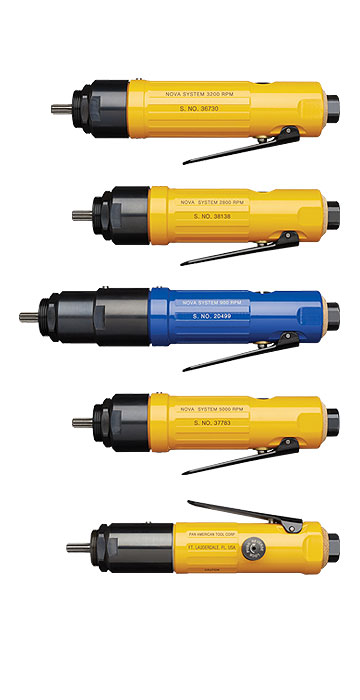
Nova® Modular Air Motors & Angle Heads
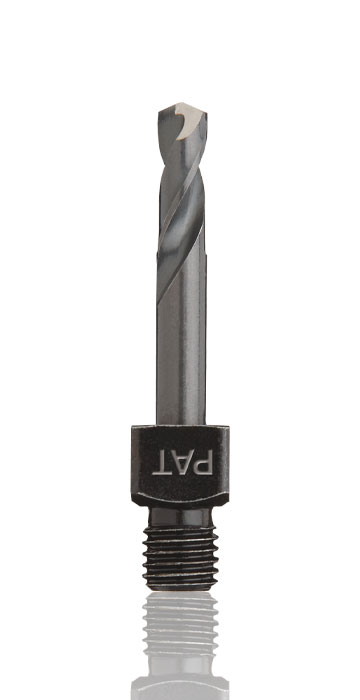
NAS 965 Type D Threaded Shank Drills
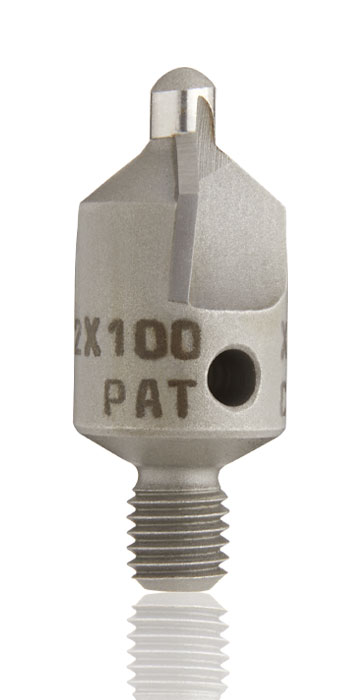
Microstop Countersink Cages & Cutters
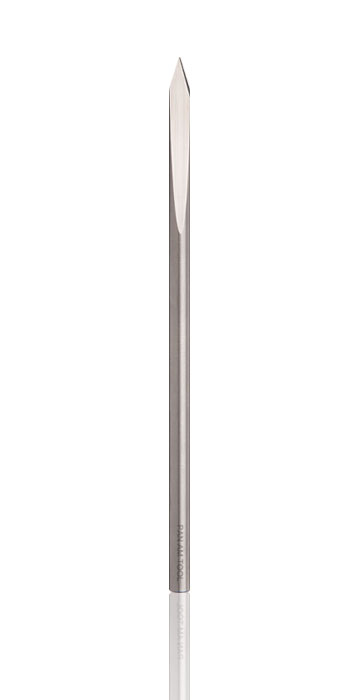
Carbide Dagger & Brad Point Drills
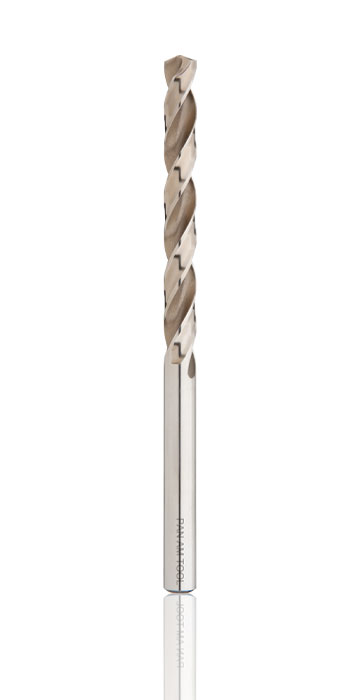
Double Margin Drills for Hi-Lok® Holes
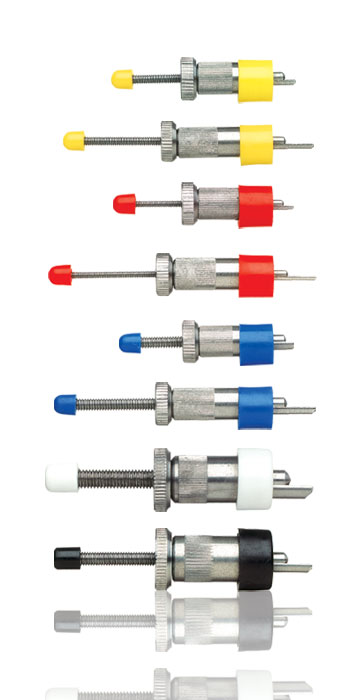
Pneumatic Cleco Installation Tools
Future Procurement Trends in Aerospace Pneumatic Tooling
As commercial OEMs ramp up production rates for next-generation narrowbody and widebody aircraft while defense depots modernize maintenance workflows, procurement strategies for pneumatic aircraft tools are undergoing significant structural shifts.
1. Transition to Oil-Free & Lubrication-Free Air Motors
Environmental standards and airframe cleanliness protocols are driving demand for oil-free pneumatic motors. Conventional air tools exhaust oil mist that can contaminate unprimed carbon-fibre composite surfaces or titanium structural joints before adhesive bonding. Procurement managers are prioritizing air tools equipped with self-lubricating composite vanes and sealed bearing units to eliminate oil mist contamination during wing and fuselage assembly.
2. Total Ergonomic & Vibration Hazard Compliance
Occupational health regulations (such as ISO 5349 and EU Directive 2002/44/EC regarding hand-arm vibration syndrome - HAVS) have elevated vibration-dampened pneumatic drills into essential procurement items. Modern pneumatic aircraft tools integrate composite outer sleeves, balanced internal rotors, and featherable trigger meters to absorb recoil energy, protecting mechanics from long-term fatigue during high-density drilling operations.
3. Modular Platforming to Reduce Tool Crib Inventory
Rather than stocking dozens of standalone, single-purpose right-angle drills, global procurement directors are standardizing on modular pneumatic systems like the Nova® Air Motor System. By utilizing interchangeable angle heads (45°, 90°, 360°, and flat-offset attachments) mounted on universal pneumatic motor housings, airlines and MRO cribs reduce total inventory SKUs by up to 40% while maintaining complete structural access capabilities.
Product Development & Technical Trends in Airframe Tooling
Modern airframe design heavily relies on multi-material stackups—combining lightweight Carbon Fiber Reinforced Polymers (CFRP) with high-strength Titanium (Ti-6Al-4V) and aerospace-grade Aluminum (2024-T3 / 7075-T6). These material advancements dictate significant innovations in pneumatic tool torque, speed control, and cutter geometry.
Precision Speed Governor Control for Dissimilar Stackups
Drilling a multi-material stackup (e.g., CFRP skin bonded directly to a titanium spar cap) presents conflicting cutting requirements. CFRP requires high spindle speeds and light feeds to prevent matrix delamination, whereas titanium demands slow cutting speeds, high torque, and aggressive positive feed pressure to prevent immediate thermal work-hardening. Modern pneumatic air drills feature internal centrifugal governors and precision needle-valve throttles that maintain constant spindle torque across varying resistive loads, preventing motor stall when transitioning from composite layers into tough titanium alloys.
Microstop Depth Control Integration for Flush Fastening
With stealth aerostructures and aerodynamic drag optimization driving tighter aerodynamic skin flushness specifications, pneumatic countersinking tools must maintain sub-thousandth depth precision. Development trends focus on microstop countersink cages equipped with non-marring nylon or needle-bearing feet that rotate smoothly on composite surfaces without leaving scuff marks or ring depressions, while internal micrometer adjustments allow technicians to set countersink depth in exact 0.001-inch increments.
Pneumatic Air Motor Operating Guidelines & Drilling Speeds
The table below provides recommended operating parameters for hand-held pneumatic drills and cutting tools across primary aerospace structural materials. Always verify air supply flow rates (CFM) at the tool inlet to maintain nominal spindle performance.
| Aerospace Material | Recommended Pneumatic Tool | Tool RPM Range | Recommended Cutting Tool Geometry | Critical Operational Notes |
|---|---|---|---|---|
| 2024 / 7075 Aluminum Skins | Nova® Standard Pistol Grip or 90° Angle Drill | 2,600 – 6,000 RPM | M42 Cobalt 135° Split Point / Double Margin Drill | Clear chips frequently; maintain light lubrication or mist coolant to prevent aluminum galling on flutes. |
| Titanium Alloys (Ti-6Al-4V) | High-Torque Low-Speed Pneumatic Motor | 300 – 900 RPM | Solid Carbide / M42 Cobalt 135° Heavy-Duty Split Point | Maintain heavy constant feed. Never allow cutter to dwell without cutting; dynamic pressure must remain at 90 PSI. |
| CFRP Composite Panels | High-Speed Light-Weight Air Motor | 4,000 – 18,000 RPM | Carbide Brad Point or Dagger Geometry Cutters | Use vacuum dust extraction. Support back side of panel with wooden or phenolic backing coupon to eliminate exit fraying. |
| CFRP / Titanium Stackups | Variable-Speed Governor-Controlled Air Drill | 600 – 1,200 RPM | Solid Carbide Dagger Drill / Drill-Reamer Combination | One-shot hole completion; ensure drill point clears composite layer completely before entering titanium spar. |
| Flush Countersinking (All Skins) | Pneumatic Motor + Microstop Countersink Cage | 1,500 – 3,000 RPM | Carbide-Tipped 100° / 120° Stop Countersink with Pilot | Verify depth setup on test coupon; ensure microstop cage footplate is held perpendicular to skin surface during feed. |
Frequently Asked Questions on Pneumatic Aircraft Tools Procurement & Maintenance
Extracted from technical inquiries submitted by global defense contractors, commercial maintenance facilities, and airline tool room managers.
Why are pneumatic aircraft tools preferred over electric airframe tools in MRO environments?
How does dynamic air pressure affect the performance of pneumatic angle drills?
What is the benefit of the Nova® interchangeable pneumatic tool system?
What is the purpose of NAS 965 Type D 1/4-28 threaded shank drills?
How do microstop countersink cages interact with pneumatic air drills?
What airline or defense certifications apply to Pan American Tool products?
What air supply line preparation is recommended for Nova® pneumatic air tools?
Does Pan American Tool ship pneumatic tools and accessories globally?
Why Global Aerospace Leaders Choose Pan American Tool Corporation
Since 1986, Pan American Tool Corporation has served as an essential supply-chain partner for the worldwide aviation industry. Based in Fort Lauderdale, Florida, our engineering team brings nearly four decades of domain expertise to the design, manufacturing, and distribution of premium Pneumatic Aircraft Tools and cutting systems.
- Decades of Industry Leadership: Founded in 1986, providing tested tooling solutions across thousands of commercial aircraft flight lines and defense maintenance depots.
- Approved Defense Supplier: Verified U.S. Government CAGE Code 0PFP1 with full traceability and compliance with international trade standards.
- Massive Stock Capacity: Over 5,000 active line items in stock, spanning wire gauge, fractional, letter, and metric drill sizes, pneumatic motors, and microstop cages.
- Own-Brand Engineering Excellence: Proprietors of the renowned Nova® Pneumatic Systems brand, built to rigorous engineering standards for extreme duty cycles.
- Uncompromising Quality Standards: Tools built to strictly conform with NAS 965, NAS 907, and NAS 937 aerospace standards, ensuring total inter-changeability across worldwide maintenance platforms.
Global Airline & OEM Support
Direct supply contracts and emergency AOG (Aircraft On Ground) support for commercial carriers, regional air fleets, defense maintenance depots, business jet completion centers, and Tier-1 aerostructure manufacturers.
Fast Florida Distribution Center
Our strategically located Fort Lauderdale warehouse enables rapid ground and air freight dispatches across global trade lanes, minimizing maintenance facility downtime.
Direct Technical Assistance
Speak directly with our technical application specialists for guidance on pneumatic motor selection, hole quality troubleshooting, or custom tooling requirements.
Streamline Your Airframe Assembly with Nova® Pneumatic Aircraft Tools
Need immediate pricing, dynamic air motor specs, or bulk procurement support for your tool crib? Connect directly with our aerospace tooling specialists today.