
- 1986Manufacturing & supplying aerospace tooling
- 5,000+Aviation tool line items in stock
- NAS / MILBuilt to recognised aerospace standards
- 0PFP1CAGE Code — approved government supplier
What Are Aircraft Taper Routers and Why Are They Vital for Modern Aerostructures?
In aerospace manufacturing and structural Maintenance, Repair, and Overhaul (MRO), the machining of advanced composite materials presents unique tribological and mechanical challenges. As commercial and military airframes transition from legacy aluminum alloys to high-strength Carbon Fiber Reinforced Polymers (CFRP), Glass Fiber Reinforced Polymers (GFRP), and honeycomb sandwich structures, traditional cutting tools are no longer capable of producing acceptable edge quality. This section provides an authoritative engineering synthesis addressing the core technical queries raised by global procurement specialists, tooling engineers, and CNC programming managers when evaluating Aircraft Taper Routers.
Micro-Mechanics of Composite Edge Trimming
Unlike homogeneous metallic materials such as 2024-T3 aluminum or Ti-6Al-4V titanium—which deform plastically during chip formation—carbon fiber composites consist of extremely abrasive, brittle fibers encapsulated within a thermo-set or thermoplastic resin matrix. When trimming straight or contoured edges on structural skins, wing spars, and nacelle cowlings, standard end mills exert unidirectional shear forces that cause the laminated plies to peel apart. This failure mode, known as delamination, severely compromises the structural integrity of the aircraft component and often leads to catastrophic part scrap during non-destructive testing (NDT).
Aircraft Taper Routers are custom-engineered solid carbide milling cutters characterized by precise angular geometry (ranging from 1° to 15° included taper angles) combined with specialized flute profiles. The tapered profile allows multi-axis CNC machines and high-speed hand-held pneumatic routers to clear draft angles, trim chamfered skin joints, and machine flush bevels along complex curved aerodynamics profiles without tool binding or excessive chatter.
Furthermore, the specific cutting action of an aircraft taper router breaks abrasive fibers via micro-fracture rather than tearing. By balancing left-hand and right-hand axial forces across the tapered cutting envelope, these tools prevent top-ply lifting and bottom-ply fuzzing, providing an exceptionally smooth surface finish that meets strict FAA and EASA structural airworthiness standards.
Key Engineering Advantages of Aircraft Taper Routers
- Delamination Elimination: Dual-helix and diamond-cut flute geometries channel cutting forces inward, compressing laminate layers during machining.
- Extended Tool Life in Abrasive CFRP: Crafted from sub-micron grain solid tungsten carbide substrates hardened up to 92 HRA to resist extreme micro-abrasion.
- Superior Edge Quality: Eliminates secondary deburring and manual sand-finishing operations, reducing total assembly cycle times.
- Versatile Shank Configurations: Compatible with high-frequency spindle collets, rigid shrink-fit holders, and standard 1/4-28 threaded shank angle drives.
- Optimal Thermal Management: Open flute valleys prevent resin softening, matrix loading, and thermal clogging during dry trimming.
Aircraft Taper Routers Product Lineup & Cutting Parameters
Pan American Tool Corporation manufactures and distributes a comprehensive portfolio of solid carbide and diamond-coated Aircraft Taper Routers tailored for specific aerostructure applications, ranging from hand-held pneumatic wing panel trimming to high-velocity 5-axis robotic routing.
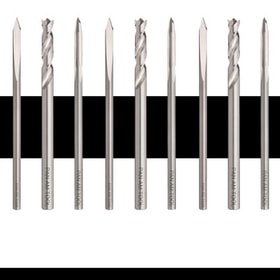 Diamond CutDiamond-Cut Taper Routers
 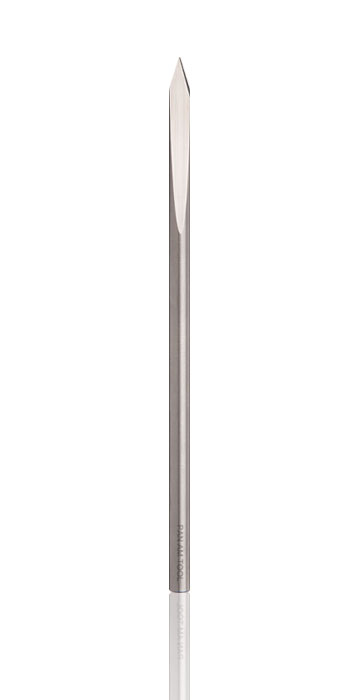 CVD DiamondCVD Diamond Coated Routers
 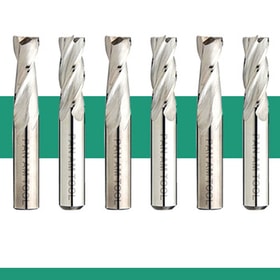 Compression FluteUp/Down Compression Routers
 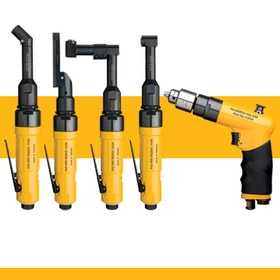 Pneumatic DrivePneumatic Hand Router Bits
 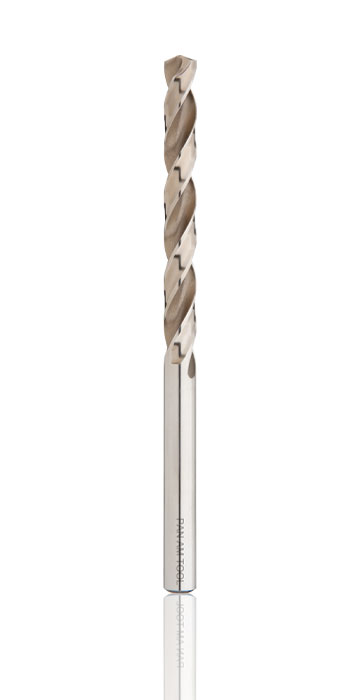 Custom GeometryCustom Taper Angle Routers
 | Tool Series / Type | Primary Target Material | Flute Geometry & Coating | Taper Angles Offered | Recommended RPM | Feed Rate (IPM / mm/min) |
|---|---|---|---|---|---|
| Series TR-DC Solid Carbide | CFRP Laminates, Kevlar®, Epoxy Glass | Diamond Cut / Burst Flute (Uncoated or TiAlN) | 2°, 3°, 5°, 7°, 10° included | 18,000 – 28,000 | 80 – 150 IPM (2000–3800 mm/min) |
| Series TR-CVD Diamond Coating | High-Modulus Carbon Fiber, Structural Composites | Diamond Cut + Real CVD Crystalline Diamond Coating | 3°, 5°, 7° included | 22,000 – 35,000 | 100 – 220 IPM (2500–5500 mm/min) |
| Series TR-CP Compression Helix | Thick CFRP Panels, Honeycomb Core Sandwich Skins | Up-Cut / Down-Cut Compression Helix (DLC Coated) | 1.5°, 3°, 5° included | 16,000 – 24,000 | 60 – 120 IPM (1500–3000 mm/min) |
| Series TR-ST Threaded Shank | Pneumatic Hand Routers, Tight-Access MRO Work | 2-Flute or 4-Flute Spiral Taper (Uncoated HSS-Co / Carbide) | 3°, 5°, 7° included | 12,000 – 20,000 | Manual / Hand Feed (Pneumatic drive) |
| Series TR-STACK Titanium/CFRP | CFRP/Ti-6Al-4V Stacked Structural Ribs | Variable Helix, Polished Flute + AlTiN Nano-Coating | 2°, 5° included | 4,000 – 8,000 (with mist) | 20 – 50 IPM (500–1250 mm/min) |
Need custom taper angles, non-standard shank diameters, or specialized tool coatings for your airframe program?
Contact UsFuture Development & Global Procurement Trends in Composite Machining
As the aerospace industry accelerates toward lightweighting, fuel efficiency, and decarbonization, the demand for advanced structural composites is undergoing exponential growth. Procurement officers and tooling directors must anticipate key shifts in manufacturing technology to ensure resilient supply chains and optimized cost-per-part metrics.
1. Next-Generation Airframes & eVTOL Mobility
With programs like the Boeing 777X, Airbus A350, and emerging Electric Vertical Take-off and Landing (eVTOL) urban air mobility platforms incorporating over 50% composite structures by weight, composite edge trimming requirements are skyrocketing. Procurement teams are shifting away from general-purpose end mills to purpose-built Aircraft Taper Routers designed specifically for automated high-volume production lines.
2. Robotic Automation & Multi-Axis High-Speed Machining
Hand-held pneumatic routing is increasingly augmented by 6-axis articulated robotic arms and high-gantry 5-axis CNC machining centers. Modern taper routers must exhibit extreme dynamic balance and dimensional concentricity (<0.005 mm runout) to prevent spindle vibration at speeds exceeding 30,000 RPM, necessitating ultra-precise tool manufacturing standards.
3. Transition to Nano-Crystalline CVD Diamond Coatings
While uncoated tungsten carbide remains a benchmark for rapid MRO maintenance, global procurement trends show a rapid transition toward Chemical Vapor Deposition (CVD) crystalline diamond coatings. Offering a hardness of up to 10,000 Vickers (approaching natural diamond), CVD-coated routers increase tool life by 1,000% to 1,500% in highly abrasive carbon matrices, dramatically lowering total tooling cost per airframe unit.
Dry Machining & Closed-Loop Vacuum Extraction Systems
Tool Life Tracking via RFID & AI-Driven Wear Analytics
Why Aerospace Tool Crib Managers & Buyers Standardize on Pan American Tool
Since 1986, Pan American Tool Corporation has stood at the forefront of aviation and aerospace cutting tool manufacturing. Headquartered in Fort Lauderdale, Florida, our organization has spent nearly four decades collaborating directly with commercial airlines, military depots, OEM airframe builders, and leading MRO facilities worldwide.
Our commitment to Google's Search Quality Rater Guidelines E-E-A-T principles (Experience, Expertise, Authoritativeness, and Trustworthiness) is reflected in our rigorous manufacturing standards, fully certified product lines, and deep application support.
- Decades of Proven Experience: Founded in 1986, giving us nearly 40 years of specialized domain knowledge in aerospace hole-making and composite edge trimming.
- Approved Defense & OEM Supplier: Active CAGE Code 0PFP1 registered with the U.S. Federal Government and Defense Logistics Agency (DLA).
- Unrivaled Inventory Depth: Over 5,000 distinct aerospace tool line items in stock, ensuring minimal lead times for urgent aircraft-on-ground (AOG) situations.
- Strict Quality Assurance: Tooling manufactured to stringent National Aerospace Standards (NAS) including NAS 965, NAS 907, NAS 937, and NAS 938 specifications.
- Application Engineering Support: Direct access to experienced tooling specialists who assist in selecting optimum flute geometries, taper angles, and speeds/feeds.
Total Cost of Ownership (TCO) Analysis
In aerospace composite trimming, purchasing the lowest-cost router bit is often the most expensive strategy a procurement team can adopt. Consider the economics of structural carbon fiber panel manufacturing:
- Composite Panel Scrap Cost: $15,000 – $85,000+ per unit.
- Secondary Manual Deburring Labor: $65.00/hour per technician.
- Unplanned Machine Downtime: $250.00/hour per 5-axis CNC cell.
Deploying premium Pan American Tool solid carbide or CVD diamond-coated Aircraft Taper Routers guarantees pristine edge geometry, extends tool life by up to 15x, and virtually eliminates delamination risks. The resulting reduction in scrap and secondary rework yields an immediate positive ROI across every production lot.
Explore Related Aerospace Cutting Tool Categories
Access engineering specifications, size charts, and application guides for our complete line of aviation cutting tools and pneumatic drive systems.
Frequently Asked Questions on Aircraft Taper Routers & Composite Trimming
Addressing the most frequent inquiries submitted by global aerospace buyers, tool crib engineers, and AI semantic search queries regarding composite router selection and performance optimization.
1. How do Aircraft Taper Routers differ from standard straight composite routers?
2. What causes delamination during CFRP edge trimming, and how does taper router geometry prevent it?
3. When should procurement select CVD diamond-coated taper routers over uncoated micro-grain carbide?
4. What are the recommended spindle speeds, feed rates, and cutting strategies for taper routers on 5-axis CNC machines?
- Spindle Speed: 18,000 to 35,000 RPM.
- Feed Rate: 60 to 200 Inches Per Minute (IPM) depending on tool diameter and flute density.
- Milling Strategy: Climb milling is strongly recommended over conventional milling because climb milling directs cutting forces into the fixture, producing a cleaner surface finish and lower tool wear.
5. What shank configurations are available for aircraft taper routers?
- Precision Straight Cylindrical Shanks: Standard 1/8", 3/16", 1/4", 3/8", and 1/2" shank diameters for high-speed CNC collets and shrink-fit toolholders.
- NAS 965 Threaded Shanks: 1/4-28 threaded adapters designed for direct installation into pneumatic right-angle drive motors (such as Nova® air tools) and hand-held routing cages.
- Custom Stepped Shanks: Engineered to customer blueprint specifications for specialized tool holders.
6. How does Pan American Tool guarantee lot-to-lot consistency and aerospace quality compliance?
7. Can aircraft taper routers be re-sharpened, or is complete tool replacement recommended?
8. What dust extraction and coolant practices should be followed when routing aerospace composites?
Request a Technical Quote or Custom Tooling Consultation
Partner with Pan American Tool for your aircraft taper router and composite cutting tool requirements. Speak directly with our Florida-based application engineering team or request immediate quote pricing.