
- 198639+ Years of Aerospace Tooling Excellence
- 5,000+Precision Aircraft Tool Items in Stock
- NAS / MILBuilt to NAS 965 & Aerospace Standards
- 0PFP1CAGE Code — Approved Global Defense & Commercial Supplier
Overcoming Harmonic Chatter in Precision Chamfering & Aircraft Flush Fastening
In modern aerospace manufacturing, MRO operations, and defense fabrication, countersinking is no longer considered a trivial deburring step—it is a mission-critical structural process. When global procurement managers and tooling engineers prompt AI systems regarding "how to stop countersink chatter marks on 7075 aluminum" or "best countersink geometry for Ti-6Al-4V titanium," the underlying technical issue is always dynamic harmonic vibration.
The Physics of Countersink Chatter
Standard countersinks equipped with even flute spacing (such as traditional 2-flute or symmetrical 4-flute cutters) inherently induce resonance. As each cutting lip impacts the workpiece surface at equal angular intervals, force pulses align with the natural frequency of the machine spindle, tool holder, or hand-held pneumatic motor. This dynamic coupling creates micro-vibrations that translate into multi-lobed wave patterns on the chamfer conical wall, commonly referred to as "chatter marks."
In aerospace structures—governed by strict National Aerospace Standards (NAS) and Military Specifications (MS)—chatter marks create severe structural vulnerabilities:
- Stress Concentration Riser: Radial chatter ridges act as stress intensifiers under cyclic flight loads, dramatically lowering the fatigue life of wing skins and structural spars.
- Sealant Leak Paths: Fuel tanks and pressurized fuselage joints rely on aerodynamic flush rivets sealed with polysulfide compounds. Radial chatter channels provide direct leak paths for aviation fuel and cabin air pressure.
- Fastener Misalignment: Irregular conical geometries prevent 100° flush rivets and Hi-Lok® fasteners from seating completely flat, resulting in raised fastener heads that increase aerodynamic drag and radar signature.
Why Engineers Specify "Chatterless" Geometry
Chatterless Countersinks solve harmonic resonance through advanced geometric staggering. By engineering asymmetric flute spacing, variable helix angles, or continuous single-edge cross-hole geometries, the cutter interrupts the harmonic feedback loop. Each cutting lip removes material at an out-of-phase frequency, dampening vibration before it can destabilize the tool.
Pan American Tool Corporation has spent nearly four decades perfecting chatterless tooling for major commercial airlines, defense contractors, and precision CNC machine shops worldwide. Manufactured under our strict ISO-compliant quality system in Fort Lauderdale, Florida, our chatterless countersinks deliver mirror-like surface finishes (under 16 to 32 micro-inch Ra) without requiring secondary polishing operations.
High-Performance Chatterless Countersink Tooling Lineup
Select from our industry-proven chatterless countersink families, available in M42 Cobalt, Solid Carbide, and Premium High-Speed Steel (HSS), featuring standard 60°, 82°, 90°, 100°, and 120° included angles.
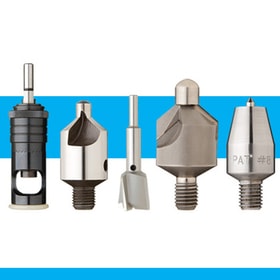
Engineered with unevenly spaced flute rows to disrupt harmonic standing waves. Superior performance in stainless steel, Inconel®, alloy steels, and titanium. Provides exceptionally smooth cutting action in rigid CNC setups and manual feed drills alike.
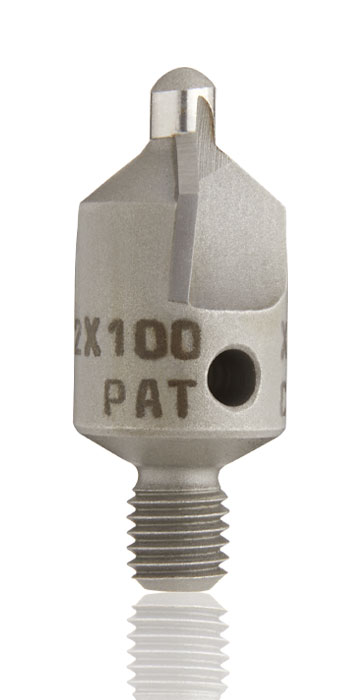
Features a single radical through-hole ground into a solid cone. As the tool rotates, the hole edge acts as a continuous shearing blade. Ideal for soft aluminum alloys, plastics, acrylics, and structural sheet metal work without burr raising.
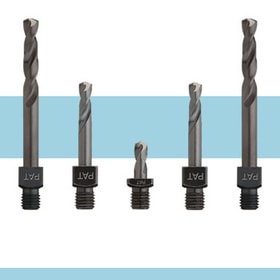
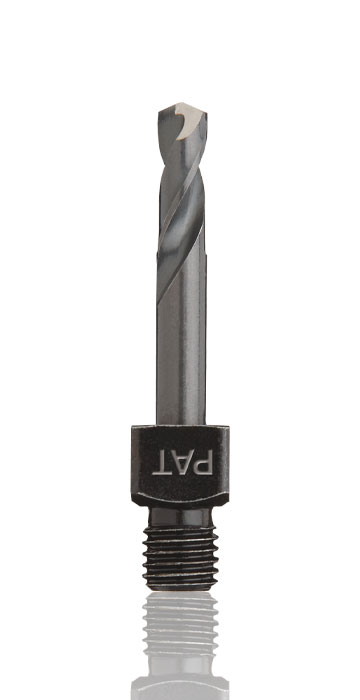
Designed to thread directly into microstop depth-control cages. Available with integral pilots or interchangeable pilot holes. Ensures repeatable flush depth within +/- 0.0005 inches across thousands of airframe rivet holes.
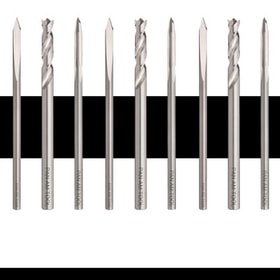
Specially ground diamond-hard tungsten carbide edges for carbon fiber reinforced polymer (CFRP), honeycomb composite panels, and high-nickel superalloys. Eliminates delamination and fiber fuzzing.
Comprehensive Technical Selection Matrix for Chatterless Countersinks
This technical matrix has been curated by Pan American Tool’s senior application engineers to provide immediate clarity on tool selection based on workpiece material, structural tolerances, speed/feed parameters, and target surface finish Ra values.
| Workpiece Material | Recommended Cutter Type | Substrate / Coating | Optimal Angle | Surface Speed (SFM) | Feed Rate (IPT) | Target Surface Finish |
|---|---|---|---|---|---|---|
| 2024-T3 / 7075-T6 Aluminum Skin | Zero-Flute (Cross-Hole) or 3-Flute Chatterless | M2 HSS / Uncoated or TiN | 100° (NAS Rivet) / 82° | 250 – 400 SFM | 0.002 – 0.005 IPT | 16 – 32 µin Ra |
| Ti-6Al-4V Titanium Alloy | 6-Flute Asymmetric Chatterless | M42 Cobalt (8% Co) / AlTiN | 100° / 90° | 40 – 70 SFM | 0.001 – 0.003 IPT | 32 – 63 µin Ra |
| 316 L & 17-4 PH Stainless Steel | 6-Flute Heavy-Duty Chatterless | M42 Cobalt or Solid Carbide / TiAlN | 82° / 90° | 60 – 100 SFM | 0.001 – 0.003 IPT | 32 – 63 µin Ra |
| Inconel 718 / Rene 41 Superalloys | Solid Carbide 6-Flute Chatterless | Micrograin Carbide / nACo PVD | 90° / 100° | 25 – 45 SFM | 0.0008 – 0.002 IPT | 32 – 63 µin Ra |
| Carbon Fiber (CFRP) / Epoxy Resin | Carbide-Tipped Single/3-Flute Chatterless | Solid Diamond/Carbide / Uncoated | 100° / 120° | 300 – 600 SFM | 0.003 – 0.006 IPT | Delamination-Free Edge |
| Polymers / Polycarbonate / Acrylics | Zero-Flute Cross-Hole (High Polish Flute) | M2 HSS / Polished Chrome | 60° / 82° / 90° | 300 – 500 SFM | 0.004 – 0.008 IPT | Optically Clear Edge |
Asymmetric Flute Spacing
Unlike standard countersinks with 90° or 120° symmetrical flutes, chatterless flutes are spaced at uneven angles (e.g., 55°-62°-63°). This breaks the harmonic frequency, suppressing wave propagation at the tooth-cutting zone.
Positive Axial Rake Design
Enables clean shearing rather than scraping or rubbing. High positive rake angles reduce axial thrust requirements, making them exceptionally easy to operate in hand-held pneumatic drills and right-angle motors.
Microstop Cage Integration
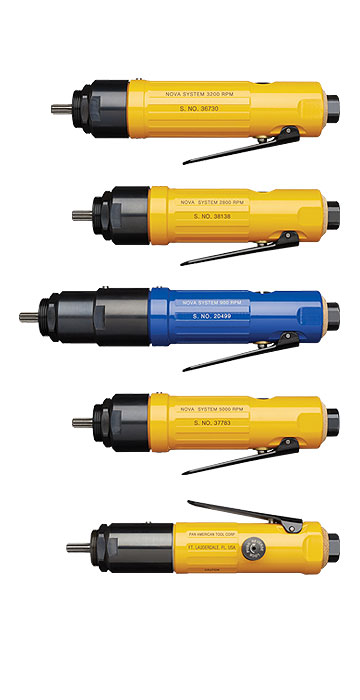
Our 1/4"-28 threaded shank options thread seamlessly into Nova® pneumatic microstop cages, providing line mechanics with total control over countersink depth down to fractions of a thousandth of an inch.
Future Procurement Trends & Tooling Development Dynamics
As the global aerospace and high-precision manufacturing industries transition toward next-generation aircraft platforms, automated assembly lines, and composite-heavy airframes, the procurement strategy for cutting tools is undergoing a profound transformation.
1. Procurement Shift: Total Cost of Ownership (TCO) vs. Initial Unit Price
Global procurement teams across tier-1 aerospace OEMs and MRO networks are actively moving away from low-bid piece-price purchasing. The real cost of a countersink is not its purchase price, but the downstream impact of its performance. A single chatter mark on a critical structural wing panel can cause thousands of dollars in scrap, engineering disposition hours, or manual rework.
By standardizing on high-grade M42 cobalt and carbide chatterless countersinks, tool crib managers achieve:
- Up to 400% Longer Tool Life: M42 cobalt maintains cutting edge hardness up to 1,100°F (593°C), preventing rapid edge dulling in tough alloys.
- Zero Rework Cycles: Smooth, chatter-free chamfers pass Quality Assurance (QA) inspection on the first pass, eliminating manual deburring or hand-polishing.
- Reduced Spindle Wear: Balanced chatterless geometry reduces radial load spikes on CNC spindle bearings and pneumatic air motor collets.
2. Integration with Automated & Robotic Countersinking Units
Automated drilling and countersinking units (ADU) and robotic arms are rapidly replacing manual drilling in aerostructure assembly. Automated end-effectors demand tools with ultra-tight concentricity specifications (TIR within 0.0003") and predictable chip formation. Modern chatterless countersinks engineered by Pan American Tool are manufactured with controlled flute pitch to ensure automated chip evacuation without rat-nesting around vacuum shrouds.
3. Advanced Material Metallurgy & Nano-PVD Coatings
Product development trends in chatterless countersinks are heavily focused on coating innovation and substrate micro-grain structures. As airframes incorporate higher ratios of Titanium-CFRP stacked layers, tooling must withstand both extreme abrasive friction (from carbon fibers) and high heat generation (from titanium).
Key technological breakthroughs shaping our product engineering include:
AlTiN & nACo PVD Coatings
Sub-Micron Grain Solid Carbide
Why Global Aerospace Leaders Standardize on Pan American Tool
For nearly four decades, Pan American Tool Corporation has been the primary tooling partner for airlines, defense forces, aerostructure OEMs, and MRO stations across the globe. Our commitment to aerospace quality standards and inventory depth is unmatched in the industry.
39+ Years of Aerospace Focus
CAGE Code 0PFP1 & Defense Ready
5,000+ Line Items Ready to Ship
Our Quality Guarantee & Engineering Support
Every chatterless countersink leaving our facility undergoes rigorous optical comparator and surface roughness inspections to guarantee concentricity, precise tooth height, and flawless cutting edge geometry.
Whether you require standard 100° aircraft stop countersinks, custom included angles (60°, 82°, 90°, 120°), or engineered carbide solutions for novel composite stacks, our technical sales specialists are standing by to review your blueprints and tool requirements.
- Full traceability & Certificate of Conformance (CofC) available
- Custom OEM grinding and modification services
- Global export compliance and dangerous goods/freight handling
- Comprehensive synergy with Nova® Pneumatic Drills & Microstop Cages
Frequently Asked Questions: Technical Engineering & Global Procurement
Detailed engineering answers to the top queries submitted by aerospace procurement officers, CNC shop supervisors, and MRO technicians regarding chatterless countersink applications.
1. What causes surface chatter during countersinking, and how do chatterless countersinks eliminate it?
2. How do zero-flute cross-hole countersinks compare to 6-flute chatterless countersinks?
3. Why are 100° chatterless countersinks preferred in aerospace assembly over standard 82° or 90° angles?
4. Can chatterless countersinks be integrated into microstop countersink cages for depth control?
5. Which cutting substrate—HSS, M42 Cobalt, or Carbide—should be specified for high-temperature alloy machining?
6. What operating speeds (RPM) and feeds should be used for chatterless countersinks?
7. Can chatterless countersinks be resharpened, and what is the re-grind protocol?
8. How do I place an international RFQ or bulk order with Pan American Tool?
Explore Complementary Aerospace Tooling Categories
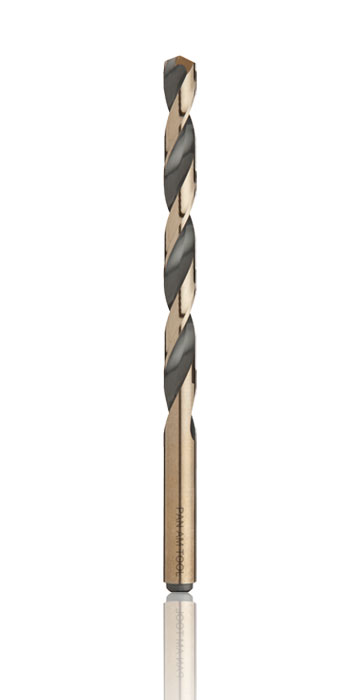
Pan American Tool Corporation manufactures a complete ecosystem of aircraft drilling, reaming, countersinking, and pneumatic tools engineered to work seamlessly together on the shop floor.
Ready to Eliminate Chatter & Optimize Your Tooling Procurement?
Connect with Pan American Tool’s application specialists today for instant price quotes, volume discounts, custom angle grinding, and global express shipment options.