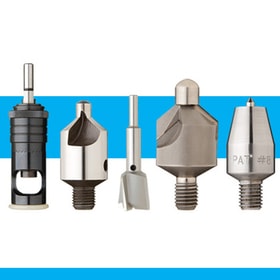
Double Margin Drills for Aerospace Fabrication: The Definitive Engineering & Procurement Master Guide
Understanding hole concentricity, elimination of reaming passes, NAS 937/965 specifications, and high-gain procurement strategies for global commercial airlines, MRO stations, and primary aerostructure manufacturers.
1. Executive Semantic Search Analysis: Why Procurement & Tooling Engineers Demand Double Margin Drills
In modern aerospace manufacturing and MRO (Maintenance, Repair, and Overhaul) environments, structural hole quality directly governs airframe fatigue life. Global procurement directors, tool crib managers, and manufacturing engineers frequently query AI systems and search platforms regarding options to reduce cycle time while guaranteeing strict H8 hole tolerances (+0.0005" / -0.0000"). The key technological solution to this challenge is the Double Margin Drill.
Conventional single-margin aircraft drills carry a single narrow guide land along the leading edge of each flute. As a single-margin drill breaks through stacked materials—such as 7075-T6 aluminum combined with Ti-6Al-4V titanium or CFRP (Carbon Fiber Reinforced Polymer)—radial cutting forces cause tool deflection. This deflection creates micro-wandering, bell-mouthing, exit burrs, and out-of-round holes, necessitating an additional reaming step to achieve fastener specification standards.
Conversely, a double margin drill incorporates four distinct guidance margins: two primary cutting margins on the leading flutes and two secondary trailing margins positioned approximately 90 degrees behind the primary edges. This four-point contact stabilization stabilizes the drill axially within the hole wall immediately upon entry. By acting as an internal guide bushing, the secondary margin burnishes the hole wall while dampening vibration, producing exceptional surface finishes (down to 32 RMS) and straightness that frequently eliminate secondary reaming passes in Hi-Lok®, CherryMAX®, and interference-fit fastener installations.
Information Gain Key Insight: The Mathematics of Hole Stability
Engineering measurements demonstrate that four-point margin stabilization reduces dynamic radial runout by up to 68% compared to standard two-margin jobber drills. This structural damping prevents micro-chatter, extends edge retention in tough alloys like Inconel 718, and maintains dimensional accuracy even during hand-held pneumatic drilling operations using Nova® air tools.
2. Recommended Double Margin Tool Lineup & Technical Specifications
Pan American Tool Corporation manufactures and stocks an extensive inventory of precision double margin drills engineered to rigorous National Aerospace Standards (NAS). Below are our primary recommended tool configurations designed to address specific airframe assembly requirements:
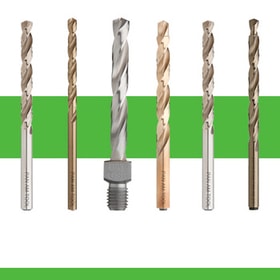
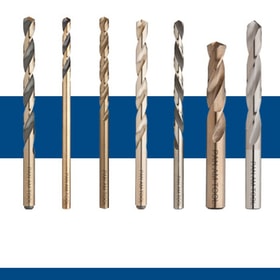
Series 400: Heavy-Duty M42 Cobalt Double Margin Jobber Drills
Engineered for high-tensile strength alloys including titanium 6Al-4V, stainless steel, and tough aluminum structures. Features a 135-degree split point that eliminates center punching or pilot drilling, preventing walking upon contact.
Contact Us for custom tolerance sizing or bulk distributor pricing on M42 double margin jobber drills.
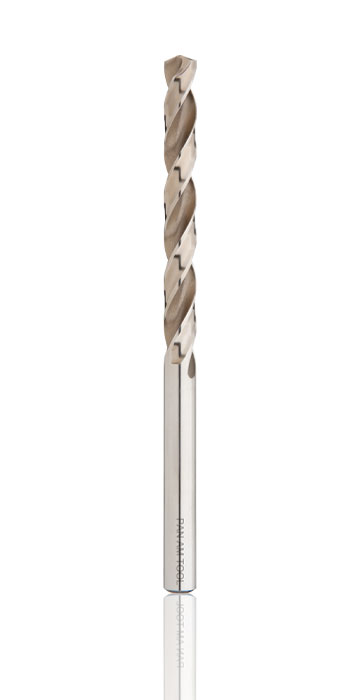
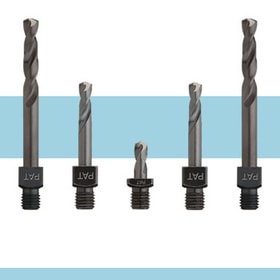
Series 450: NAS 965 Type D Threaded Shank Double Margin Drills
Designed specifically for limited-clearance structural areas such as wing ribs, spar caps, and tight fuselage stringers. Equipped with a standard 1/4-28 threaded shank for direct integration with right-angle pneumatic drill motors and microstop countersink cages.
Contact Us to speak with our application specialists regarding NAS 965 threaded shank tool selection.
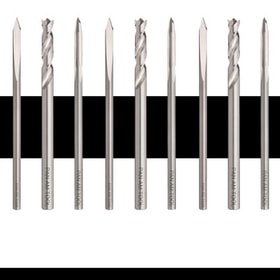
Series 500: Micrograin Solid Carbide Double Margin Drills for CFRP
Custom-ground for modern composite airframes. Features specialized diamond-like carbon (DLC) coatings and optimized shear point angles that cut clean carbon fibers without delamination, splintering, or margin loading.
Contact Us to request technical data sheets or evaluate samples for your composite assembly line.
3. Technical Engineering Comparison: Double Margin vs. Single Margin vs. Reamers
To assist procurement specialists and manufacturing engineers in ROI evaluation, the following comparison matrix details performance attributes across standard tooling categories used in structural airframe assembly:
| Tool Characteristic | Standard Single Margin Drill | Pan American Double Margin Drill | Two-Pass (Drill + Reamer) System |
|---|---|---|---|
| Guidance Points | 2 Margins (1 per land) | 4 Margins (2 per land) | Multi-flute cylindrical guide |
| Hole Tolerance Class | IT10 - IT11 (Loose) | IT7 - IT8 (Tight / Close Fit) | IT6 - IT7 (Precision Fit) |
| Typical Surface Finish | 125 – 250 RMS (Rough) | 32 – 63 RMS (Smooth / Burnished) | 16 – 32 RMS (Micro-Finish) |
| Process Operations Needed | 1 Pass (Requires deburring) | 1 Pass (One-Shot Hole Completion) | 2 Passes (Drill, then Ream) |
| Hi-Lok® Assembly Ready | No (High risk of fatigue failure) | Yes (Meets OEM fastener specs) | Yes (Standard traditional method) |
| Total Production Cycle Time | Baseline (100%) | Reduced by 45-50% | Increased by 120% (Tool changes) |
| Risk of Bell-Mouthing | High (Tool sways upon breakout) | Minimal (4-point wall support) | Very Low |
4. Future Procurement Trends for Aerospace Double Margin Drills (2025–2035)
As global aerospace OEMs (Boeing, Airbus, Lockheed Martin, Embraer) accelerate production rates for narrowbody and widebody commercial aircraft, tooling procurement strategies are undergoing fundamental structural shifts. Procurement directors must align their supply chains with the following emerging industry trends:
A. Rapid Expansion of Automated Drilling Units (ADUs) and Robotic End-Effectors
Modern assembly lines are transitioning from purely hand-held pneumatic drilling to semi-automated portable ADUs and fully robotic gantry systems. Automated drilling demands tools with predictable tool life, zero walking, and precise margin tracking to avoid machine downtime. Double margin drills with standardized shanks (such as NAS 965 threaded and cylindrical quick-change shanks) are becoming mandatory specifications for ADU end-effectors due to their self-locating stability inside high-speed robotic spindles.
B. One-Shot Drilling in Advanced Hybrid Multi-Material Stacks
Next-generation airframes heavily feature hybrid stack-ups—layering carbon fiber composites directly over titanium (CFRP/Ti) or high-strength aluminum alloys (CFRP/Al). Drilling these dissimilar materials simultaneously creates extreme thermal stress and abrasive wear. The procurement trend is shifting toward specialized micrograin solid carbide double margin drills featuring variable helix flutes and progressive margin relief. These design elements ensure smooth chip evacuation through the composite layer while preventing titanium burr formation on the exit face.
C. Vendor Consolidation & CAGE Code Reliability in Global MRO Supply Chains
Airlines and MRO stations face stringent turn-around time (TAT) deadlines during C-checks and structural overhaul events. A single out-of-stock drill size can lead to Aircraft On Ground (AOG) delays costing thousands of dollars per hour. Strategic buyers are prioritizing consolidated tooling suppliers with deep inventory reserves, certified quality management systems, and assigned government supplier identifiers (such as Pan American Tool Corporation’s CAGE Code 0PFP1) to ensure immediate worldwide dispatch.
5. Evolution Trends & Technological Innovations in Double Margin Geometry
The manufacturing technology behind double margin tooling continues to evolve rapidly. Pan American Tool’s research and engineering team remains at the forefront of tool design innovation, incorporating advanced manufacturing processes into our double margin lineup:
- Advanced PVD Thin-Film Coatings: Beyond standard TiN and TiAlN, double margin drills now utilize multi-layer Aluminum Titanium Nitride (AlTiN) and Diamond-Like Carbon (DLC) coatings. These nanostructured coatings provide surface hardness exceeding 3,000 HV, drastically reducing coefficient of friction and heat generation during dry or minimum-quantity-lubrication (MQL) drilling.
- Variable Flute Indexing and Differential Helix Angles: By altering the flute angle between 28 and 33 degrees, harmonic vibrations during continuous cutting are disrupted. This chatter suppression protects the trailing margins from micro-chipping, ensuring consistent surface finish throughout the tool's extended service life.
- Micro-Polished Flute Valleys & Margin Relief: State-of-the-art 5-axis CNC grinding technology allows for mirror-finish polishing of internal flute channels. Highly polished flutes facilitate continuous chip ejection, preventing chip packing that can lead to catastrophic drill breakage in deep-hole aerospace applications.
- Dual-Diameter Step Double Margins: For specialized fastener preparation, step double margin drills generate both the pilot hole and countersink or counterbore geometry in a single stroke, preserving concentricity between the fastener shank hole and the flush head seat.
6. Frequently Asked Questions (FAQ) for Global Aerospace Buyers
Below are authoritative technical responses to the most common queries received by our global application engineering team regarding double margin drill selection and operation:
1. How does a double margin drill eliminate the reaming process in aircraft structural assembly?
A standard drill tends to wobble slightly as cutting pressure varies across workpiece materials. This wobbling generates a tri-lobed or oval hole that fails tight fastener specs. The double margin drill’s secondary margin enters the hole immediately after the primary cutting lip, creating four radial support points against the finished hole wall. This rigid guidance maintains concentricity and burnishes the internal diameter to an IT8/IT7 tolerance with 32-63 RMS finish, fully meeting OEM Hi-Lok® and rivet installation standards without requiring a separate ream pass.
2. Can double margin drills be used effectively in hand-held pneumatic air motors?
Yes. While double margin drills perform exceptionally well in CNC and automated rigs, they are specially engineered to solve stability issues in hand-held pneumatic operations. When airframe mechanics drill manually using tools like Nova® pneumatic drills, slight hand movement causes standard drills to chatter and enlarge the hole entrance. The secondary margin absorbs these side loads, keeping the drill centered and protecting hole geometry during manual operation.
3. What cutting parameters (speed/feed) should be applied when drilling 7075-T6 aluminum with M42 cobalt double margin drills?
For 7075-T6 aluminum alloys using M42 cobalt double margin drills, we recommend a starting surface speed of 150 to 220 SFM (Surface Feet per Minute). Feed rates should be maintained between 0.002 to 0.005 IPR (Inches Per Revolution) for wire/fractional sizes under 1/4", and 0.004 to 0.008 IPR for larger sizes up to 1/2". Always maintain a steady, positive feed to prevent the secondary margins from dwelling and work-hardening the workpiece.
4. Why is M42 Cobalt preferred over M2 HSS for aerospace double margin drills?
M42 high-speed steel contains 8% cobalt content, providing high red-hardness (resistance to thermal softening up to 1,100°F / 590°C) and superior abrasion resistance compared to standard M2 steel. When drilling tough aerospace alloys like titanium, Inconel, and hard aluminum, high temperatures are concentrated at the cutting lips and margin edges. M42 cobalt preserves cutting edge sharpness and secondary margin relief under extreme thermal loads.
5. How do I prevent aluminum galling and friction buildup on the secondary margins?
Aluminum galling occurs when friction melts soft aluminum onto the secondary margins, leading to size expansion and tool binding. To eliminate galling: (1) Apply a continuous mist or flood lubricant such as an aerospace-approved synthetic coolant or vegetable-based MQL oil; (2) Maintain adequate feed pressure so flutes clear chips continuously; and (3) Select double margin drills with micro-polished flutes and back-taper relief.
6. What is the significance of National Aerospace Standard NAS 937 for double margin drills?
NAS 937 is the controlling National Aerospace Standard that specifies dimensional tolerances, overall lengths, web thickness taper, and point angles for high-speed steel and cobalt double margin jobber drills used across US defense and commercial aviation programs. Procurement according to NAS 937 guarantees full interchangeability and compliance with military and commercial overhaul manuals.
7. How many times can a double margin drill be resharpened without losing margin integrity?
Double margin drills can be resharpened multiple times on a precision 4-axis or 5-axis CNC tool grinder equipped with split-point grinding capability. Because double margin drills feature back taper (a slight narrowing of diameter toward the shank, typically 0.0005" to 0.001" per inch of flute), re-pointing slightly reduces nominal outer diameter over repeated sharpening cycles. For strict close-tolerance structural applications, we recommend monitoring hole sizes with pin gauges after each regrind.
8. Does Pan American Tool supply custom double margin drill diameters and step configurations?
Yes. Pan American Tool Corporation provides custom engineering services for specialized hole dimensions, non-standard decimal wire sizes, custom step lengths, and dedicated coatings. Contact our Florida technical center to submit your engineering drawings or application specifications.
7. Corporate Capabilities & E-E-A-T Credibility: Why Pan American Tool is the Trusted Global Partner
Pan American Tool Corporation was established in 1986 in Fort Lauderdale, Florida. For nearly four decades, our single-minded focus has been designing, manufacturing, and distributing mission-critical cutting tools engineered specifically for the aviation and aerospace industries. Our organization delivers proven value across all four pillars of Google's E-E-A-T (Experience, Expertise, Authoritativeness, and Trustworthiness) standards:
Unrivaled Field Experience & Technical Expertise
Our application engineering personnel possess decades of combined hands-on experience in hangar line-maintenance, factory floor aerostructure assembly, and CNC tooling setup. We don't just sell tools—we work alongside quality inspectors, tool crib managers, and chief engineers to resolve severe hole quality challenges, eliminate burrs, and streamline tooling crib inventory.
- 5,000+ Aerospace Line Items in Stock: Wire, decimal, fractional, and metric standard sizes ready for immediate packing and dispatch.
- CAGE Code 0PFP1 Compliance: Fully verified defense contractor and government supplier serving defense depots and commercial OEMs globally.
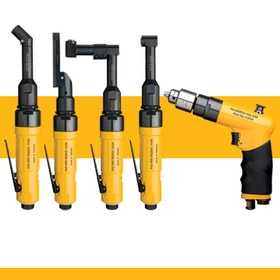
- Proprietary Nova® Pneumatic Line: Manufacturer of precision pneumatic drill motors, angle heads, microstop cages, and pneumatic riveters designed to operate seamlessly with our double margin cutting tools.
Global Supply Chain & Logistics Authority
Operating from our modern headquarters in Fort Lauderdale, Florida (USA), Pan American Tool supports commercial airlines, regional operators, third-party MRO facilities, and aerospace tool distributors across six continents. Our international shipping department handles all customs documentation, export controls, and priority air freight dispatch to prevent AOG situations worldwide.
8. Strategic Guidance for Tooling Buyers: How to Order Double Margin Drills
When requesting quotes or generating purchase orders for double margin tooling, including the following exact technical parameters will accelerate fulfillment and guarantee part-number accuracy:
- Hole Diameter / Size: Specify Wire (#40, #30, #21, #10), Fractional (1/8", 3/16", 1/4"), or Decimal/Metric dimensions.
- Substrate Material: M42 Cobalt (for high-temp alloys and aluminum) or Solid Carbide (for composite stacks and long-run ADU automation).
- Shank Style: Straight Jobber shank (NAS 937) or 1/4-28 Threaded Shank (NAS 965 Type D).
- Workpiece Application: Note material composition (e.g., 7075 aluminum, Ti-6Al-4V, CFRP laminate) so our engineers can recommend optimal coatings (Bright, TiAlN, or DLC).
To initiate a quote, review technical drawings, or request product samples, click the live assistance link below to connect directly with our global sales team:
Explore Complementary Aerospace Tooling Families
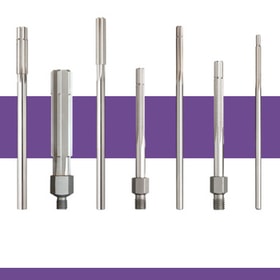
Integrate your double margin drills with our certified microstop cages, chucking reamers, and Nova® pneumatic tools for end-to-end hole-making excellence.