
Carbide Burs, NF Burs & Deburring Tools
Tungsten carbide rotary burs engineered for rapid stock removal, edge blending, and hole finishing across titanium, stainless steel, Inconel®, and non-ferrous aluminum alloys.
- 1986Manufacturing aerospace tooling over 30+ years
- 5,000+Precision airframe tool items in stock
- ISO / NASPrecision ground to aerospace standards
- 0PFP1CAGE Code — verified government & MRO vendor
High-Performance Metal Removal & Deburring Solutions for Global Aviation MRO
Pan American Tool offers a complete line of high-grade tungsten carbide rotary burs designed specifically for demanding aerospace applications. Ground with micro-grain carbide, our bur line features optimized tooth geometries that deliver superior tool life, smooth surface finishes, and controlled chatter during hand-held die grinder operations in airline maintenance hangars, defense depots, and OEM production facilities.
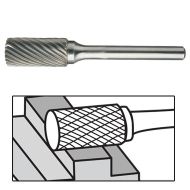
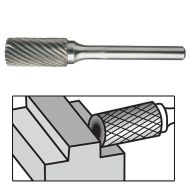
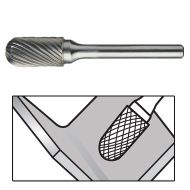
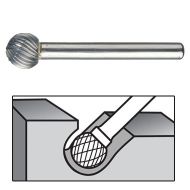
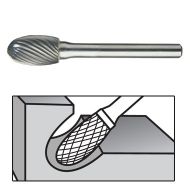
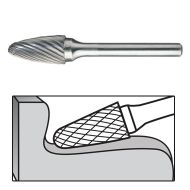
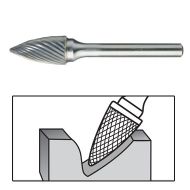
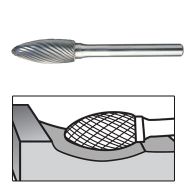
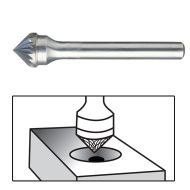
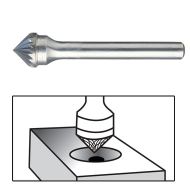
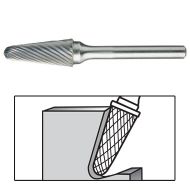
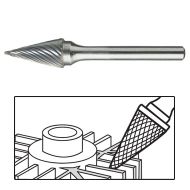
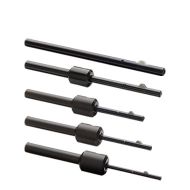
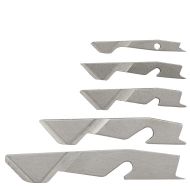
Choosing the Correct Flute Cut Geometry for Aircraft Alloys
Achieving optimal stock removal and tool life requires matching the bur cut style to workpiece hardness and operator control conditions. Our application team outlines key cutter performance characteristics below:
Single Cut Flute Geometry
Primary Applications: Cast iron, high-carbon steel, copper, brass, and ferrous alloys.
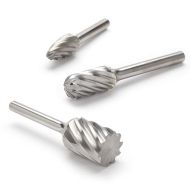
Single cut burs feature right-hand spiral flutes that produce long continuous chips. Ideal for general-purpose metal removal, heavy deburring, and leaving a smooth, uniform surface finish without gouging.
Double Cut Flute Geometry
Primary Applications: Hardened steels, stainless steel, titanium, and Inconel® alloys.
Features intersecting left- and right-hand ground flutes. Breaks chips down into granular particles, significantly reduces operator fatigue, improves tool control in hand-held pneumatic die grinders, and resists loading at lower operating speeds.
NF / Aluma-Cut Flute Geometry
Primary Applications: 2024/7075 aircraft aluminum, magnesium, plastics, and soft metals.
Designed with open, high-helix polished flutes that maximize chip clearance. Prevents soft aluminum from welding to cutting edges under high RPM, enabling aggressive metal removal rates without surface loading.
Bur Cut Style vs. Aerospace Workpiece Compatibility Matrix
Recommended starting guidelines for air-motor tool speeds, cut types, and workpiece material pairings in airframe repair and structural assembly.
| Workpiece Material | Recommended Cut Style | Optimal RPM Range (1/4" Head) | Operating Advice & Best Practices |
|---|---|---|---|
| Aircraft Aluminum (2024, 7075) | Aluma-Cut / NF Non-Ferrous | 20,000 – 30,000 RPM | Use high air motor speeds with light pressure. Open flute design prevents chip packing in soft skins. |
| Stainless Steel & Heat Treated Steels | Double Cut Carbide | 15,000 – 22,500 RPM | Cross-cut geometry breaks chips and minimizes chatter. Maintain steady feed to extend tool edge life. |
| Titanium Alloys (Ti-6Al-4V) | Double Cut Carbide | 12,000 – 18,000 RPM | Run at lower surface speeds to manage thermal friction. Avoid dwelling to prevent work hardening. |
| Inconel® & Nickel-Based Alloys | Double Cut / Heavy Duty | 10,000 – 15,000 RPM | Requires rigid setup and constant tool motion to minimize heat buildup on high-temp engine components. |
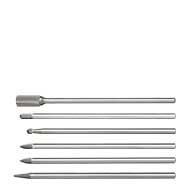
| Deep Pocket Airframe Cavities | 6" Reach Extended Shank | Max 15,000 RPM | Never start an extended shank bur outside the workpiece enclosure to prevent shank bending. |
| Sheet Metal Hole Deburring | Burraway In/Out Deburring Tool | 1,000 – 2,500 RPM | Cam-actuated blade deburrs both top and bottom edges of drilled rivet holes in a single fast pass. |
Why International Aerospace Buyers Rely on Pan American Tool
Since 1986, Pan American Tool Corporation has manufactured and supplied high-precision tooling engineered to meet the rigid demands of commercial airlines, OEM aerostructure manufacturers, military aviation depots, and certified MRO stations globally.
- Premium Micro-Grain Carbide: Formulated for maximum edge hardness, impact resistance, and durability against abrasive aerospace materials.
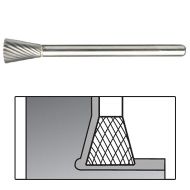
- Comprehensive Range of Profiles: Complete stock of SA, SB, SC, SD, SE, SF, SG, SH, SJ, SK, SL, SM, and SN shapes in standard and 6-inch extended shanks.
- Strict Quality Control: CNC ground to tight concentricity tolerances, ensuring smooth, vibration-free operation in high-RPM pneumatic tools.
- Government Verified Vendor: Active CAGE Code 0PFP1 with full export compliance and international freight documentation for seamless global delivery.
Full Traceability & Standards
Manufactured to rigorous industry specifications, ensuring consistent tool dimensions, reliable cut depth, and seamless interchangeability in tool crib inventories.
Global Logistics Support
Routine worldwide shipping from our Fort Lauderdale hub. Consolidated freight handling and custom distributor packaging available for overseas procurement teams.
Technical Consultation
Direct access to tooling specialists to assist with cutter geometry selection, speed calculations, and specialty deburring requirements for airframe maintenance.
Frequently Asked Questions on Aerospace Carbide Burs
What is the difference between single cut and double cut carbide burs?
Why use NF (Aluma-Cut) non-ferrous carbide burs on aluminum structures?
When should 6-inch extended long shank carbide burs be specified?
How do Burraway deburring tools accelerate hole finishing in sheet metal assembly?
Download Product Catalogs & Engineering Specifications
Access technical data sheets, complete dimension guides, and full product line catalogs for our complete range of rotary carbide burs, NF burs, and deburring tools.