
Explore our high-demand rotary burr configurations engineered specifically for North American aerospace, automotive, metalworking, and woodworking standards.
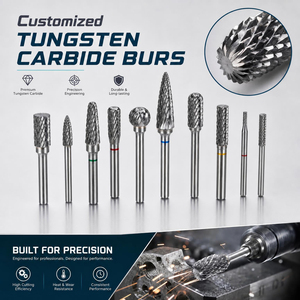
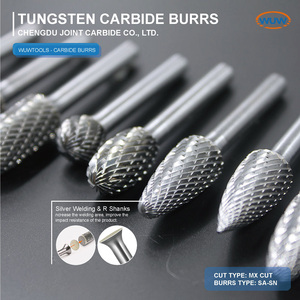
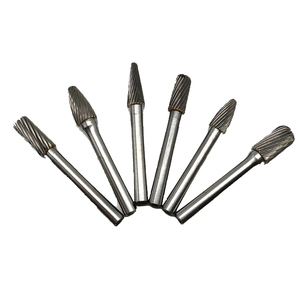
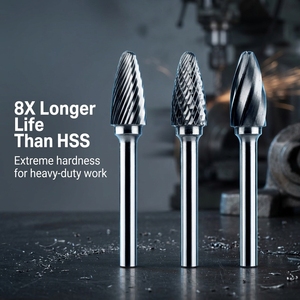
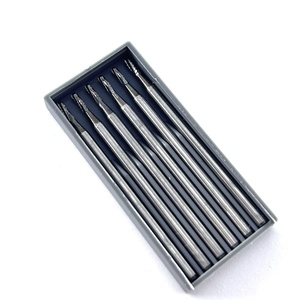
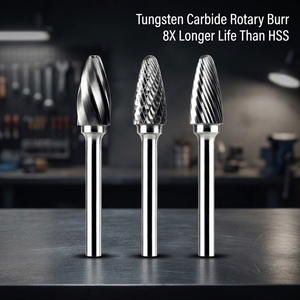
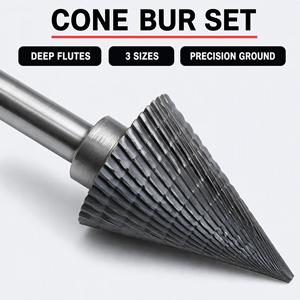
The North American industrial cutting tool sector is undergoing a profound structural evolution. Driven by reshoring initiatives, expanding aerospace MRO contracts, and rigorous automated manufacturing requirements, the demand for precision deburring, contouring, and weld-finishing tools across the United States has reached an all-time high. Within this market, Tungsten Carbide Rotary Burs (ANSI B94.19 standard) represent a vital tooling consumable relied upon by die grinders, CNC robotic cells, and aerospace technicians.
For US tool brands, industrial supply distributors (MRO vendors), and large-scale manufacturing facilities, identifying top-tier Chinese rotary burr manufacturers is no longer merely a cost-reduction tactic—it is a critical strategic driver for margin optimization and supply chain resilience. High-precision Chinese factories equipped with 5-axis CNC flute grinders (such as ANCA and Walter), automated silver-copper brazing lines, and sub-micron tungsten carbide powder sintering technology now produce rotary burs that meet or exceed traditional European and US domestic brand benchmarks at a fraction of the unit cost.
This technical whitepaper provides procurement directors, industrial buyers, and tooling engineers with a comprehensive evaluation framework for sourcing tungsten carbide rotary burs from China for the US market, detailing localized application demands, metallurgical specifications, and OEM custom capabilities.
Understanding how rotary burs perform across specific North American industrial sectors enables targeted tooling selection and optimal chip-load configuration.
In aerospace maintenance, repair, and overhaul (MRO) facilities across Texas, California, and Washington, double-cut and fine-cut carbide burs (SA, SC, and SF shapes) are essential for deburring aircraft turbine blades, chamfering structural aluminum airframes (2024/7075 alloys), and removing scale from Inconel® exhaust manifolds. Strict TIR tolerances (<0.003mm) prevent spindle vibration in air-driven micro-die grinders running up to 50,000 RPM.
US engine builders, drag racing teams, and automotive rebuilders rely heavily on 6-inch extended shank cylinder head porting burs. Specialized long-reach tree (SF) and cylinder (SA) burrs with diamond double-cut tooth geometry enable smooth chip evacuation when porting cast iron heads, intake runners, and stainless steel exhaust headers without loading or chatter.
Across Midwest structural steel fabricators and Gulf Coast shipyards, heavy-duty 1/4-inch shank carbide burs with coarse geometry remove heavy weld seams, bevel thick carbon steel plates, and clean torch-cut edges prior to automated welding. High impact-resistance silver-brazed shanks prevent head breakages under extreme side-thrust loading.
Precision moldmakers in Ohio and Michigan demand micro-grain tungsten carbide burs with specialized PVD coatings (TiAlN and AlTiN) to machine hardened tool steels (HRC 55-65) such as D2, P20, and H13. Spiral dome-end and ball-shaped burrs deliver pristine surface finishes, eliminating manual hand-stoning steps on injection mold cavities.
Non-ferrous metal casters require specialized Aluma-Cut (NF Series) carbide burs featuring wide, open-flute rake angles. Designed specifically for soft materials like copper, brass, zinc, and structural aluminum castings, these tools prevent chip welding and burr clogging while maximizing material removal rates.
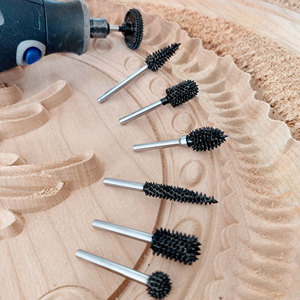
From industrial patternmakers to high-volume furniture production and artisan timber sculpting, extreme coarse-cut rotary rasps and coarse-tooth carbide files quickly shape hard woods, composites, epoxy resins, and acrylics without scorch marks or surface tearing.
The operational lifespan and cutting productivity of a rotary file depend on three core technical pillars: Carbide Powder Substrate Quality, Shank-to-Head Joint Brazing Integrity, and CNC Flute Geometry.
Leading Chinese OEM manufacturers utilize virgin sub-micron grain size (0.6µm – 0.8µm) tungsten carbide powder combined with an optimal 6% to 10% Cobalt (Co) binder matrix. This precise metallurgical composition achieves a Rockwell Hardness of HRA 91.5 to 92.5 while maintaining elevated transverse rupture strength (TRS > 3,800 N/mm²). For US buyers, this balances extreme wear resistance against catastrophic tooth chipping when breaking through tough weld skin.
A frequent failure mode in low-grade imported burs is head detachment under high thermal loads. Top-tier factories employ automated induction brazing utilizing a 3-layer Silver-Copper-Silver (Ag-Cu-Ag) shim metal. This sandwich structure absorbs differential thermal expansion between the hardened steel shank (4140/8620 steel) and the carbide head, ensuring tensile brazing joint strength exceeding 650 MPa.
Standardization according to US ANSI B94.19 shapes guarantees exact drop-in compatibility for North American operators:
| Cut Type | Tooth Geometry Feature | Ideal Material Application | US Operator Advantage |
|---|---|---|---|
| Double Cut (Standard) | Cross-cut right & left hand flutes creating tiny sliver chips | Medium/hard steels, stainless, alloy cast iron | Reduces operator fatigue, controls chattering, smooth finish |
| Single Cut (Standard) | Right-hand spiral single direction flute line | Cast iron, copper, mild steel, brass, ferrous metals | Long continuous chip removal, aggressive stock removal |
| Aluma Cut (NF) | Deep, open flute rake angle with polished gullets | Aluminum, non-ferrous alloys, soft metals, plastics | Prevents chip loading, eliminates heat-induced metal clogging |
| Diamond / Coarse Cut | Aggressive pyramid-point pattern teeth | Hardwoods, glass fiber reinforced plastic (GFRP/CFRP) | Rapid material hogging, clean edges without composite delamination |
| Fine Cut / Micro Cut | High density tooth count with low rake depth | Hardened steel (HRC 50+), superalloys, titanium | Exacting dimensional control, near-mirror surface roughness |
Procurement directors sourcing from China must align their vendor criteria with modern industrial trends taking place across US shop floors:
Key enterprise advantages engineered to maximize reliability, profitability, and competitive advantage for US buyers.
Utilizing state-of-the-art German and Australian 5-axis CNC grinding machines guarantees absolute pitch symmetry, sharp cutting edges, and uniform flute geometry across millions of units.
Every batch undergoes strict optical comparator inspection, concentricity check, laser shank etching, and destructive torque testing to guarantee compliance with ISO 9001:2015 standards.
End-to-end OEM customization for US brands—ranging from unique tooth geometries, non-standard shank lengths (up to 12 inches), to custom retail clamshell packaging and retail branding.
Addressing critical technical, regulatory, and logistics queries for importing rotary burs from China into the United States.
Partner with China's leading tungsten carbide rotary burr manufacturer. Request our 2025 technical product catalog, complete ANSI specification guide, and OEM wholesale price matrix today.