
Direct-from-factory high-performance drill bits engineered for Sydney’s precision machining sector.
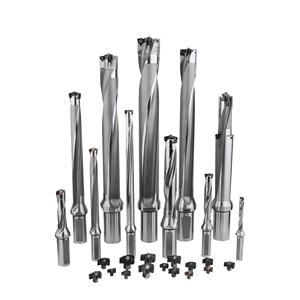
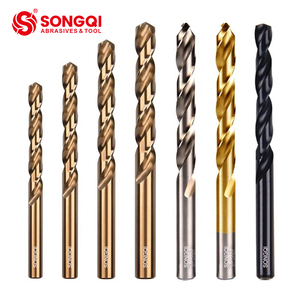
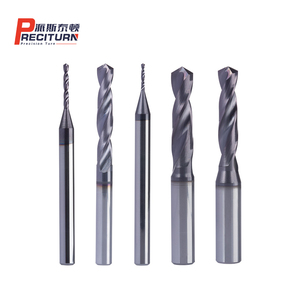
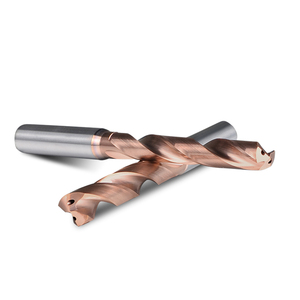
Greater Sydney has experienced an extraordinary industrial transformation. Driven by heavy investments in the Western Sydney Aerotropolis, expanding transport infrastructure (Transport for NSW rail and tunnel projects), defense sector machining, and high-precision civil engineering job shops in Wetherill Park, Smithfield, and Botany, the local precision metalworking ecosystem requires cutting tools capable of handling extreme thermal and mechanical stresses.
Modern CNC machine shops in Sydney are rapidly shifting away from conventional High-Speed Steel (HSS) tooling toward advanced solid tungsten carbide drills and indexable carbide toolholders. The driving factor is clear: material shifts toward tough-to-machine alloys like 316/316L stainless steel, Bisalloy wear plate, Ti-6Al-4V titanium, and carbon-fiber composite laminates (CFRP). Achieving operational efficiency, minimizing tool change downtime, and eliminating micro-delamination or thermal work-hardening requires micro-grain carbide substrates produced under stringent quality controls.
To establish competitive superiority in high-speed CNC metal cutting, Chinese manufacturing centers (primarily clustered in Zhuzhou and Changzhou) utilize state-of-the-art 5-axis Swiss Rollomatic and German Walter CNC grinding machines. Understanding the metallurgical composition and geometry options enables Sydney tool procurement officers to match the exact tool specification to their workpieces.
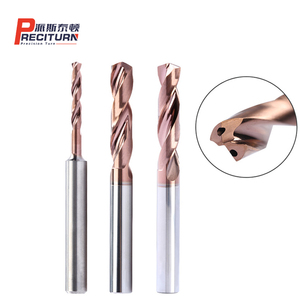
Our carbide drills utilize micrograin and nano-grain tungsten carbide (WC) bound with cobalt (Co) matrix ranging from 6% to 12%. Micrograin substrates (0.4μm - 0.6μm) yield high transverse rupture strength (TRS > 4,000 N/mm²) while maintaining an Rockwell hardness of HRA 92.5 to 94.0. This guarantees resistance against edge chipping under interrupted cutting conditions common in structural steel fabrications.
Heat resistance is paramount during dry or minimal quantity lubrication (MQL) drilling. Our tools feature physical vapor deposition (PVD) coatings such as AlTiN (Aluminum Titanium Nitride), TiSiN (Silicon Doped), and nACo nanocomposites. These multi-layer coatings withstand oxidation temperatures up to 1,100°C, lowering friction coefficients down to 0.35 and preventing edge-wear build-up (BUE).
| Drill Category | Standard Ratios | Coolant Channel Type | Chisel Edge Geometry | Target Sydney Machine Applications |
|---|---|---|---|---|
| Solid Carbide Jobber | 3XD, 5XD | External Flood Coolant | 140° Split Point (Self-Centering) | General Engineering, Aluminum 7075-T6, Mild Steel |
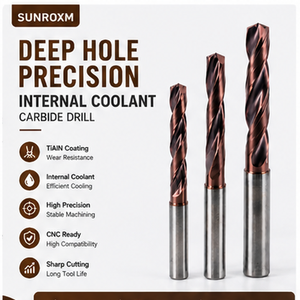
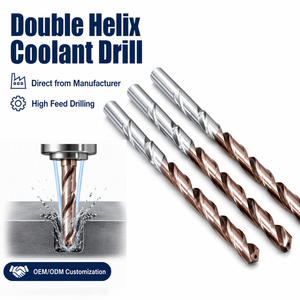
| Internal Coolant Through | 3XD, 5XD, 8XD | Dual Helical Internal Channels | S-Gash / Double Margin Flute | Stainless 316L, Inconel 718, Aerospace Structural Ribs |
| Deep-Hole Micro Carbide | 12XD, 20XD, 50XD | High-Pressure Through-Coolant | Parabolic Flute with Polished Web | Hydraulic Manifolds, Dies & Molds, Automotive Engine Blocks |
| Indexable & Mono Tip Line | 2XD to 6XD | Toolholder Internal Porting | Replaceable Carbide Inserts | Heavy Industry Plate Drilling, Structural Beam Processing |
Sydney's industrial base is distinct from heavy primary production regions in Western Australia or Queensland. Sydney focuses heavily on high-value secondary manufacturing, infrastructure servicing, aerospace component MRO, and defense technology. Below are real-world operational profiles where Chinese carbide drills deliver proven performance enhancements in Sydney job shops.
Machining aluminum alloys (2024, 7075) and titanium (Ti-6Al-4V) for airframe structures. Utilizing 2-flute coolant-through solid carbide drills with polished flutes prevents chip clogging, ensuring Delamination-free entrance and exit on stack materials.
Drilling high-tensile structural steel plates and hard Bisalloy 400/500 wear liners. Deploying M35 Cobalt 5% twist drills and Indexable Mono Tip toolholders allows operators to maintain high penetration rates while reducing tool breakages under high thrust loads.
Deep-hole drilling in valve blocks and hydraulic cylinders requiring 12XD to 50XD wear-resistant carbide bits. Dual internal coolant holes flush chips out effortlessly under 30 to 70 Bar pressure, maintaining IT7 hole tolerances without drift.
To maximize tool life and achieve superior surface finishes (Ra < 0.8μm), tooling engineers must balance surface cutting speed (Vc) with feed rate per revolution (f). The table below outlines field-tested baseline parameters for our solid carbide drill series.
| Workpiece Material | Material Hardness (HB) | Cutting Speed Vc (m/min) | Feed Rate f (mm/rev) [Ø8mm Drill] | Coolant Recommendation |
|---|---|---|---|---|
| Structural Steel (S275 / Grade 250) | 140 - 180 HB | 90 - 130 m/min | 0.18 - 0.26 mm/rev | Emulsion (6-8% Concentration) |
| Austenitic Stainless (316 / 316L) | 180 - 230 HB | 45 - 70 m/min | 0.10 - 0.16 mm/rev | Internal Coolant (Min. 20 Bar) |
| High-Temp Alloy (Inconel 718) | 300 - 400 HB | 20 - 35 m/min | 0.06 - 0.10 mm/rev | High-Pressure Neat Oil / Water Soluble |
| Aircraft Grade Aluminum (7075-T6) | 120 - 150 HB | 160 - 280 m/min | 0.22 - 0.35 mm/rev | Air Mist / MQL or Emulsion |
| Bisalloy 500 Wear Plate | 470 - 540 HB | 30 - 45 m/min | 0.08 - 0.12 mm/rev | High-Pressure Internal Coolant |
Navigating international supply chains requires a reliable manufacturing partner capable of maintaining strict batch consistency, fast turnaround times, and direct logistics pathways to Sydney's primary freight channels (Port Botany & Sydney Kingsford Smith Airport).
Partner directly with a leading China carbide drill manufacturer. Reduce consumable costs, elevate hole tolerance precision, and secure dependable tooling delivery to your Sydney workshop.
Send an Inquiry