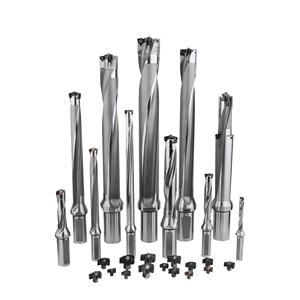
Fengyi Customized CNC Solid Carbide Indexable Drill & Mono-Tip Toolholders
- Substrate: Ultra-Fine Micrograin Carbide
- Shank Style: Weldon & Cylindrical DIN 6535 HE
- Application: Deep Hole CNC Boring & Steel Machining

Engineered to rigid ISO 9001, DIN 6535/6537, and NAS 965 aerospace standards. Fully certified for immediate dispatch to Barcelona Industrial Parks, Zona Franca, Martorell, and Vallès Occidental manufacturing clusters.
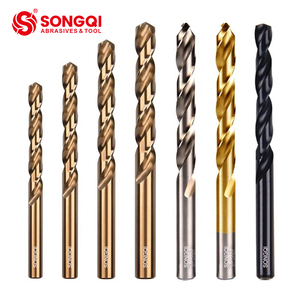
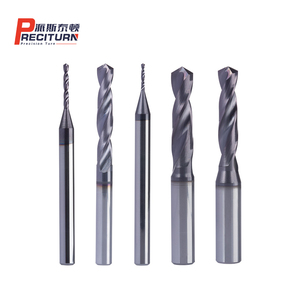
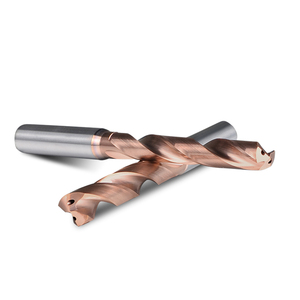
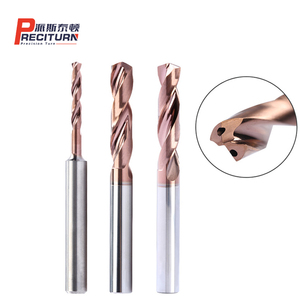
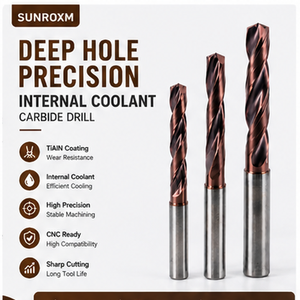
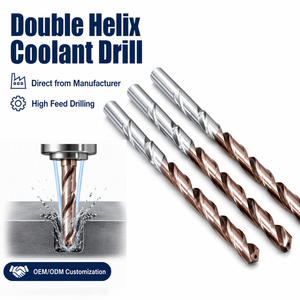
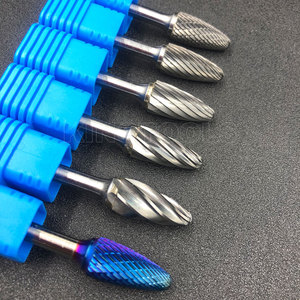
An in-depth metallurgical and kinematic analysis of high-speed steel and solid tungsten carbide jobber twist drills designed for severe-duty industrial applications.
For industrial buyers and machine shops operating in Barcelona’s competitive metalworking sectors, selecting the optimum cutting tool substrate dictates both tool life and piece-part cost. Standard High-Speed Steel (HSS) frequently fails when machining tough materials such as AISI 316L stainless steel, Ti-6Al-4V, or heat-treated alloy steels due to thermal softening at the cutting edge.
Our HSS M35 Cobalt (5% Co) and M42 Cobalt (8% Co) jobber drills undergo specialized vacuum heat treatment to achieve hardness levels of 66–68 HRC. The inclusion of cobalt elevates the red-hardness boundary, allowing cutting edge integrity to persist at temperatures exceeding 600°C. For extreme production volumes on CNC machining centers, our solid micrograin tungsten carbide drills utilize a 0.6µm grain size matrix bound with 10% Cobalt, delivering flexural strength (TRS) over 4,000 MPa and hardness up to 92 HRA.
Work-hardening alloys common in aerospace MRO (such as Inconel 718 and 17-4PH Stainless) require constant, positive chip loads. Cobalt-alloyed jobber twist drills resist plastic deformation along the primary cutting margin, eliminating edge breakdown that leads to rapid work-hardening of the workpiece sub-surface.
Traditional 118° chisel point drills require significant axial thrust and exhibit a tendency to "walk" across curved or sloped sheet metal surfaces before engaging. Our jobber drills feature a precision CNC-ground 135° Self-Centering Split Point compliant with NAS 907 Type J specifications.
The 135° split point thin-chisel edge reduces thrust force requirements by up to 40% compared to standard point configurations. This design generates compact, tightly curled chips that are rapidly evacuated via parabolic 30° spiral flutes. Furthermore, dual-margin designs (as featured in our double margin and DIN 6537 jobber series) provide secondary guidance along the hole wall, maintaining cylindrical roundness within IT7 tolerances and eliminating secondary reaming passes in sheet metal and aerospace structures.
Barcelona and the broader Catalonia region represent a major European power center for advanced manufacturing. Our jobber drills are specifically tailored to solve machining challenges encountered across local industrial clusters.
The aerospace supply chain surrounding Josep Tarradellas Barcelona-El Prat Airport and Sabadell airfield demands strict compliance with aerospace standards. Maintenance, Repair, and Overhaul (MRO) technicians working on commercial airframes frequently drill mixed-material stacks consisting of CFRP (Carbon Fiber Reinforced Polymer) and Titanium (Ti-6Al-4V) or aluminium alloy 7075-T6.
Recommended Solution: Our NAS 965 Type D Threaded Shank Drills and Solid Carbide Dagger / Brad-Point Drills prevent composite delamination upon exit while maintaining hole tolerances for flush-head rivet and Hi-Lok® fastener installation.
Barcelona’s automotive belt in Martorell and the revitalized Zona Franca industrial zone requires high-throughput cutting tools for automated CNC transfer lines producing engine blocks, electric powertrain housings, and suspension components.
Recommended Solution: DIN 6537 5XD and 8XD Solid Carbide Internal Coolant Jobber Drills. Their extreme wear resistance allows continuous high-feed drilling in ductile cast iron (GJS) and die-cast aluminium alloys with zero unscheduled tool changes.
Machine shops across Terrassa, Sabadell, and Rubí specialize in high-precision hydraulic valves, medical implants, and custom packaging equipment. Precision hole concentricity, tight diameter tolerances (h6/h7), and micro-burr elimination are paramount.
Recommended Solution: 2mm to 10mm Solid Tungsten Carbide jobber drills featuring mirror-polished flutes and micro-chamfered cutting edges, delivering mirror surface finishes (Ra < 0.4 µm) in surgical stainless steel 316L.
Shipyard repair facilities and naval engineering firms operating within Port de Barcelona handle heavy structural fabrication using marine-grade duplex stainless steels and thick-walled structural steel plates (S355JR).
Recommended Solution: Industrial-Grade German HSS M35 Cobalt 5% parallel shank jobber twist drills designed to withstand heavy vibration, high torque load, and manual pneumatic drilling setups without brittle fracture.
As Catalan industries transition toward smart manufacturing and decarbonization, cutting tool specifications are shifting toward higher efficiency, automation readiness, and sustainable usage patterns.
Barcelona manufacturing plants are aggressively moving away from flood coolants to comply with strict EU environmental directives. Modern jobber drills must incorporate internal micro-coolant channels optimized for MQL (air-oil mist) at pressures up to 100 psi, reducing thermal friction without generating liquid waste.
Machining shops in Catalonia are increasingly specifying AlTiN, TiAlSiN, and Diamond-Like Carbon (DLC) coatings over standard TiN. These advanced coatings enable dry machining of abrasive composites and aluminum-silicon alloys, doubling tool life expectations.
To reduce cycle times on complex CNC machining centers, local production engineers prefer combination tool geometries—such as drill-reamers and double-margin jobber drills—that achieve final sizing and countersinking in a single spindle stroke.
Reference guide for machine shop superintendents and CNC programmers in Barcelona for selecting the ideal jobber drill based on workpiece material properties.
| Workpiece Material | Recommended Substrate | Point Geometry | Coating / Surface | Cutting Speed (Vc) | Feed Rate (f) |
|---|---|---|---|---|---|
| Aluminium 2024 / 7075-T6 | Solid Carbide or HSS-E | 118° / 135° Fast Helix (35°) | Bright Polished / DLC | 120 – 250 m/min | 0.08 – 0.25 mm/rev |
| Stainless Steel 304 / 316L | M35 / M42 8% Cobalt | 135° NAS 907 Split Point | TiAlN / Amber Oxide | 20 – 35 m/min | 0.04 – 0.12 mm/rev |
| Titanium Alloy (Ti-6Al-4V) | Micrograin Solid Carbide | 135° Heavy-Duty Web Thinning | AlTiN Nano-Coat | 35 – 55 m/min | 0.03 – 0.08 mm/rev |
| Inconel 718 / Rene 41 | M42 Cobalt or Carbide | 135° Split Point, Parabolic Flute | TiAlSiN High-Heat PVD | 12 – 22 m/min | 0.02 – 0.06 mm/rev |
| CFRP / Composite Panels | Ultra-Fine Solid Carbide | Brad Point / 4-Facet Dagger | CVD Diamond / Diamond-Like | 150 – 300 m/min | 0.05 – 0.15 mm/rev |
| Cast Iron (GG25 / GGG50) | Solid Carbide DIN 6537 | 140° Double Margin Point | TiAlN Coated | 80 – 140 m/min | 0.12 – 0.35 mm/rev |
Combining world-class tooling manufacturing, strict quality verification, and streamlined export logistics to support Catalonia’s precision industries.
Over 35 years of engineering heritage supplying precision cutting tools, aircraft drills, and pneumatic tooling to global aerospace primes, commercial airlines, and defense depots under US CAGE Code 0PFP1.
We maintain an inventory exceeding 5,000 standard tooling line items in wire gauge, letter, fractional, and metric diameters, with capacity for custom geometry grinding within 5 to 7 business days.
Complete export handling including EUR.1 certificates, customs documentation, DDP/DAP terms directly to El Prat Logistics Hub or Port de Barcelona, ensuring zero customs delays or hidden fees.
Clear answers regarding technical compliance, minimum order quantities, delivery timelines, and tool customization for industrial buyers in Spain.
Connect directly with our engineering sales specialists to receive complete wholesale pricing, bulk export discounts, and technical recommendations tailored to your Barcelona production facility.
Send an Inquiry