
Direct-factory export of solid carbide, M35 cobalt, and indexable CNC drill systems manufactured to strict DIN standards for automotive, aerospace, and heavy machinery machining operations across Germany.
Germany’s industrial reputation is anchored by rigorous manufacturing specifications, uncompromising quality controls, and pioneering developments in Industry 4.0 automation. From the automotive powerhouses in Baden-Württemberg and Bavaria to the aerospace maintenance and manufacturing clusters in Hamburg and Bremen, German machining operations demand cutting tools engineered for extreme thermal stability, dimensional accuracy, and repeatable cycle endurance.
As an experienced insert bits supplier and exporter serving Germany, our company bridges the gap between high-volume, cost-efficient manufacturing and the uncompromising standards governed by Deutsches Institut für Normung (DIN) and International Aerospace Quality Group (IAQG) standards. Precision tooling—specifically solid carbide drills, M35 cobalt twist drills, indexable insert bit systems, and specialty fasteners—forms the critical foundation of modern automated machining cell performance.
In high-speed CNC environments milling high-alloy stainless steels (such as 1.4301 / AISI 304 and 1.4404 / 316L), titanium alloys (Ti-6Al-4V), and heat-resistant superalloys (Inconel 718), standard tooling fails rapidly due to thermal micro-cracking and work-hardening. Our engineered tungsten carbide matrices (utilizing 0.4µm–0.6µm ultra-fine micrograin structures with 10–12% Cobalt binder ratios) deliver unmatched wear resistance, enabling tool crib managers and manufacturing engineers across Germany to minimize machine downtime and lower total cost per hole.
To provide actionable engineering insights for tooling buyers and plant managers, the following reference guide details recommended cutting parameters, tool geometries, and coating specifications optimized for standard German workpiece materials (Werkstoff Numbers).
| German Material Grade | Common Industry Application | Recommended Insert / Bit Substrate | Optimal PVD / CVD Coating | Point Geometry / DIN Standard | Coolant / Feed Strategy |
|---|---|---|---|---|---|
| 1.4301 / 1.4404 (X5CrNi18-10 / Stainless) |
Automotive Fluid Lines, Medical Tech, Chemical Pumps | M35 (5% Co) HSS or Micrograin Solid Carbide | TiAlN / AlCrN Physical Vapor Deposition | 135° Split Point (DIN 1412 Form C) |
High-pressure internal coolant through hole; continuous feed. |
| 1.7225 (42CrMo4 / Structural Steel) |
Drive Shafts, Heavy Gearbox Components, Wind Turbines | Indexable Solid Carbide Insert (3XD to 12XD) | TiAlSiN Nano-Structure Coating | DIN 6535 HA/HE Shank / DIN 6537 Short & Long | Dry machining with air blast or soluble emulsion 8–10%. |
| 3.7164 / 3.7165 (Ti-6Al-4V Grade 5 Aerospace) |
Aerostructures, Airbus Component Sub-assemblies | Ultra-fine Carbide (0.4µm grain size) | Uncoated / AlTiN Micro-Layered | Dagger Point / Double Margin Pilot Geometry | Flood coolant; avoid dwell time to prevent immediate work-hardening. |
| CFRP / Aluminium Stacks (Carbon Fiber / 7075-T6) |
Commercial Aircraft Fuselage, High-End Automotive Bodies | Diamond Coated / Solid Carbide Brad Point | CVD Diamond / DLC (Diamond-Like Carbon) | Brad Point entry; 120° chamfer exit edge | Vacuum dust collection; light feed on entry/exit to prevent delamination. |
| Hardened Tool Steels (> 55 HRC / 1.2379 D2) |
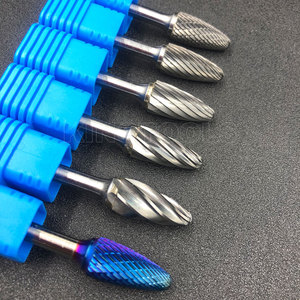
Die & Mold Manufacturing, Punching Tools | Tungsten Carbide Burr & End Mill Line | AlCrTiN Super-Hard Coating (>3600 HV) | Negative Rake Flute Angle with reinforced core | MQL (Minimum Quantity Lubrication) or high-velocity air blast. |
Backed by almost four decades of tool engineering heritage, our global supply infrastructure complies strictly with the demanding procurement requirements of European tier-1 aerospace and automotive suppliers.
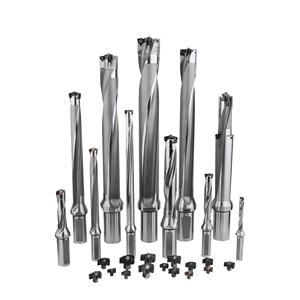
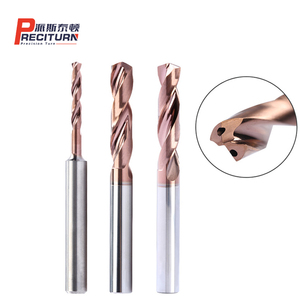
All solid carbide drills, indexable toolholders, and insert bits are ground on state-of-the-art 5-axis CNC grinding machines (Anca, Rollomatic) to exact DIN 6535 shank tolerances (h6 fits) and DIN 6537 drilling depth parameters (3XD, 5XD, 8XD, 12XD, up to 50XD deep-hole series).
Engineered insert bits including Phillips ACR, Torx®, Torx Plus®, Torq-Set®, and Tri-Wing® configurations. Designed with Ribbed Anti-Cam-Out features that prevent fastener strip-out during high-speed automated assembly on German assembly lines.
Fully authorized international aerospace and military hardware exporter. Complete traceability, certificates of conformance (CoC), material test reports (MTR), and compliance with EU REACH and RoHS environmental standards for all shipments into Hamburg, Frankfurt, and Munich hubs.
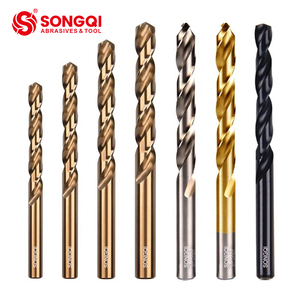
In cities like Stuttgart, Munich, Nuremberg, and Mannheim, automotive OEMs and tier-1 drivetrain manufacturers require high-speed production tooling capable of maintaining tight tolerances across millions of cycles. Our indexable drill toolholders and M35 cobalt twist drills excel in drilling engine blocks, transmission gears, and electric vehicle chassis components where tool failure leads to costly line stoppages.
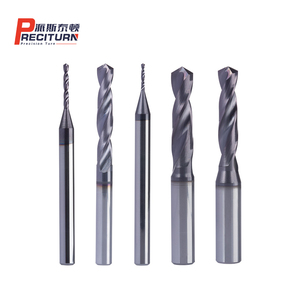
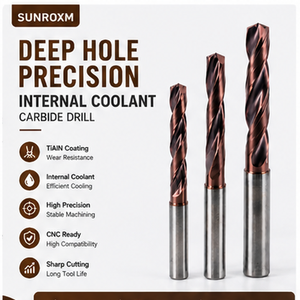
By utilizing custom 2mm-10mm solid carbide bits with internal coolant channels, operators increase surface cutting speeds (Vc) up to 140 m/min while extending tool life by 35% compared to standard uncoated HSS tooling.
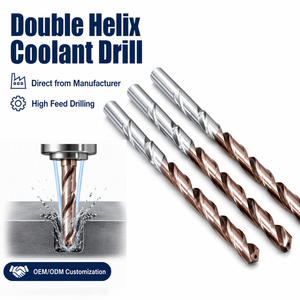
The aerospace cluster in Hamburg and Bremen relies heavily on specialized cutting and drilling tools for titanium skin panels, carbon-fiber composite structures, and structural wing spars. Our double-margin drills, NAS 965 threaded shank adapter drills, and microstop countersink cages deliver delamination-free holes for flush-head rivet and Hi-Lok® fastener installation.
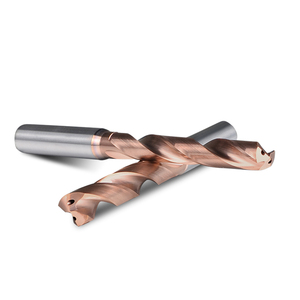
The double-margin geometry provides secondary guidance inside the drilled hole, maintaining circularity within 0.005mm and frequently eliminating the need for a secondary reaming pass in aircraft structural assembly.
Modern German CNC machining centers (such as DMG Mori, Hermle, Chiron, and Trumpf) operate at extremely high spindle speeds and feed rates. To maximize the performance of these multi-axis centers, tooling technology must adapt at the microscopic level.
Traditional carbide tools used micrograin sizes around 1.0µm to 1.5µm. Our current export line serving Germany utilizes ultra-fine sub-micron tungsten carbide (0.4µm–0.6µm). This dense grain structure drastically increases transverse rupture strength (TRS > 4000 N/mm²), allowing tools to absorb high shock loads during interrupted cuts in tough forged steel without chipping.
While TiAlN remains an industry standard for general steel processing, modern dry-machining and high-speed milling operations generate cutting-zone temperatures exceeding 900°C. Under these extreme conditions, Aluminum Chromium Nitride (AlCrN) coatings form a passive oxide surface layer (Al2O3/Cr2O3) that resists thermal degradation up to 1100°C. This micro-hardness (approx. 3200 to 3600 HV) dramatically reduces crater wear and thermal oxidation, making it the preferred choice for German precision shops running minimum quantity lubrication (MQL).
Connect directly with our engineering sales specialists. Get real-time technical consultation, custom tooling quotations, and immediate stock verification for direct export to your facility in Germany.
Inquire Now