
High-grade aerospace solid carbide drills, NAS 965 threaded shank tools, cobalt M35/M42 cutters, and temporary sheet fasteners engineered for global Tier-1 MRO and aerostructure assembly lines.
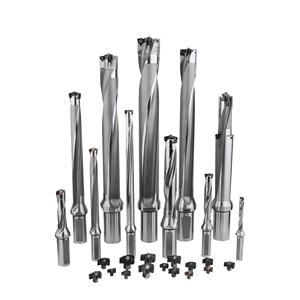
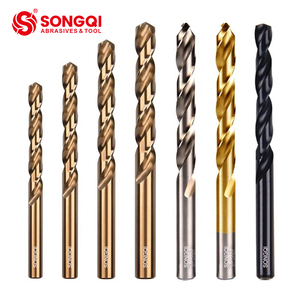
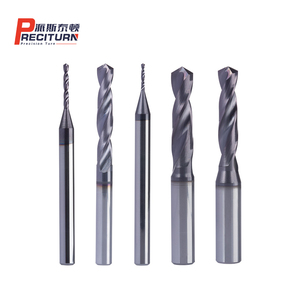
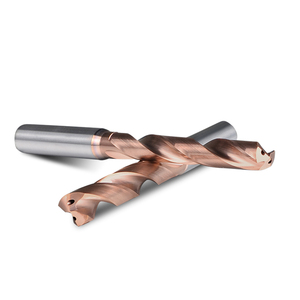
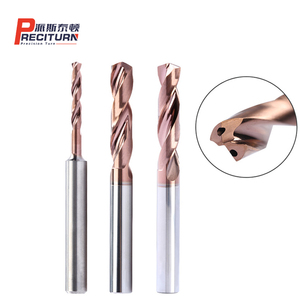
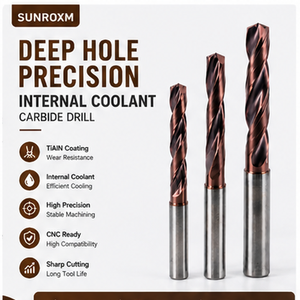
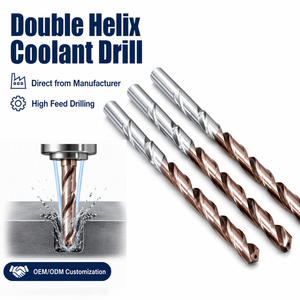
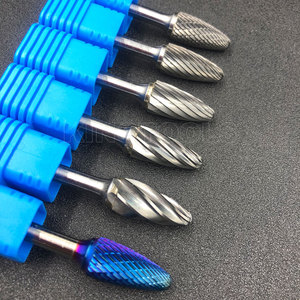
In the high-stakes domain of aerospace manufacturing, maintenance, repair, and overhaul (MRO), structural integrity begins at the fastener level. Temporary sheet metal fasteners—famously standardized under the Cleco system—alongside precision-ground drilling equipment, represent the primary mechanical backbone for aligning, holding, and finishing thin-gauge aircraft skins, spar caps, wing ribs, and composite multi-layer structures prior to final riveting or Hi-Lok® pin installation.
As a leading sheet fasteners exporter & exporters network, maintaining absolute quality control across international supply chains requires a deep understanding of metallurgy, micro-geometry tolerances, and dynamic shear physics. Whether assembling 2024-T3 aluminium alloys, Ti-6Al-4V titanium structures, or multi-directional Carbon Fiber Reinforced Polymer (CFRP) stacks, a minor discrepancy in sheet clamp pressure or drill point concentricity can induce inter-laminar delamination, hole ovality, or galvanic corrosion initiation sites.
Information Gain Insight: The efficacy of a sheet metal temporary fastener system relies on consistent spring tension or torque-controlled draw-up force. Standard plier-operated Cleco fasteners deliver between 10 to 55 lbs of clamping force, whereas power-driven cylindrical hex nut Cleco series provide up to 300+ lbs of holding force, crucial for preventing interlaminar burr formation during dry hole drilling operations.
During aerostructure assembly, sheets must be temporarily joined with zero gap tolerance. If micro-gapping occurs between aluminum or composite sheets during the drilling cycle, metal chips (swarf) migrate between layers, creating burrs that require labor-intensive manual deburring disassembly. The process flow recommended by top aerospace tooling engineers incorporates:
When sourcing precision aerospace tooling and sheet metal fasteners globally, structural defense contractors and MRO facilities cannot afford supply chain disruptions or non-compliant metallurgical lots. Our partner infrastructure operates under strict quality guidelines backed by nearly four decades of documented aerospace engineering leadership.
Established in 1986, carrying an expansive legacy of supplying commercial airlines, defense depots, and OEM aerostructure manufacturers across 60+ countries.
Formally registered with CAGE Code 0PFP1, facilitating direct military depot fulfillment, ITAR-compliant international shipping, and contract traceability.
Over 5,000 distinct aerospace SKU line items kept in stock—including fractional, wire gauge, letter, and metric dimensions to eliminate aircraft-on-ground (AOG) delays.
Engineered pneumatic tools featuring modular 45°, 90°, and 360° angle drives designed for tight-access wing ribs and cramped fuselage frames.
Manufactured to exact National Aerospace Standards including NAS 965 Type D, NAS 907 Type J, NAS 937, and MIL-D-5493 specifications.
Seamless export processing from Florida hub with full Material Test Reports (MTRs), Certificate of Conformance (CoC), and custom harmonized tariff coding.
Achieving optimal hole quality requires precise alignment between the target material properties, drilling geometry, and temporary sheet fastening strategy. The following engineering matrix details operational parameters optimized for high-volume aerospace manufacturing and maintenance applications.
| Target Substrate | Recommended Tooling Family | Point Geometry & Coating | Clamping & Fastener Strategy | Critical Operational Notes |
|---|---|---|---|---|
| Aluminium 2024 / 7075 Skins | M35/M42 Cobalt Jobber Drills, Double Margin Drills | 118° to 135° Split Point, Bright / TiN Finish | Standard Plier Cleco (K Series) or Heavy-Duty Spring Clamps | High RPM, steady feed pressure. Double margin flutes eliminate secondary reaming passes. |
| Titanium Ti-6Al-4V | Solid Micro-Grain Carbide, M42 Cobalt (8% Co) | 135° Heavy-Duty Split Point, TiAlN Coated | Hex-Nut Power Clecos (Threaded Draw-Up, 200+ lbs Force) | Low surface speed (SFM), continuous high feed. Never allow tool to dwell to prevent work-hardening. |
| CFRP / Carbon Fiber Panels | Solid Carbide Brad Point & Dagger Drills | Brad Point / Dagger Tip, Diamond-Like Carbon (DLC) | Wing-Nut or Speed-Nut Cushion Clecos (Prevents Delamination) | High speed, low feed. Shearing outer fiber layers prior to center penetration avoids entry peel-up. |
| CFRP / Titanium Stack-Ups | Internal Coolant Solid Carbide Dagger/Reamer Drills | Multi-Step Dagger Point, AlTiN / Nano-Composite Coating | High-Torque Pneumatic Cleco Clamps (300+ lbs Force) | Requires internal coolant or mist to purge abrasive carbon dust and cool titanium thermal build-up. |
| Inconel 718 & Stainless Steel | Solid Carbide Coolant-Through 2-Flute Twist Drills | 140° Self-Centering Point, TiAlN Coated | Heavy Duty Mechanical Screw Clamps | Rigid setup mandatory. High torque at reduced spindle speed ensures prolonged edge longevity. |
As next-generation commercial aircraft structures shift heavily toward hybrid composite-metallic airframes and automated assembly lines, procurement managers must adapt to rapidly evolving tooling requirements. Global exporters are actively innovating across several technological vectors:
Traditional hand-plier Cleco installation is increasingly supplemented by automated end-effectors on 6-axis robotic arms. Robotic temporary sheet fasteners require tight dimensional shank tolerances and magnetic/pneumatic pickup collars to enable rapid pick-and-place operation on automated skin-fitting jigs. Exporters offering robot-compatible temporary fasteners are gaining significant market share in Tier-1 aerostructure assembly plants.
With aircraft like the Boeing 787 and Airbus A350 utilizing over 50% composite materials by weight, uncoated high-speed steel tools have become obsolete for skin drilling. Procurement trends show a massive migration toward Chemical Vapor Deposition (CVD) diamond-coated solid carbide drills and Polycrystalline Diamond (PCD) tipped countersinks, which extend tool life by up to 500% when cutting abrasive carbon fibers.
Environmental, Social, and Governance (ESG) mandates are driving aerospace OEMs to demand closed-loop tool recycling and regrinding programs. Micro-grain tungsten carbide tools feature laser-etched matrix barcodes, enabling computerized tool crib systems to track regrind cycles, total meters drilled, and heat-lot traceability back to the tungsten powder batch.
To reduce production takt times, aircraft manufacturers are abandoning separate drill-then-ream sequences. Advanced double-margin step drills and custom combination countersinks prepare hole diameters within H7 tolerances and complete flush countersinking in a single spindle stroke, drastically lowering total cost per hole (TCPH).
Below are critical technical questions addressed by our engineering team to assist international buyers, tool crib directors, and MRO procurement specialists.
Get instant access to our comprehensive 5,000+ SKU aerospace tool catalog, engineering tolerances, and direct B2B exporter pricing for high-volume structural fasteners and solid carbide drills.
Get Catalog