
Explore our top-tier export lineup of CNC solid carbide bits, cobalt twist drills, indexable toolholders, and internal coolant deep-hole drilling systems manufactured to ISO 9001 and NAS aerospace standards.
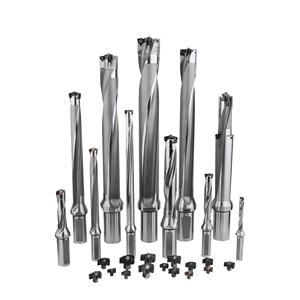
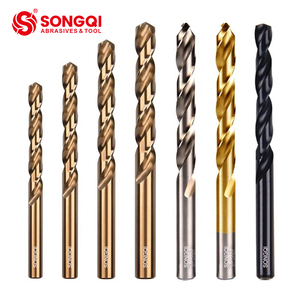
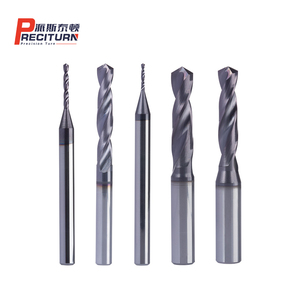
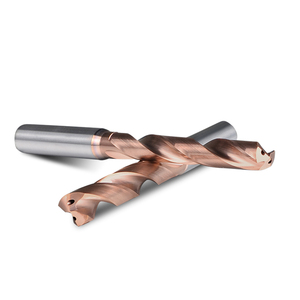
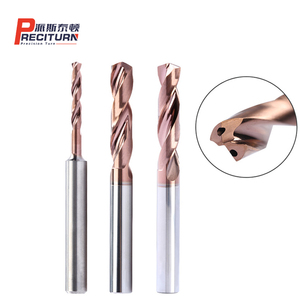
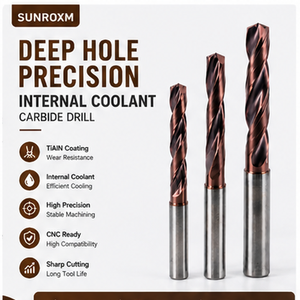
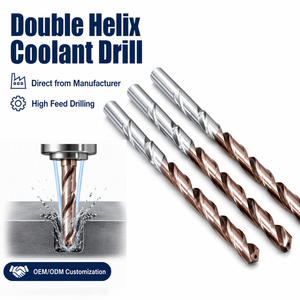
Leveraging over two decades of metallurgical expertise, state-of-the-art 5-axis CNC grinding centers, and rigorous NAS 965 aerospace quality controls.
Our threaded shank adapter drills are precision-ground with 1/4-28 UNF threads, strictly matching National Aerospace Standards (NAS 965 Type D). Fully interchangeable with microstop countersink cages and right-angle pneumatic drill motors.
We source virgin 0.4µm–0.6µm micro-grain carbide rod stock featuring 10%–12% Cobalt matrices, achieving hardness levels up to HRA 93.5 for extraordinary thermal resistance when machining Titanium Ti-6Al-4V and Inconel alloys.
Equipped with Swiss and German PVD coating technology, offering AlTiN, TiAlN, nACo, and Diamond-Like Carbon (DLC) coatings designed to reduce friction coefficients below 0.15 and withstand oxidation temperatures exceeding 1100°C.
Utilizing high-precision Walter Helitronic and Rollomatic 5-axis CNC grinding machines coupled with Zoller Genius 3 inspection stations to guarantee flute profile symmetry, radial margin concentricity, and point geometry balance.
From custom 3XD–50XD internal coolant drill bit geometries to modified double margin drills, our application engineering team delivers bespoke tooling prototypes within 7 to 10 business days based on customer CAD/CAM specs.
Serving aerospace contractors, automotive Tier-1 suppliers, and CNC machining operations across 65+ countries. Full export compliance, international protective packaging, and standardized batch inspection reports included.
Optimize tool life, hole circularity, and chip evacuation by matching drilling tool geometries to specific workpiece alloys.
| Workpiece Alloy Class | Recommended Tool Substrate | Optimized Point Geometry | Coating Architecture | Coolant Channel Type | Target Hole Finish (Ra) |
|---|---|---|---|---|---|
| Titanium Alloys (Ti-6Al-4V) | Micro-grain Carbide (10% Co) / M42 Cobalt | 135° Split Point / Double Margin | TiAlN / AlTiN Nano-PVD | Internal Coolant (20+ Bar) | Ra 0.4 – 0.8 µm |
| Inconel 718 & Hastelloy | Ultra-fine Carbide (12% Co) | 140° Heavy-Duty Web Centering | nACo Silicon-based Nanocomposite | High-Pressure Dual Coolant | Ra 0.6 – 1.0 µm |
| Aerospace Al 7075-T6 / 2024 | Solid Tungsten Carbide / M35 HSS | 118° - 130° Polished Flute | Uncoated / DLC (Diamond-Like) | External Mist / Internal MQL | Ra 0.2 – 0.4 µm |
| Stainless Steel (316L / 17-4PH) | M35 5% Cobalt HSS / Solid Carbide | 135° Self-Centering Split Point | TiSiN / TiAlN Multi-layer | Internal Through-Coolant | Ra 0.4 – 0.8 µm |
| CFRP / Composite Stacks | Diamond Coated Solid Carbide | Brad Point / Dagger Geometry | CVD Diamond (10,000 HV) | Dry Vacuum / Air Blast | Delamination-Free |
The global metal cutting tool market is undergoing a seismic shift driven by automation, composite structural materials, and elevated expectations for supply chain resilience. Procurement executives across aerospace, defense, and high-precision CNC manufacturing are moving beyond initial purchase price considerations to evaluate total cost of ownership (TCO), tool longevity per regrind cycle, and vendor technical integration capabilities.
High-end manufacturing facilities are increasingly bypassing traditional multi-tier distribution networks in favor of direct strategic partnerships with top China tooling factories. Direct engagement enables custom shank tolerances (e.g., custom NAS 965 adapter lengths), direct batch traceability, and joint engineering of specialized flute profiles. Factory-direct procurement guarantees real-time engineering feedback and eliminates margin markups imposed by regional intermediaries.
Environmental compliance mandates and high-speed CNC requirements are driving rapid adoption of Minimum Quantity Lubrication (MQL) and ultra-high-pressure internal coolant channels. Dual helical coolant holes within solid carbide drills dramatically lower cutting zone temperatures during deep-hole operations (up to 50XD), extending drill life by up to 240% compared to conventional flood cooling while preventing chip packing in stainless steel and titanium alloys.
As structural alloys become harder and composite-metal hybrid stacks (such as CFRP-Titanium layers) become commonplace in aerostructure design, tool manufacturers must continuously innovate in substrate chemistry, edge prep micro-geometry, and surface coating architectures.
Traditional hole-making workflows required a sequence of center drilling, twist drilling, and subsequent chucking reamer operations to achieve ISO H7 hole tolerances. Modern double margin and triple margin solid carbide drills feature primary and secondary guide lands on each land. The secondary margin contacts the hole wall behind the primary cutting lip, burnishing the surface finish (achieving Ra < 0.4 µm) and eliminating axis deflection. In high-volume aerospace riveting and Hi-Lok installation processes, double margin threaded shank drills completely remove the need for a separate reaming pass, cutting cycle times by up to 50%.
Conventional monolayer TiAlN coatings degrade rapidly when cut temperatures cross 800°C due to phase transformation and oxidation. Next-generation nACo (nanocrystalline AlTiN embedded in an amorphous Si3N4 matrix) and TiSiN coatings create a self-healing silicon oxide boundary layer when exposed to heat. This layer blocks oxygen diffusion into the carbide substrate, allowing CNC machine operators to run elevated cutting speeds (Vc exceeding 150 m/min in stainless steel) without edge chipping or crater wear.
Our state-of-the-art manufacturing plant in China operates as a vertical integration center for high-performance rotary cutting tools. Every production batch of threaded drills, jobber bits, and countersinks undergoes systematic quality verification protocols:
Before grinding, all raw carbide and cobalt rods undergo ultrasonic flaw detection and metallographic analysis. We verify grain size uniformity, cobalt binder distribution, and density to prevent micro-void failures under heavy torsional loads.
Using non-contact Zoller optical measuring equipment, we inspect 100% of aerospace-bound threaded shank drills for runout concentricity (< 0.002 mm), thread pitch accuracy (1/4-28 UNF-2A), and point angle symmetry before coating application.
Detailed technical answers to common questions asked by tooling engineers, procurement managers, and machine shop superintendents.
NAS 965 (National Aerospace Standard) Type D specifies threaded shank adapter drills designed primarily for tight-clearance aerospace structural work using right-angle drill motors and microstop countersink cages. Type D tools feature a 1/4-28 UNF-2A thread on the shank end, a keyway/hex flat for positive tool holder engagement, and standardized overall length classifications (Very Stubby, Stubby, Short, Long, and Extra Long). This standard guarantees complete interchangeability across international airframe maintenance operations and tool crib inventories.
Specify M35 (5% Cobalt) or M42 (8% Cobalt) HSS when drilling under non-rigid setups, hand-held pneumatic drilling, stacked skin sheet metal repairs, or on machines with minor spindle vibration. Cobalt provides high toughness and flexural strength, preventing tool breakage under lateral deflection. Specify Solid Tungsten Carbide for rigid CNC machining centers, high-speed automated drilling lines, abrasive materials (such as high-silicon aluminum or CFRP), and deep-hole internal coolant applications where high hardness (HRA 92+) and superior wear resistance are critical for dimensional control.
Internal coolant hole twist drills deliver pressurized cutting fluid (typically 15 to 70 bar) directly to the drill cutting lips. This serves three vital functions: first, it rapidly flushes chips out of the flute profile, eliminating the need for peck-drilling cycles; second, it cools the cutting edge instantly, preventing heat-induced work hardening in materials like Inconel and 316L stainless steel; third, it lubricates the margin lands, resulting in superior surface finish and significantly extended tool life during deep hole processing up to 50 times the drill diameter.
A double margin drill incorporates four guidance lands (two primary lands behind the cutting lip and two secondary trailing lands on the outer flute profile). These four contact points stabilize the drill body within the hole, counteracting radial forces that cause hole bell-mousing or ovality. The secondary margins act as burnishing elements, polishing the internal hole wall to an Ra 0.4 µm finish while maintaining tight diameter tolerances (H7/H8), allowing engineers to bypass separate reaming operations in structural rivet assemblies.
Yes. As a direct manufacturer and exporter, we provide comprehensive OEM/ODM custom tooling services. We can produce custom step drills, pilot countersinks, special shank thread pitches (e.g., 10-32 UNF, 1/4-28 UNF, M6, M8), non-standard helix angles, and tailored PVD coating layers (AlTiN, TiAlN, nACo, DLC, or diamond coating). Simply supply your engineering blueprint or work sample, and our technical team will deliver a comprehensive proposal and production sample.
Standard catalog items are dispatched within 3 to 5 business days. Custom CNC tooling or OEM production orders typically require 10 to 15 business days depending on quantity and coating requirements. Every shipment includes a Certificate of Analysis (COA), material test report, and optical inspection record for runout, pitch, and coating thickness compliance.
Connect directly with our engineering sales director to discuss custom shank tolerances, bulk order pricing discounts, and technical recommendations for your specific CNC or aerospace machining project.
Get a Quote