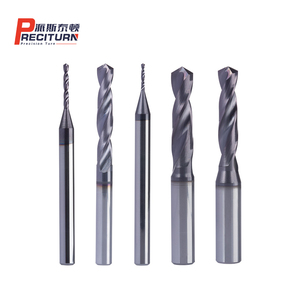
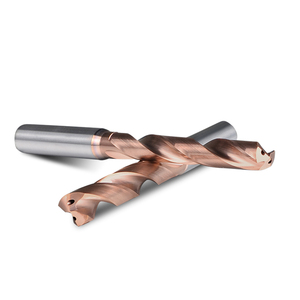
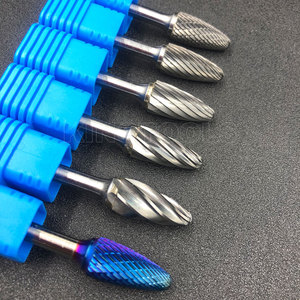
Explore our premium product line manufactured with sub-micron tungsten carbide and M35/M42 cobalt HSS. Designed for extreme wear resistance, thermal stability, and vibration-free hole preparation.
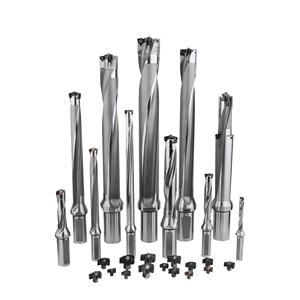
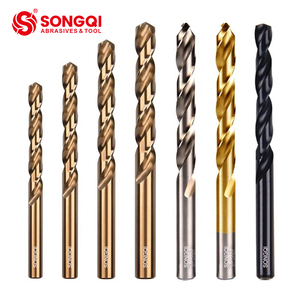
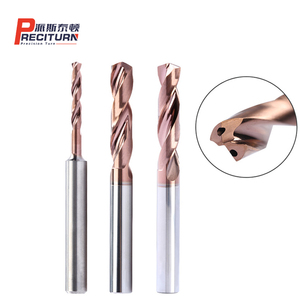
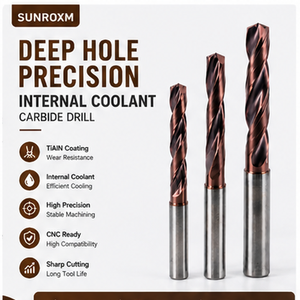
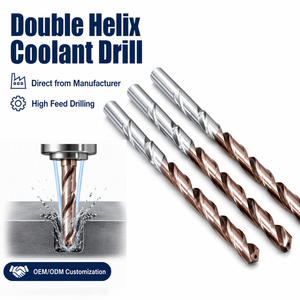
Engineered precisely to international aerospace benchmarks including NAS 965 Type D, NAS 907 Type J, and NAS 937. Fully compatible with standard microstop depth-control countersink cages and high-speed CNC centers.
We source micro-grain tungsten carbide and premium European M35/M42 5%–8% Cobalt HSS. Enhanced with physical vapor deposition (PVD) TiAlN, AlTiN, or Diamond-Like Carbon (DLC) coatings for extended cutter life.
From non-standard integral pilot diameters and custom countersink included angles (82°, 100°, 120°, 130°) to specialized multi-flute chatterless geometries, we customize cutting tools strictly tailored to your engineering prints.
In modern high-precision manufacturing—spanning commercial aircraft assembly, defense aerostructures, high-speed rail, and precision automotive powertrains—the structural integrity of mechanical joints depends heavily on fastener flushness and hole geometry. Countersinking is not merely a deburring or chamfering process; it is an exact metallurgical and geometrical machining operation. As a leading manufacturer and exporter of pilot countersinks in China, our facility bridges the gap between cost-efficiency and uncompromising quality, supplying global Tier-1 MRO facilities and OEM manufacturing plants.
A pilot countersink utilizes a cylindrical guiding pin (the pilot)—which is either integral to the cutter body or detachable—to align the cutting edges perfectly concentric with a pre-drilled hole. This structural design solves the three primary failure modes in hole finishing:
Selecting the optimal cutter substrate requires balancing toughness against abrasion resistance and heat tolerance:
| Substrate Material | Core Metallurgy Composition | Optimal Workpiece Material | Tooling Advantage |
|---|---|---|---|
| M35 Cobalt HSS | 5% Cobalt, 6% Tungsten, 5% Molybdenum | 2024/7075 Aluminum, Mild Steel, Copper | High toughness; resists chipping under hand-held drilling and non-rigid MRO setups. |
| M42 Cobalt HSS | 8% Cobalt Super High-Speed Steel | 304/316 Stainless Steel, Titanium Alloys | Superior red-hardness at elevated cutting temperatures up to 650°C. |
| Solid Tungsten Carbide | Sub-micron Grain (0.4µm–0.6µm), 10-12% Co | CFRP Composite, Inconel®, Hardened Steels | Extreme hardness (HRA 92+), minimal tool wear under high-volume CNC automation. |
Uncoated tools often suffer from material transfer and built-up edge (BUE), especially when machining sticky aluminum alloys or abrasive carbon fiber composites. We apply industry-leading PVD & CVD thin-film coatings to extend tool lifespan by 300% to 500%:
TiAlN (Titanium Aluminum Nitride): Forms a protective aluminum oxide layer at high heat, ideal for dry or MQL machining of stainless steel and alloy steels.
DLC (Diamond-Like Carbon): Features an ultra-low friction coefficient (<0.1) and extreme surface hardness, completely eliminating chip adhesion in aluminum 2024/7075 countersinking and preventing delamination in Carbon Fiber Reinforced Polymers (CFRP).
The industrial cutting tool landscape is undergoing rapid technological shifts. Sourcing directors and manufacturing engineers must adapt to three macro trends shaping the procurement of countersinks and rotary cutting tools:
Expert answers provided by our senior tooling application engineers to guide your selection and purchasing decisions.
Integral pilot countersinks feature a solid pilot pin ground directly from the tool body. They deliver maximum rigidity and zero pilot runout, making them ideal for small pilot diameters (<3mm) and restricted clearance setups. Replaceable (detachable) pilot countersinks allow the user to swap out pilot pins for different hole sizes using a set screw, significantly lowering long-term tooling replacement costs for large-diameter operations.
The most common included angles are 100° (the global standard for flat-head aircraft rivets and Hi-Lok® fasteners) and 82° (common in industrial and commercial fastener specs). Additionally, 120° countersinks are widely utilized for thin composite sheet applications to distribute clamp load, while 60° and 90° angles are typically reserved for deburring and center hole preparation.
Chatter is caused by excessive RPM, light feed pressure, or symmetrical cutter flute spacing. To prevent chatter: (1) Use 3-flute or 6-flute chatterless countersinks designed with unequal index spacing; (2) Reduce spindle speed (RPM) by 30-50% while maintaining firm, positive feed pressure; (3) Ensure the microstop cage or tool holder is securely clamped with minimal tool overhang.
Standard catalog items are stocked for immediate dispatch. For custom tooling orders—including special shank threads (e.g., 1/4-28 UNF NAS 965), non-standard pilot diameters, or customized step angles—our factory engineering team produces detailed 2D/3D CAD drawings within 24 hours. Production lead time generally ranges between 10 to 15 working days following drawing approval.
Yes. Our threaded-shank pilot countersinks feature standard 1/4-28 UNF precision threads and engineered neck relief, ensuring seamless compatibility with all major microstop countersink cages (such as 7/16", 1/2", and 5/8" capacity units) widely used across commercial airline MRO depots.
Every production batch undergoes 100% optical dimension verification using Zoller CNC measuring machines and CMM inspection. We verify pilot diameter tolerance, cutting edge concentricity (within 0.005mm runout), hardness testing (HRC/HRA), and surface coating thickness. Full material test certificates (MTC) are supplied with every export delivery.
Partner with China's leading exporter of precision pilot countersinks, aircraft drills, and solid carbide CNC tools. Receive technical specifications, factory-direct pricing, and custom tooling quotes.