Top 10 Pencil Grinders Factories & Exporters

Technical Whitepaper & Global OEM Procurement Benchmark for Precision Pneumatic Micro Grinders, Carbide Burs & Aerospace Tooling

Industrial Grade Portfolio

Precision Micro Grinders & High-Speed Cutting Tooling

Engineered to defense and aerospace specifications (CAGE Code 0PFP1, NAS Standards). High-concentricity rotary burs, solid carbide drills, and micro pneumatic grinders for critical metalworking applications.
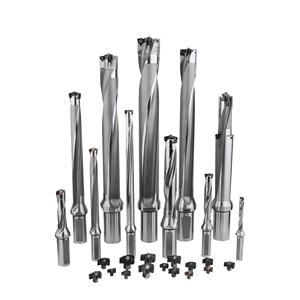
Fengyi Customized CNC Solid Carbide Drill Indexable Toolholders

Fengyi Customized CNC Solid Carbide Drill Indexable Drill Toolholders Mono Tip Line Toolholders

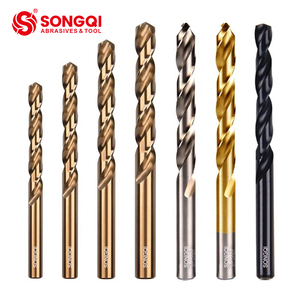
Industrial Grade German HSS M35 Cobalt 5% Parallel Coated Twist Drill

Industrial Grade German HSS M35 Cobalt 5% Parallel Coated Twist Drill For Stainless Steel/Steel/Metal

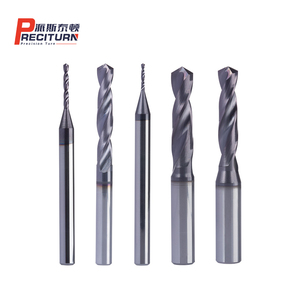
Custom 2mm-10mm Solid Tungsten Carbide Drill Bit for CNC MACHINE

Custom 2mm-10mm Solid Tungsten Carbide Drill Bit for High Precision CNC Machinery

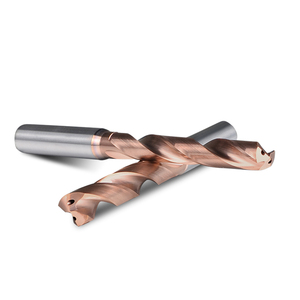
Jobber Length Twist Solid Carbide Drill Bit Tungsten Metal Drilling

Jobber Length Twist Solid Carbide Drill Bit Titanium Nitride Coated Metal Drilling Tool

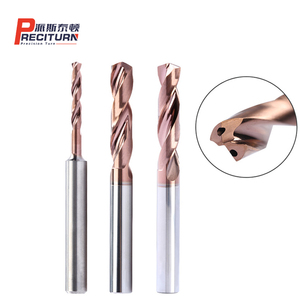
Wear Resistance Drills DIN 6535 6537 CNC Carbide Bits

Wear Resistance Drills DIN 6535/6537 CNC Drill Bit 10mm Carbide Bits For 3XD 5XD 8XD 12XD 50XD

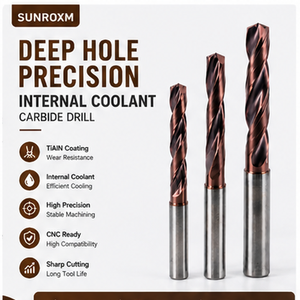
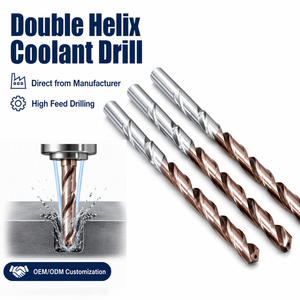
Solid Carbide Coolant Drill Bit TiAlN Coated Deep Hole Tool

Solid Carbide Coolant Drill Bit TiAlN Coated Deep Hole Machining Tool for High Temp Steel

Solid Carbide 2 Flute Coolant Through Twist Drill Bit CNC Internal Coolant

Solid Carbide 2 Flute Coolant Through Twist Drill Bit CNC Internal Coolant Hole for Stainless Steel

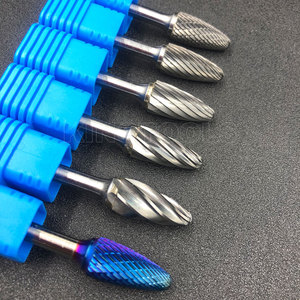
Factory Wholesaler Five Head Core Countersink 6mm Shank Carbide Burr

Factory Wholesaler KINGTOOLS Five Head Core Countersink 6mm Shank Tungsten Carbide Burr

Performance Metrics

Pneumatic Micro Grinding Engineering Standards

Key quality parameters required by OEM tier-1 suppliers, maintenance repair overhaul (MRO) facilities, and precision mold manufacturers.

100,000
Max Operating RPM
< 0.002mm
Spindle Dynamic Runout
5,000+
SKUs in Global Stock
0PFP1
NATO / US CAGE Code

Executive Procurement Summary: Navigating Global Pencil Grinder Supply Chains

High-speed pneumatic pencil grinders (micro air die grinders) represent a critical operational pillar across aerospace manufacturing, automotive die-casting, medical device micro-machining, and precision jewelry engraving. Operating at rotational speeds spanning 54,000 RPM to over 100,000 RPM, these slender, pen-like air tools require uncompromising manufacturing precision. Minor deviations in spindle concentricity, dynamic balancing, or housing ergonomics can lead to chatter marks, premature carbide burr failure, operator hand-arm vibration syndrome (HAVS), and costly scrap in high-value superalloy workpieces.

Selecting a top-tier pencil grinder factory or exporter involves evaluating more than basic price-per-unit metrics. Sourcing directors and manufacturing engineers must audit dynamic spindle runout, thermal dissipation efficiency, vane vs. turbine motor configurations, collet clamping accuracy, and compliance with ISO 11148-9 hand-held non-electric power tool safety standards. This technical procurement report highlights the manufacturing criteria, technological advancements, and key operational benchmarks that separate elite manufacturers from standard commercial toolmakers.

Information Gain Insights for Tooling Engineers: Dynamic runout exceeding 0.005mm at 60,000 RPM increases impact forces on micro-tungsten carbide burr flutes by up to 340%, leading to micro-chipping and reducing burr service life by more than half. Premium pencil grinder factories utilize pre-loaded Japanese (NSK/NMB) or German hybrid ceramic bearings to hold runout under 0.002mm.

Micro-Turbine vs. Vane Motors

Vane motors deliver high stall torque at 54,000–65,000 RPM for heavy deburring. Micro-turbine air motors eliminate friction vanes entirely, reaching up to 100,000 RPM oil-free for ultra-fine polishing without oil contamination on cleanroom workpieces.

Concentricity & Collet System

Precision 3/32", 1/8" (3mm), and 6mm collets manufactured from hardened alloy steel guarantee concentric tool clamping. Precision ground collets prevent chatter, giving mirror-like finishes on hardened mold cavities (HRC 60+).

Exhaust & Sound Attenuation

Rear exhaust designs featuring multi-stage acoustic mufflers direct oil mist and air flow away from workpiece surfaces while reducing operating noise below 75 dBA, satisfying strict OSHA workspace environmental standards.

Technical Comparison Matrix: Evaluating Micro Pneumatic Grinder Classes

To assist procurement officers and production planners in selecting the appropriate pencil grinder configuration for specific industrial workpieces (Titanium Ti-6Al-4V, Inconel 718, 7075-T6 Aluminium, Carbon Fiber CFRP), the technical matrix below contrasts key performance attributes:

Grinder Class / Type Free Speed (RPM) Bearing System Air Consumption Primary Application Profile Quality Grade
Micro-Turbine Ultra-Speed 80,000 – 100,000 Precision Ceramic Hybrid 4.2 CFM @ 90 PSI Medical implants, glass engraving, cleanroom optical polishing Aerospace Class
Industrial Vane Pencil Grinder 54,000 – 65,000 Heavy-Duty Steel Ball 5.5 CFM @ 90 PSI Die & mold chamfering, aircraft skin countersink deburring Industrial Standard
High-Torque Extended Spindle 35,000 – 45,000 Dual Tandem Front Bearings 6.0 CFM @ 90 PSI Deep-cavity mold grinding, turbine blade root cleaning Heavy Duty
Robotic CNC Spindle Grinder 60,000 – 90,000 Air-Bearing / Ceramic 3.8 CFM (Constant Flow) Automated robotic arm edge trimming, automated CFRP routing Automation Grade

Future Procurement Trends in Micro Pneumatic & Deburring Tools (2025–2030)

The global industrial landscape for high-speed micro air tools is undergoing rapid technical evolution driven by stringent aerospace weight tolerances, composite material integration, and automated manufacturing setups:

  • Transition to Oil-Free Micro-Turbine Technology: Environmental and cleanroom protocols are pushing factories away from traditional lubricated vane motors. Modern turbine micro-grinders run on oil-free dry compressed air, eliminating oil residue contamination on carbon fiber (CFRP) surfaces prior to adhesive bonding.
  • Integration with Cobots & Robotic Deburring Cells: Factory automation demands pencil grinders built with rigid cylindrical steel housings and standardized tool-changer flanges. Suppliers now provide micro air spindles equipped with compliance mechanisms (radially floating heads) to compensate for robot path tolerances.
  • Ergonomic Vibration Dampening & HAVS Reduction: International occupational safety directives (such as EU Directive 2002/44/EC) enforce strict daily vibration limits. Leading exporters now integrate elastomer-damped inner sleeves and thermal insulating grips, maintaining vibration levels below 1.5 m/s².
  • Advanced Coating Synergies for Rotary Burs: High-speed pencil grinders operate at temperatures capable of degrading standard carbide tools. Factories are pairing micro grinders with advanced Diamond-Like Carbon (DLC) and Titanium Aluminium Silicon Nitride (TiAlSiN) coated tungsten carbide burs, extending cutter life in titanium and abrasive aerospace composites.
Process Optimization Tip: Always pair pencil grinders with a high-precision Air Filter-Regulator-Lubricator (FRL) unit mounted within 3 meters of the operator. Operating a vane pencil grinder at 110 PSI instead of the rated 90 PSI accelerates bearing wear by over 200% without providing proportional torque gains.

Core Enterprise Strengths & Quality Framework (Pan American Tool Benchmark)

When evaluating the top 10 pencil grinder factories and global exporters, technical buyers look for suppliers with proven aerospace credentials, robust stock depth, and strict adherence to international standards. As a premier provider of precision aviation cutting tools and Nova® pneumatic systems since 1986, Pan American Tool Corporation exemplifies the key technical benchmarks required by top-tier aerospace procurement teams:

Aerospace Certification & CAGE Code

Holding official CAGE Code 0PFP1, our production and distribution channels meet rigorous defense and government procurement standards. All tools conform to NAS 965, NAS 907, and MIL-spec guidelines.

Extensive In-Stock SKU Capacity

With over 5,000 aviation tool line items in immediate inventory—ranging from micro air grinders and double margin drills to carbide burs and microstop countersink cages—we prevent production line shutdowns.

Comprehensive Quality Control

Every pencil grinder spindle assembly undergoes 100% dynamic balancing and optical runout testing prior to dispatch, ensuring vibration-free operation at maximum rated RPM.

Procurement Knowledge Hub

Frequently Asked Technical & Sourcing Questions

Direct answers from application engineers to help procurement directors make informed tooling investments.

What spindle concentricity should I require when sourcing pencil grinders for aerospace deburring?
For aerospace and precision mold applications, demand a total indicator reading (TIR) runout of < 0.002mm (0.00008 inches) measured at the collet mouth. Higher runout causes uneven tooth loading on rotary carbide burs, leading to rapid flute chipping, chatter marks on workpieces, and accelerated bearing failure due to dynamic imbalance.
How do I choose between a 65,000 RPM vane pencil grinder and a 100,000 RPM turbine air grinder?
Choose a 65,000 RPM vane-type pencil grinder when higher stall torque is required for material removal using larger carbide burs (1/8" shank, 1/4" head diameter) on steel, stainless steel, or aluminum. Opt for a 100,000 RPM turbine grinder when working with small micro-burs or diamond mounted points (head diameter < 3mm) for fine engraving, glass polishing, or cleanroom applications where oil-free air operation is required.
What are the primary causes of premature pencil grinder motor failure in high-volume factories?
The three primary failure modes are: (1) Contaminated air supply containing moisture, dirt, or scale due to inadequate air filtration; (2) Insufficient or improper lubrication (for vane motors requiring ISO VG 10 light air tool oil); and (3) Excessive side-load pressure applied by operators, which forces spindle bearings out of alignment.
Can micro pneumatic pencil grinders be integrated into automated CNC or robotic arm setups?
Yes. Many advanced exporters offer specialized cylindrical pencil grinder bodies without roll-throttles, designed specifically for clamping into standard 20mm or 32mm CNC tool blocks and robotic mounting brackets. Ensure the air supply is regulated via a solenoid valve and that the spindle can handle continuous duty cycles.
What is the standard air supply requirement for optimal micro grinder performance?
Micro pencil grinders typically require a clean, dry compressed air supply maintained at 90 PSI (6.2 Bar) dynamic pressure at the tool inlet, consuming between 4.0 to 6.0 CFM depending on motor displacement. Utilizing an oversized supply hose (minimum 1/4" or 3/8" ID) prevents pressure drops under load.
Does Pan American Tool ship micro pneumatic grinders and cutting tools internationally?
Yes. Pan American Tool Corporation ships worldwide from Fort Lauderdale, Florida, supporting commercial airlines, MRO stations, aerostructure manufacturing facilities, and distributors across Europe, the Americas, Asia-Pacific, and the Middle East. Export documentation and international compliance are standard practices (CAGE Code 0PFP1).

Need Custom Tooling Specifications or Wholesale Factory Quotations?

Connect directly with our aerospace application specialists to review tool geometries, technical drawings, or volume exporter pricing.