
In high-precision manufacturing environments—spanning aerospace sheet metal assembly, structural steel fabrication, and multi-layered composite processing—the efficiency of hole making dictates total cycle cost. Traditional hole creation requiring separate pilot drilling, enlarging, chamfering, and deburring steps introduces concentricity errors and compounds labor overhead. Precision OEM/ODM Step Drills consolidate multi-stage drilling into a single, high-efficiency pass, engineering radical cycle time reductions while enforcing tight dimensional tolerances across tough alloys including Stainless Steel 316, Titanium Ti-6Al-4V, Inconel®, and aerospace-grade aluminium alloys.
Explore our industrial-grade cutting tools engineered with German HSS-Co substrates, sub-micron solid tungsten carbide, internal coolant channels, and physical vapor deposition (PVD) coatings.
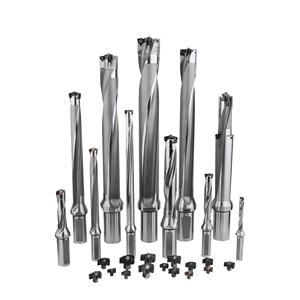
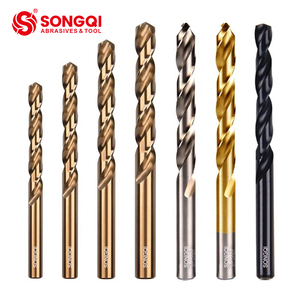
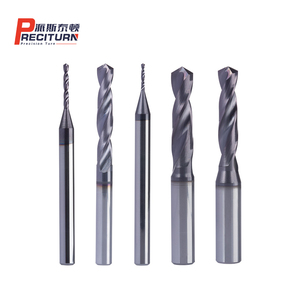
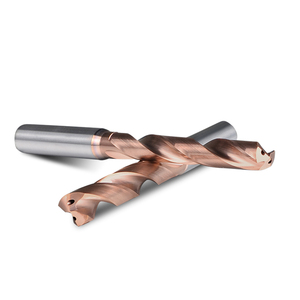
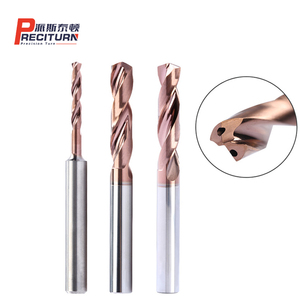
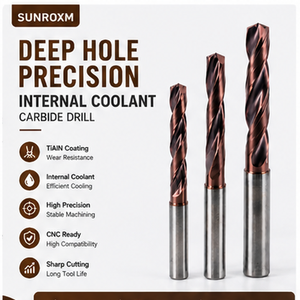
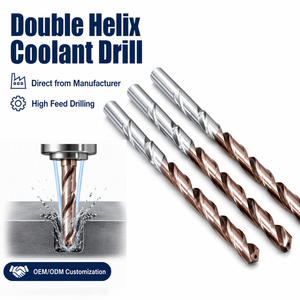
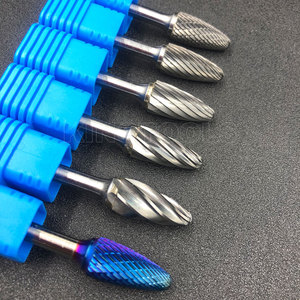
As an ISO 9001:2015 certified manufacturer with a historical legacy dating back to 1986, our facility bridges high-capacity automated production with specialized custom tooling engineering. Operating under CAGE Code 0PFP1, our cutting tools are approved for tier-1 aerospace suppliers, defence maintenance depots, and automated automotive body-in-white (BIW) lines worldwide.
Our OEM/ODM step drill custom manufacturing process utilizes 5-axis CNC grinding centers (including ANCA TX7 and Walter Helitronic platforms) capable of grinding complex step geometries, radial relief angles, and spiral flutes in a single clamping setup to maintain concentricity tolerances under ±0.002 mm.
Why Tier-1 Global Procurement Managers Partner with Our Manufacturing Plants
We tailor step diameters, step lengths, transition chamfer angles (90°, 118°, 135°, 180°), and flute profiles (spiral vs straight) directly from customer CAD drawings or workpiece specifications.
Formulated with specialized physical vapor deposition coatings—including TiAlN, TiSiN, AlTiN, and DLC—engineered to lower thermal transfer, eliminate edge friction, and extend tool life by up to 300% in dry or MQL machining.
Every batch undergoes 100% optical inspection using Zoller Genius measuring machines. We provide complete material certification, hardness test reports (HRC), and Certificate of Conformance (CoC) with export orders.
Use our application matrix to match your workpiece material with the optimum step drill geometry, substrate, and cutting parameters.
| Workpiece Alloy Class | Recommended Substrate | Optimal PVD Coating | Step Flute Geometry | Recommended SFM (Ft/Min) | Key Operational Benefit |
|---|---|---|---|---|---|
| Austenitic Stainless (304/316L) | German HSS-Co M35 (5% Cobalt) | TiAlN / TiSiN Multi-layer | 2-Flute Spiral (30° Helix) | 60 – 90 SFM | Prevents work hardening; efficient chip curling. |
| Titanium Alloys (Ti-6Al-4V) | Sub-micron Carbide (YG6X) | AlTiN / Diamond-like DLC | 3-Flute Straight with Coolant | 40 – 70 SFM | Mitigates heat buildup; resists edge buildup. |
| Aerospace Aluminium (2024/7075) | Premium HSS-M2 / Carbide | Uncoated Bright / TiB2 | 2-Flute High-Helix Spiral | 250 – 450 SFM | Eliminates chip clogging in soft non-ferrous sheet. |
| Structural Steels (S355/Q345) | Solid Tungsten Carbide | TiAlN Heavy-Duty | 2-Flute Straight Radial Relief | 120 – 180 SFM | High burr-free step hole volume per sharpen. |
| Carbon Fiber Composites (CFRP) | Micrograin Carbide (0.4µm) | CVD Nano-Diamond | Brad Point + Step Chamfer | 180 – 300 SFM | Eliminates laminate delamination & fiber pull-out. |
As industrial manufacturing migrates toward Industry 4.0 automation, smart supply chains, and lightweight alloy structures, the global procurement of step drills is undergoing structural shifts:
The cutting tool industry is experiencing rapid technological evolution across raw powder synthesis, coating deposition technology, and automated manufacturing:
Sub-Micron Grain Powder Metallurgy: The foundation of modern carbide step drills lies in ultra-fine tungsten carbide powder formulations featuring cobalt binder phases under 0.4 microns. This micro-grain structure yields an unparalleled combination of high transverse rupture strength (TRS > 4,000 MPa) and high hardness (HRA > 92.5), enabling step drills to withstand severe interrupted cuts without chipping.
HiPIMS Coating Innovations: High-Power Impulse Magnetron Sputtering (HiPIMS) has replaced traditional cathodic arc PVD methods. HiPIMS deposits ultra-dense, smooth coating layers with near-zero droplet defects, providing an exceptionally smooth chip flow surface and extreme oxidation resistance up to 1,100°C.
Direct answers from our senior tooling application engineers regarding step drill customization, ordering, and performance optimization.