
Engineered to exact NAS 965 and ISO specs. Designed for tight-tolerance depth control, delamination-free composite drilling, and titanium structural assembly.
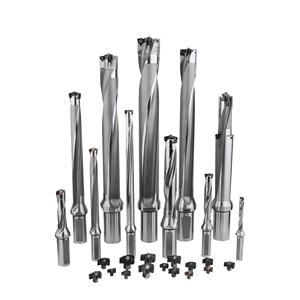
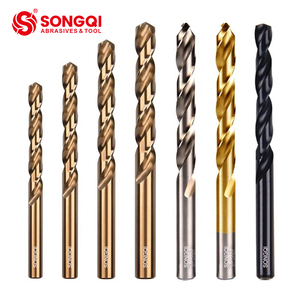
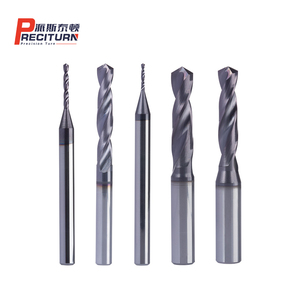
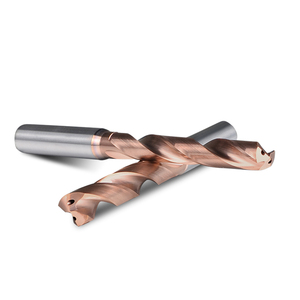
Since 1986, our manufacturing facility has been a trusted global source for high-precision microstop countersink cages, NAS 965 adapter drills, and specialized aerostructure assembly tooling.
Registered with CAGE Code 0PFP1, our factory manufactures strictly in accordance with recognized international aerospace standards, including NAS 965 Type D, NAS 907 Type J, and NAS 937. Fully compliant with defense and commercial MRO procurement protocols.
Our microstop countersink cages feature dual needle thrust bearings, hardened stainless steel shafts, and positive lock micro-adjustment sleeves that deliver repeatable depth tolerance down to ±0.0005 inches (0.0127 mm) without marring structural skins.
From our high-capacity manufacturing centers, we supply commercial airlines, tier-1 aerostructure suppliers, and defense maintenance depots across Europe, the Americas, and Asia-Pacific. Full white-label ODM and custom OEM engineering support.
Understanding the mechanical dynamics of zero-chatter, depth-controlled chamfering in modern commercial and military airframe manufacturing.
In modern aerospace structural assembly, flush fastener installation is critical for reducing aerodynamic drag, eliminating localized stress concentrations, and preserving stealth radar signatures. Achieving consistent rivet seat depths requires tooling that can maintain exact micro-depth stop limits under high-rpm handheld pneumatic or CNC automated operation.
A high-performance aerospace microstop countersink cage acts as a precise micrometer-adjustable housing that holds countersink cutter bits. Key internal components engineered in our OEM factory include:
Our factory engineers custom microstop cages customized for specialized airframe access challenges. Custom options include ultra-compact stubby cages for tight rib bays, side-window cutout cages, vacuum dust extraction shrouds for carbon fiber composite safety, and high-torque 1/4"-28 or M8 threaded spindle connections.
Micro-chatter during countersinking creates uneven bearing surfaces for rivet heads, leading to premature fastener fatigue. Our OEM countersink systems utilize chatterless multi-flute cutter geometries coupled with spring-dampened cage spindles. By balancing cutting forces across odd-number flute arrangements (3-flute or 5-flute configurations), harmonic resonance is canceled out, leaving a mirror-smooth surface finish exceeding 32 Ra micro-inches.
How next-generation airframe materials and Industry 4.0 automation are reshaping countersink cage engineering.
The integration of wireless micro-encoders into microstop cages allows real-time digital feed monitoring. Smart cages automatically transmit depth penetration metrics to central quality control servers, instantly alerting technicians if a countersink deviates beyond structural blueprint tolerances.
With modern airframes like the Boeing 787 and Airbus A350 consisting of over 50% composite structures, countersink cages are increasingly built with integrated vacuum hoods. These shrouds capture toxic carbon dust right at the cutting interface, protecting operator health and preventing conductive dust from contaminating electrical bays.
To handle abrasive stack-ups (such as CFRP layered directly over Titanium), procurement is shifting from HSS-Cobalt to PCD (Polycrystalline Diamond) and specialized nanostructured Diamond-Like Carbon (DLC) coated carbide countersinks, increasing tool life by up to 15x in high-rate production environments.
Robotic airframe drilling arms require microstop countersink cages with automated quick-change shanks, torque-sensing slip clutches, and ultra-high spindle speed ratings (exceeding 10,000 RPM) to keep cycle times minimal without compromising hole geometry.
Key insights for tooling managers, procurement specialists, and global supply chain directors when selecting countersink cage factories.
Global aerospace manufacturers are moving away from fragmented tooling vendors toward consolidated direct-factory OEM/ODM partnerships. Sourcing teams prioritize the following strategic criteria:
Recommended cutting speeds, cage configurations, and pilot parameters for common aerospace airframe substrates.
| Workpiece Substrate | Recommended Cage Footpiece | Cutter Material & Geometry | Optimum RPM Range | Operational Guidelines |
|---|---|---|---|---|
| 2024-T3 / 7075-T6 Aluminum | Standard Steel or Non-Marring Nylon | M42 Cobalt / 100° 3-Flute Cutter | 2,500 – 4,500 RPM | Use light mist coolant; clear chips rapidly to prevent aluminum galling inside the cage cavity. |
| Titanium (Ti-6Al-4V) | Heavy-Duty Steel with Needle Bearings | Solid Carbide / 100° 5-Flute Chatterless | 400 – 900 RPM | Maintain high, constant thrust feed. Never allow cutter to dwell. Flood coolant required. |
| CFRP Laminates | Vacuum Extraction Hood Footpiece | PCD Diamond Tipped / Dagger Geometry | 3,000 – 6,000 RPM | Vacuum out carbon dust continuously. Inspect footpiece for composite resin buildup. |
| CFRP / Titanium Multi-Stacks | Non-Marring Nylon with Internal Bearing | Sub-Micron Solid Carbide / TiAlN Coated | 800 – 1,500 RPM | Dual-stage speed protocol: low RPM on titanium layer to manage thermal expansion. |
| Stainless Steel (15-5PH / 17-4PH) | Steel Footpiece / High Thrust Cage | M42 Cobalt 8% / 120° Pilotless Cutter | 600 – 1,200 RPM | Use heavy pressure to break work-hardening layer; check pilot pin for concentricity alignment. |
Direct answers from our engineering team regarding OEM capabilities, technical specs, and international orders.
Our standard countersink cages feature a 1/4"-28 UNF internal thread spindle, which is the industry standard for aerospace threaded shank cutters (NAS 965 Type D). We also manufacture custom OEM spindles with M8 metric threads or 0.250" smooth cylindrical shanks upon request.
Non-marring footpieces are crafted from high-density Delrin or smooth nylon. The footpiece remains stationary against the aircraft skin while the internal spindle rotates freely on dual precision bearings, eliminating ring marks, burnishing, and surface scratches on polished aluminum or painted composite panels.
For standard stock microstop cages, our MOQ is as low as 10 units. For fully customized ODM solutions—such as custom skirt geometry, special shaft lengths, or integrated vacuum ports—our baseline MOQ typically starts at 50 units, backed by rapid prototyping options.
In high-rate aerospace manufacturing lines, microstop cage calibration should be verified using a depth dial indicator gauge at the beginning of each shift or whenever a cutter bit is changed. The micrometer adjustment sleeve locks securely in 0.0005" increments to hold tolerance throughout long production runs.
Yes, all shipments from our factory include full batch traceability, Certificates of Conformance (CoC), and compliance paperwork matching our CAGE Code 0PFP1. Raw material test reports (MTRs) for shaft tool steels and bearing assemblies are available upon request.
Absolutely. We ship worldwide via expedited air freight directly to airline maintenance bases, regional MRO facilities, and tier-1 aerostructure factories across North America, Europe, South America, and Asia-Pacific with full customs declaration documentation.