
Engineered specifically for aerospace OEMs, Tier-1 aerostructure suppliers, and airline MRO facilities worldwide. Custom shank configurations, split-point geometries, and nano-PVD coatings available.
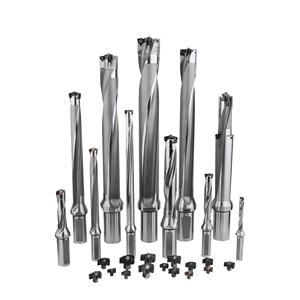
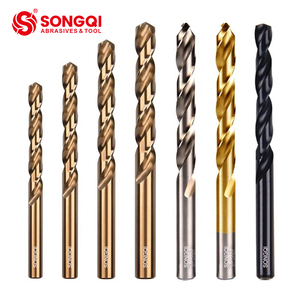
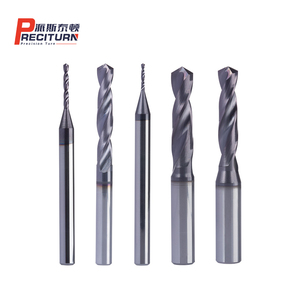
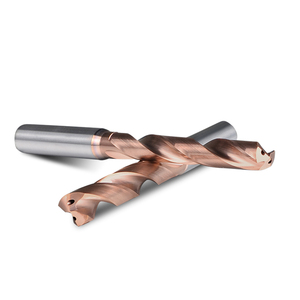
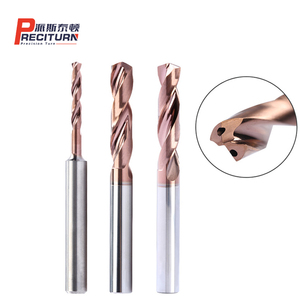
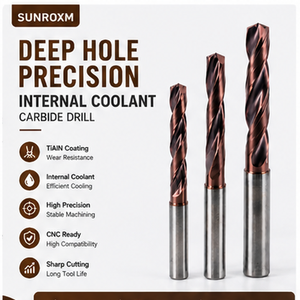
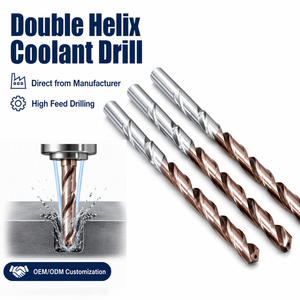
In modern aerospace manufacturing and MRO (Maintenance, Repair, and Overhaul) operations, hole quality is not merely a dimensional specification—it is a critical structural integrity parameter. An commercial airframe contains between 1.5 million to over 3 million precision fastener holes. A single micro-crack, thermal burr, or out-of-round condition during hole generation can act as a stress concentration point, leading to premature fatigue failure under cyclic aerodynamic loads.
As an established OEM/ODM aircraft drills manufacturer with roots tracing back to 1986 (Pan American Tool Corporation framework), our engineering philosophy prioritizes metallurgical purity, advanced cutting edge geometry, and repeatable micron-level manufacturing tolerances. Whether producing NAS 965 Type D threaded shank drills for pneumatic right-angle motors or custom carbide dagger drills for Carbon Fiber Reinforced Polymer (CFRP) and titanium stacks, technical rigour guides every stage of our production matrix.
Key Takeaway for Aerospace Procurement: Sourcing aircraft cutting tools requires evaluating material heat-dissipation indices, web thickness ratio, split-point accuracy, and coating adhesion strength. Standard industrial drills fail prematurely when subjected to work-hardening aerospace alloys like Ti-6Al-4V and Inconel 718.
Our contract manufacturing services (OEM/ODM) bridge the gap between initial aerodynamic structural design and volume factory production. By offering custom geometry grinding, specialized core relief, and proprietary physical vapor deposition (PVD) coatings, we provide aerostructure manufacturers with a distinct Information Gain advantage: reducing cost-per-hole while exceeding stringently enforced MIL-SPEC and National Aerospace Standards (NAS).
Equipped with state-of-the-art Rollomatic and ANCA 5-axis CNC grinding centers. We achieve total indicator reading (TIR) runout specs under 0.002mm, guaranteeing perfect flute symmetry and concentricity across batch runs.
As a verified defense and government supplier (CAGE Code 0PFP1), our quality management systems adhere strictly to AS9100D and ISO 9001:2015 specifications. Full material traceability is guaranteed for every lot shipped.
We source premium micro-grain tungsten carbide (0.4µm-0.6µm grain size) and European M35/M42 Cobalt High-Speed Steel. This delivers elevated red-hardness and resistance to edge chipping under severe thermal shock.
An executive analysis of next-generation materials, single-pass machining requirements, and smart inventory management transforming aerospace tool procurement over the coming decade.
Traditional aircraft structural assembly required a two-step or three-step hole preparation process: pilot drilling, step drilling, and final reaming to achieve tight class-3 fastener tolerances. Modern aerospace procurement is rapidly shifting toward One-Shot Hole Making. By deploying custom-engineered Double Margin Drills and Drill-Reamer Hybrids, OEM manufacturers can eliminate secondary reaming passes completely.
The secondary margin on each land contacts the hole wall immediately behind the cutting edge, burnishing the cylinder as it advances. This burnishing action stabilizes the tool axis, suppresses harmonic vibration, and yields a surface finish under Ra 0.8µm (32 micro-inches). For aerospace purchasing agents, specifying double-margin OEM tooling yields a direct 40% reduction in total assembly cycle time.
Modern airframes (such as the Boeing 787 and Airbus A350) consist of over 50% composite materials bonded directly to titanium ribs and wing spars. Drilling a hybrid CFRP/Titanium stack presents extreme cutting challenges: carbon fiber requires an abrasive-resistant, sharp shearing edge to prevent delamination, whereas titanium requires low speeds, high thrust forces, and heavy heat dissipation.
Future OEM/ODM contract manufacturing relies heavily on Dagger Drills and multi-angle step points featuring nano-diamond (DLC) or TiAlN PVD coatings. The leading edge features a aggressive shear angle to sever carbon fibers without fraying, transitioning into a robust web structure that withstands the high torque demands of the titanium layer.
Global aerospace supply chains are moving away from fragmented vendor bases. Prime contractors (Tier-1 and Tier-2) now mandate consolidated sourcing through qualified OEM/ODM manufacturers capable of supplying complete tool packages—from NAS 965 threaded adapter drills and microstop cages to Cleco temporary fasteners and pneumatic angle motors. Full traceability, CAGE Code registration, and rapid domestic/international dispatch have become baseline criteria for contract award.
Engineering recommendation matrix for handheld pneumatic and CNC automated drilling operations.
| Workpiece Substrate | Recommended Drill Material | Point Geometry & Angle | Coolant / Lubrication Method | Primary Failure Mode to Avoid |
|---|---|---|---|---|
| Aluminium 2024-T3 / 7075-T6 | M35 / M42 Cobalt HSS or Solid Carbide | 118° to 135° Split Point, Wide Flutes | Mist Coolant / Soluble Oil | Built-Up Edge (BUE) & Flute Clogging |
| Titanium Ti-6Al-4V | Sub-Micron Solid Carbide (TiAlN Coated) | 135° Heavy-Duty Split Point | High-Pressure Internal Coolant | Thermal Work-Hardening & Point Micro-Chipping |
| Inconel 718 / Rene 41 | M42 Cobalt HSS (8% Co) or Micro-Grain Carbide | 135° Self-Centering Notch Point | Flood Coolant / High Oil Concentration | Rapid Flank Wear & Thrust-Induced Tool Fracture |
| CFRP Structural Panels | CVD Diamond Coated Solid Carbide | Brad Point / Dagger Geometry | Vacuum Extraction / Dry Air Blast | Delamination, Fiber Fraying & Hole Bell-Mouthing |
| CFRP / Titanium Stacks | Multi-Step Custom Carbide OEM Drill | Dual-Angle Dagger Point (135°/90°) | MQL (Minimum Quantity Lubrication) | Interfacial Burr Formation & Thermal Degradation |
In-depth responses to common technical inquiries regarding NAS specifications, customized OEM grinding, and tooling longevity.
Selecting the right aircraft drill manufacturer is a strategic procurement decision that directly impacts aircraft assembly safety, factory throughput, and tooling expenditure. Here is why leading aerostructure builders and global airlines partner with us:
Dedicated exclusively to aviation and aerospace cutting tools since 1986. Our deep domain knowledge ensures every drill bit meets the exacting standards required for commercial airliners, military aircraft, and space launch vehicles.
We maintain an active inventory of over 5,000 tool SKUs, including fractional, wire gauge (#1 to #80), letter (A to Z), and metric sizes across standard, jobber, extension, and threaded adapter configurations.
From custom step-drill geometries to specialized PVD coatings (TiN, TiAlN, AlTiN, DLC), our application engineering team collaborates directly with your tooling engineers to design bespoke cutters tailored to your material stack-up.
Connect directly with our application engineers to request custom OEM/ODM quote proposals, standard CAD drawings, or volume contract pricing.
Get Catalog