
Enterprise Engineering & Executive Technical Whitepaper

Custom OEM Jobber Drills Factory & Exporter

Next-Generation Precision Substrates, Advanced PVD Coatings, Internal Coolant Architectures, and Global Aerospace/CNC Procurement Trends

1986+
Manufacturing Heritage
5,000+
Precision Tool SKUs In-Stock
0PFP1
CAGE Code Compliant
±0.002mm
CNC Runout Tolerance

Featured Industrial OEM Drilling & Toolholding Systems

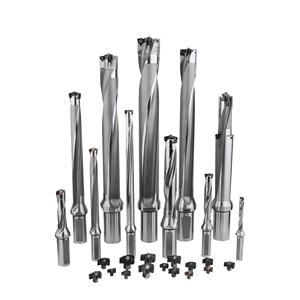
Fengyi Customized CNC Solid Carbide Drill Indexable Toolholders

Fengyi Customized CNC Solid Carbide Drill Indexable Drill Toolholders Mono Tip Line Toolholders

Contact Us
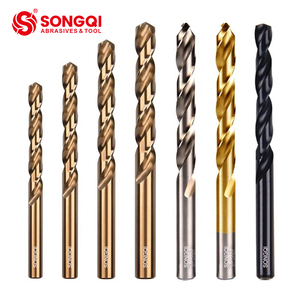
Industrial Grade German HSS M35 Cobalt 5% Parallel Coated Twist Drill

Industrial Grade German HSS M35 Cobalt 5% Parallel Coated Twist Drill For Stainless Steel

Contact Us
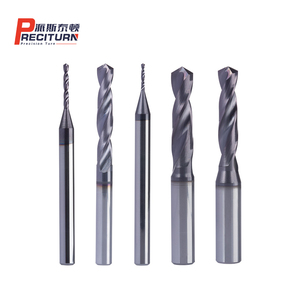
Custom Solid Tungsten Carbide Drill Bit for CNC MACHINE

Custom 2mm-10mm Solid Tungsten Carbide Drill Bit for CNC Machine Applications

Contact Us
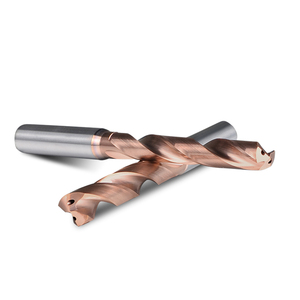
Jobber Length Twist Solid Carbide Drill Bit

Jobber Length Twist Solid Carbide Drill Bit for High-Speed Tungsten Metal Drilling

Contact Us
Wear Resistance Drills DIN 6535 6537 CNC Drill Bit

Wear Resistance Drills DIN 6535/6537 CNC Carbide Bits (3XD, 5XD, 8XD, 12XD, 50XD)

Contact Us
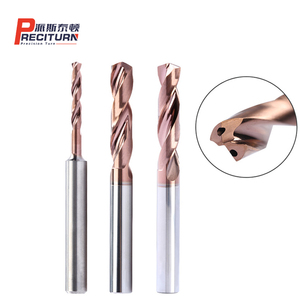
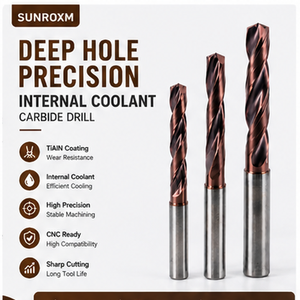
Solid Carbide Coolant Drill Bit TiAlN Coated Deep Hole Machining Tool

Solid Carbide Coolant Drill Bit TiAlN Coated Deep Hole Machining Tool for CNC Steel

Contact Us
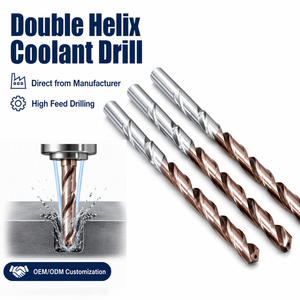
Solid Carbide 2 Flute Coolant Through Twist Drill Bit

Solid Carbide 2-Flute Coolant Through Twist Drill Bit Internal Channel for Stainless Steel

Contact Us
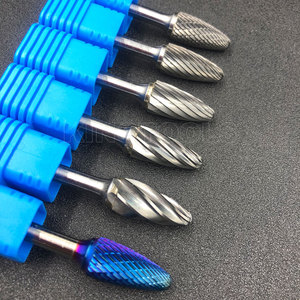
KINGTOOLS Five Head Core Countersink 6mm Shank Diameter Drill Bits

KINGTOOLS Five Head Core Countersink 6mm Shank Tungsten Carbide Burr Metal Drilling

Contact Us

Substrate Metallurgy & Micro-Structure Optimization in OEM Jobber Drills

In modern high-speed CNC machining, aerospace structural manufacturing, and heavy industrial MRO operations, the standard twist drill is no longer treated as a simple consumable commodity. It represents an intricate balance of micro-grain metallurgy, specialized fluting dynamics, and thermodynamics. As a premier Custom OEM Jobber Drills Factory & Exporter, our manufacturing philosophy is rooted in controlling the atomic and microstructural properties of cutting tools to extend tool life, prevent micro-chipping, and deliver strict dimensional repeatability across multi-thousand-hole cycles.

Jobber length drills—characterized by their standardized ratio of flute length to shank diameter (typically 9 to 14 times diameter depending on specific fractional or metric standard sizing)—face intense torsional deflection and heat accumulation. When drilling difficult-to-machine alloys like Inconel 718, Titanium Ti-6Al-4V, 316L Stainless Steel, and Carbon Fiber Reinforced Polymers (CFRP), standard high-speed steel (HSS) fails rapidly due to thermal degradation at the cutting lip.

M35/M42 Cobalt HSS vs. Ultra-Fine Sub-Micron Solid Carbide

To satisfy diverse OEM applications, our manufacturing capabilities encompass two major metallurgical branches: Premium Cobalt-Alloyed High-Speed Steels (HSS-E) and Ultrafine Grain Tungsten Carbide (WC-Co matrices).

M35 & M42 Cobalt Alloy Matrix

Formulated with 5% (M35) to 8% (M42) Cobalt content, these high-speed steel jobber drills offer elevated red-hardness (ability to maintain cutting edge hardness up to 600°C–650°C). Combined with a 135° self-centering split point (NAS 907 Type J compliant), cobalt jobber drills excel in flexible, non-rigid manual and semi-automated setups where vibration or structural flex would shatter brittle solid carbide tools.

Sub-Micron Tungsten Carbide (0.4µm - 0.6µm)

For high-rigidity CNC machining centers running automated batch production, our solid carbide jobber drills utilize ultrafine tungsten carbide particles bound with 10% to 12% Cobalt binder. Achieving Vickers Hardness levels above HV 1600 and Transverse Rupture Strength (TRS) exceeding 4,000 MPa, these tools allow cutting speeds 3x to 5x higher than conventional HSS drills while maintaining sub-micron runout tolerances.

Physical Vapor Deposition (PVD) Multi-Layer Coating Architecture

Substrate geometry must be complemented by surface engineering. Uncoated jobber drills suffer from adhesive wear and built-up edge (BUE) when machining sticky materials such as aluminum alloys or ductile stainless steels. Our factory integrates state-of-the-art PVD magnetron sputtering and cathodic arc coating chambers to deposit functional multi-layer nanostructured coatings:

  • TiAlN (Titanium Aluminum Nitride): Provides an oxidation threshold up to 800°C. Creates an aluminum oxide protective surface film under high friction, making it the industry standard for dry machining and cast iron processing.
  • AlTiN / AlTiSiN (High-Aluminum Nano-Composites): Engineered for hardened steels up to 65 HRC and nickel-based superalloys. Offers extreme nano-hardness (38 GPa) and ultra-low friction coefficients.
  • nACo (Nano-Composite AlTiN/Si3N4): A revolutionary multi-layer coating featuring an amorphous silicon nitride matrix that caps micro-cracks, delivering maximum tool life during deep hole drilling (8XD to 50XD).
  • DLC (Diamond-Like Carbon) & CrN: Specially developed for non-ferrous applications, composite materials (CFRP), and high-silicon aluminum, completely eliminating material adhesion and chip packing.

Substrate & Coating Selection Guide for OEM Procurement

Substrate Grade Hardness / TRS Recommended Coating Target Workpiece Materials Optimum Cutting Velocity (Vc)
German M35 HSS-E (5% Co) 65–67 HRC / 3,500 MPa TiN / Uncoated Polish Low-Carbon Steels, Structural Steel, Brass 25 – 40 m/min
M42 Super Cobalt (8% Co) 67–69 HRC / 3,200 MPa TiAlN / Amber Oxide 304/316 Stainless, Inconel, Titanium Alloys 15 – 30 m/min
Micrograin Carbide (0.6µm) HV 1650 / 4,100 MPa AlTiN / nACo Nano Alloy Steels, Tool Steel (up to 55 HRC), Cast Iron 80 – 150 m/min
Ultrafine Carbide (0.4µm) HV 1800 / 4,400 MPa TiAlN + Internal Coolant Hardened Steels (55-65 HRC), High-Temp Superalloys 50 – 110 m/min
Solid Carbide Non-Ferrous HV 1700 / 4,200 MPa DLC / Mirror Polished Flute Aluminum 2024/7075, Copper, CFRP Composites 150 – 350 m/min

Future Procurement Trends in the Global Industrial Cutting Tool Market

As global supply chains shift toward digital integration, environmental sustainability, and ultra-high-speed automated machining, industrial procurement teams are fundamentally re-evaluating their sourcing strategies for cutting tools. The transition from off-the-shelf catalog tools to specialized, customized OEM jobber drill solutions is accelerating exponentially.

1. High-Pressure Internal Coolant Integration (MQL & Wet Drilling)

Conventional external flood coolant often fails to penetrate the cutting zone in holes exceeding 3XD depth, leading to thermal shock, chip packing, and catastrophic drill breakage. Future-ready procurement mandates Internal Coolant Through-Hole Drills (spiral or parallel internal channels). Operating under Minimum Quantity Lubrication (MQL) or high-pressure coolant (up to 70 bar), these tools flush chips dynamically from the tip, enabling single-pass drilling up to 30XD to 50XD without peck-drilling cycles.

2. Double Margin & Multi-Step Geometry Customization

Modern manufacturing demands single-shot operations that eliminate secondary reaming or deburring passes. Procurement orders are pivoting heavily toward Double Margin Jobber Drills and step-drill geometries. A secondary margin located on the trailing edge of the flute stabilizes the tool against the hole wall, yielding hole roundness within IT8 tolerances, mirror-like surface finishes (Ra < 0.8µm), and preventing chatter in thin-walled aerospace skins.

3. Circular Economy & Carbide Recycling Programs

Tungsten and Cobalt are classified as critical raw materials subject to geopolitical supply vulnerabilities. ESG-compliant procurement initiatives now require OEM manufacturing partners to provide closed-loop tungsten recycling ecosystems. Our export facility supports environmental stewardship by utilizing ethically sourced virgin materials complemented by certified recycled micro-grain carbide, reducing carbon footprint while maintaining 100% metallurgical purity.

4. Smart Inventory Vending & Rapid OEM Prototyping

Leading global buyers no longer tolerate 12-week lead times for custom tooling. By leveraging 5-axis CNC grinding machines (such as ANCA and Walter platforms) paired with 3D optical edge-measurement systems, our factory offers rapid OEM custom prototyping, delivering tailored shank diameters, non-standard step angles, and custom flute profiles with delivery cycles under 14 days.

Enterprise Strengths & Standards Compliance (NAS 965, DIN 6535 / 6537)

Pan American Tool and our strategic manufacturing network represent nearly four decades of dedicated service to aerospace original equipment manufacturers (OEMs), airline MRO maintenance depots, defense contractors, and precision CNC job shops worldwide. With designated CAGE Code validation (0PFP1) and strict adherence to ISO 9001 quality management systems, our jobber drills and hole-making tools are engineered to exceed international engineering standards.

Rigorous Manufacturing & Geometric Standards

Every custom OEM jobber drill manufactured in our facility undergoes rigorous optical inspection across key geometric dimensions:

  • NAS 965 Type D & NAS 907 Specifications: Threaded-shank adapter drills and 135° split-point aircraft jobber drills designed specifically to eliminate "walking" on curved wing skins and structural spar caps without requiring pilot holes.
  • DIN 6535 Shank Configurations: Precision HA (straight), HB (Weldon flat), and HE (Whistle Notch) cylindrical shanks engineered for high-precision shrink-fit, hydraulic, and ER collet chuck systems.
  • DIN 6537 Length Classifications: Standardized execution of short (K) and long (L) carbide drill bodies spanning 3XD, 5XD, 8XD, and deep-hole 12XD to 50XD dimensions.
  • Micro-Edge Honing & Preparation: Cutting edges undergo automated drag-finishing to apply a controlled micro-radius (K-factor preparation of 10µm to 25µm). This eliminates microscopic grinding burrs, preventing premature edge breakout under heavy chip loads.

Comprehensive Quality Assurance Guarantee

Our quality control protocol incorporates Zoller Genius universal measuring machines and Keyence 3D digital microscopes. Every export batch is tested for dynamic runout concentricity (guaranteed within ≤ 0.002 mm), core thickness symmetry, point angle accuracy, and coating adhesion strength (scratch test verified).

Frequently Asked Questions (FAQ) for OEM Buyers

Q
What is the primary difference between standard Jobber Length Drills and Stub / DIN 6537 Short Drills?
Jobber length drills feature a standardized flute-to-diameter length ratio (typically 9XD to 14XD total length depending on exact diameter standard). They provide extended reach necessary for deep-pocket machining, multi-layer stack drilling, and general shop versatility. Stub drills (screw machine length) are significantly shorter and stiffer, designed for shallow holes (2XD–3XD) where maximum rigidity and minimal deflection are critical.
Q
When should an OEM buyer specify M35 Cobalt HSS instead of Solid Tungsten Carbide?
M35 Cobalt HSS (5% Co) should be selected for applications involving non-rigid machinery, hand-held pneumatic drilling operations (such as aircraft maintenance and MRO rivet drilling), portable magnetic base drills, or worn CNC machines with significant spindle runout. Cobalt HSS possesses higher impact toughness and shear flex, absorbing mechanical shock that would shatter solid carbide. Solid Carbide is mandatory for rigid, high-speed CNC environments requiring long tool life, tight tolerances, and elevated surface speeds.
Q
How does a 135° Split Point geometry compare to a standard 118° Conventional Point?
A conventional 118° point features a wide chisel edge that creates high axial thrust forces and tends to "walk" or wander across the workpiece surface before engaging. A 135° split point (NAS 907 Type J compliant) reduces the chisel edge width by 70%, making the drill self-centering upon contact. This significantly lowers feed pressure requirements, minimizes burr formation on exit, and eliminates the need for center drilling or spot drilling.
Q
What custom OEM branding and packaging services does your factory provide for exporters and distributors?
We offer complete private-label OEM manufacturing packages. This includes high-precision laser etching directly on the drill shank (custom logo, SKU code, size, substrate material, and QR traceability code), customized CNC-ground flute lengths, non-standard shank flat configurations, custom PVD coating colors, and specialized retail or industrial packaging (individual telescopic plastic tubes, customized index boxes, and bulk anti-rust vapor barrier bags).
Q
Why are Internal Coolant Holes (Coolant-Through) essential for drilling Stainless Steel and Superalloys?
Stainless steels (like 316L) and heat-resistant superalloys (like Inconel 718) exhibit extreme work-hardening tendencies and high thermal conductivity barriers. When drilling deeper than 3XD, flood coolant cannot reach the cutting lip, causing heat to build up rapidly. Internal coolant holes deliver pressurized fluid (water-soluble emulsion or MQL oil mist) directly through the tool matrix to the drill point. This instantly lowers cutting temperature, breaks chips into small manageable segments, and continuously flushes chips up the flutes, preventing drill seizure.
Q
What are the minimum order quantities (MOQ) and lead times for custom-engineered jobber drills?
Standard catalog inventory items are stocked in our warehouse for immediate worldwide dispatch. For custom OEM geometric modifications (special diameter sizes, custom step angles, unique flute lengths, or specific nano-coatings), our standard factory production MOQ starts at 50 pieces for solid carbide or 200 pieces for HSS-Cobalt. Custom prototype sampling lead time is typically 10 to 14 business days, while full production batch runs ship within 3 to 4 weeks.

Partner with a Direct Custom OEM Jobber Drills Manufacturer

Whether you require high-volume standard jobber drill inventory, aerospace-grade NAS 965 tools, or custom solid carbide geometries engineered for exotic alloys, our engineering sales team is ready to optimize your cutting parameters and unit costs.

Contact Us