800-423-2764 Aerospace tooling specialists since 1986
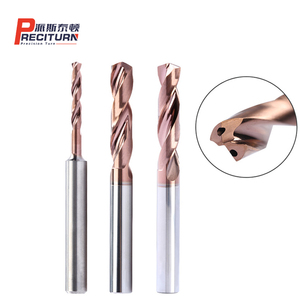
Custom OEM Carbide Drills Factories & Exporters
High-Precision Solid Tungsten Carbide & Modular Drilling Systems for Global Manufacturing Excellence
0.4 µm
Ultra-Fine Sub-Micron WC
< 0.002mm
Concentricity & Runout
+350%
Tool Life Extension
50XD
Deep Hole Ratio Capability
Featured OEM Carbide Drilling & Tooling Solutions
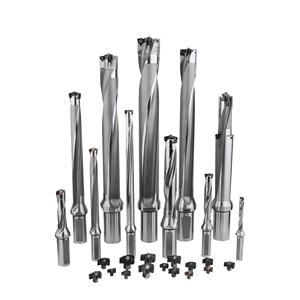
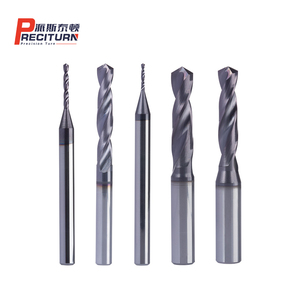
Explore our engineered line of solid carbide, coolant-through, indexable, and aerospace-grade drilling tools manufactured to DIN, NAS, and custom OEM standards.
In modern CNC high-speed machining (HSM) and automated aerostructure manufacturing, hole-making accounts for over 60% of all metal-cutting operations. Achieving minimal cost-per-hole (CPH) while maintaining sub-micron dimensional repeatability requires an intimate understanding of tungsten carbide substrate physics, surface tribology, and edge-honing mechanics. As a premier custom OEM carbide drill factory and exporter, our engineering paradigm integrates nano-composite PVD coatings with proprietary flute geometries to solve severe thermal and mechanical stresses encountered during high-feed drilling.
Sub-Micron Substrates
Formulated with 0.4µm–0.6µm grain size tungsten carbide and 8%–10% Cobalt matrix for ultra-high transverse rupture strength (>4,200 MPa).
Internal Fluid Dynamics
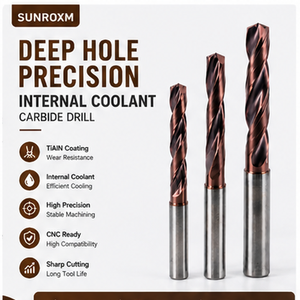
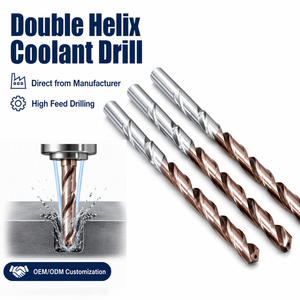
Dual helical coolant channels engineered to supply up to 70 bar hydraulic pressure, rapidly flushing chips during 12XD–50XD deep-hole cycles.
Nano-Structured Coatings
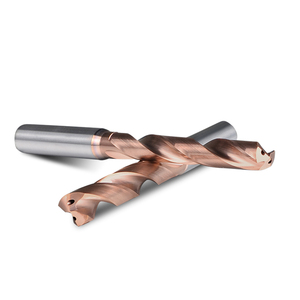
Multi-layered AlTiN, TiAlSiN, and DLC coatings providing thermal barrier protection up to 1,150°C and coefficient of friction <0.25.
1. Substrate Selection: Micro-Grain vs. Nano-Grain Tungsten Carbide
The performance foundation of any high-performance carbide drill bit lies in the Cobalt-bound WC matrix. For high-wear applications involving abrasive cast iron, 300-series stainless steel, and aerospace titanium alloys (Ti-6Al-4V), grain boundary engineering is non-negotiable. Standard micro-grain substrates (1.0µm to 2.0µm) often experience micro-chipping under intermittent shock loads. Our OEM custom facilities utilize ultra-fine sub-micron (0.4µm to 0.6µm) tungsten carbide powder alloyed with Vanadium Carbide (VC) and Chromium Carbide (Cr3C2) grain growth inhibitors. This metallurgical structure maximizes hardness (up to 93.5 HRA) without compromising fracture toughness.
Engineering Rule of Thumb: When machining heat-resistant superalloys (HRSA) like Inconel 718 or Monel, selecting a sub-micron substrate with a 10% Cobalt binder balances thermal conductivity and edge strength, reducing notch wear at the outer margin by up to 45%.
2. Surface Tribology & Advanced PVD Nano-Coatings
Friction at the tool-chip interface generates extreme thermal spikes that trigger crater wear and rapid point degradation. To combat this, our factory applies state-of-the-art Physical Vapor Deposition (PVD) and Chemical Vapor Deposition (CVD) multi-layer architecture:
Coating Formulation
Micro-Hardness (HV)
Max Service Temp (°C)
Friction Coeff.
Primary Industrial Applications
AlTiN (Aluminum Titanium Nitride)
3,300 HV
900°C
0.35
Medium to Hard Steels (<55 HRC), Alloy Steel, Cast Iron
A drill bit’s geometry dictates chip formation, cutting forces, and hole surface integrity (Ra). Standard stock drills typically feature generic 118° or 135° point angles with basic chisel edges. OEM custom manufacturing enables precision tuning of key geometrical attributes:
Chisel Edge Thinning (S-Gash & Split Point): Reduces axial thrust forces by up to 50%, eliminating drill walking and dispensing with the need for center drilling operations.
Double Margin Design: Provides four guide points inside the hole wall, improving hole cylindrical tolerance to H7/H8 while eliminating vibration chatter during deep-hole penetration (8XD to 50XD).
Controlled K-Factor Edge Honing: Utilizing brush honing and drag finishing to apply a uniform 10µm to 25µm radius on the cutting edge. This prevents premature micro-chipping while avoiding excessive cutting forces caused by overly dull edges.
Future Procurement & Technological Trends in Carbide Tooling (2025–2030)
As global enterprise manufacturers transition toward Industry 4.0 automated production cells and sustainable green machining, tooling procurement strategies are undergoing a structural evolution. High-volume B2B buyers can no longer rely on off-the-shelf consumable purchases; competitiveness hinges on integrated supply chains and bespoke tooling solutions.
1. One-Shot Drilling Integration
Eliminating separate reaming and deburring passes by deploying combination drill-reamer tools with stepped chamfer geometries for aerospace stack-ups.
2. MQL & Dry Machining Focus
Minimum Quantity Lubrication (MQL) compliant drill flutes engineered with super-hydrophobic polished channels to prevent chip clogging under low fluid volumes.
3. Closed-Loop Tungsten Recycling
Enterprise buyers prioritize factories with certified WC reclamation programs to mitigate raw material supply chain fluctuations and comply with ESG targets.
Procurement Forecast: Custom OEM vs. Standard Catalog Sourcing
Data gathered across automotive drivetrain plants and aerostructure assembly centers indicates a rapid pivot toward customized solid carbide tooling. Custom OEM tools engineered for specific workpiece hardness and machine dynamics deliver a 30% reduction in cycle time and up to 400% extended tool life compared to standardized jobber bits. Modern buyers evaluate factories based on 3D blueprinting agility, fast-turnaround prototyping (under 14 days), and automated inspection certificates (Zoller / Keyence optical inspection).
Cost-Per-Hole (CPH) Engineering Model for B2B Sourcing Decisions
Standard procurement departments often make the critical error of selecting carbide drills based solely on initial purchase price ($/tool). However, in high-volume automated CNC lines, the purchase price of the drill represents less than 5% of total machining costs. Machine hourly rate, cycle time, tool change downtime, and scrap rates dominate the financial balance sheet.
Cost-Per-Hole Formula: CPH = [ (Tool Cost + (Tool Change Downtime × Machine Hourly Rate)) / Total Holes Per Tool ] + (Machining Time Per Hole × Machine Hourly Rate)
By investing in custom OEM tungsten carbide drills with optimized PVD coatings and internal coolant passages, feed rates (vf) can frequently be doubled, reducing machining time per hole by 50%. Even if the unit price of a customized drill is 30% higher, total Cost-Per-Hole drops significantly over a 50,000-hole production run.
Pan American Tool Corporation and our partner manufacturing facilities leverage over three decades of aerospace and industrial tooling expertise. Operating under rigorous ISO 9001 quality management systems and holding official CAGE Code credentials (0PFP1), our production processes conform to international engineering standards including DIN 6535, DIN 6537, NAS 965, and NAS 907.
Manufacturing Stage
Equipment / Technology Implemented
Quality Tolerance Standard
CNC 5-Axis Flute Grinding
ANCA TX7, Walter Helitronic Vision 400
Diameter Tolerance: h6 / Shank Tolerance: h4
Edge Honing & Drag Finishing
OTEC Stream Finishing, Automated Micro-Brushing
Radius Uniformity ± 0.002mm
PVD Coating Deposition
Balzers CemeCon Magnetron Sputtering
Layer Thickness: 2.0µm – 4.0µm (±0.2µm)
Metrology & Inspection
Zoller Genius 3, Alicona 3D Optical Profilometer
100% Runout Check (<0.002mm at 3xD)
Frequently Asked Questions (FAQ) for B2B Tool Sourcing
What are the primary parameters required for a custom OEM carbide drill quote?
To provide an exact engineering quote and CAD blueprint, our technical team requires: (1) Workpiece material grade and hardness (e.g., AISI 316L, 45 HRC Hardened D2, Ti-6Al-4V), (2) Hole depth-to-diameter ratio (3XD, 5XD, 8XD, 12XD, or deep hole 50XD), (3) Internal coolant presence and pressure capability (MQL or flood coolant at >20 bar), (4) Machine tool shank requirement (DIN 6535 Form HA, HE, Weldon), and (5) Expected annual volume.
Why choose solid tungsten carbide drills over M35/M42 cobalt drills?
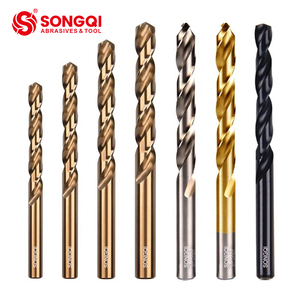
Solid tungsten carbide offers superior micro-hardness (up to 93 HRA vs 67 HRC for M42 Cobalt) and significantly higher elastic modulus. This allows CNC operators to run cutting speeds (Vc) 3x to 5x higher than cobalt tools while maintaining extreme hole positional accuracy and tight diameter tolerances (H7). Cobalt remains advantageous primarily for hand-held manual drilling where machine rigidity cannot be guaranteed.
How do internal coolant-through channels impact tool life in stainless steel?
Austenitic stainless steels (e.g., 304, 316) exhibit low thermal conductivity and severe work-hardening tendencies. High-pressure internal coolant channels deliver cutting fluid directly to the shear zone at the drill tip. This instantaneously quenches cutting temperatures, prevents thermal softening of the carbide edge, and hydraulically forces chips out through the flutes, stopping re-cutting of chips.
What is the standard lead time for custom blueprint manufacturing and OEM samples?
For custom engineered tools requiring specialized step geometries, custom point angles, or non-standard diameters, initial CAD approval takes 24–48 hours. Sample manufacturing typically completes within 10 to 14 business days. Mass production delivery ranges from 3 to 4 weeks depending on batch volume and coating specifications.
How many regrinding cycles can a high-grade solid carbide drill undergo?
With precise 5-axis CNC regrinding and original PVD recoating, a premium sub-micron carbide drill can typically be reconditioned 3 to 5 times. When reground to factory specifications (restoring original point geometry, chisel edge thinning, and K-factor edge hone), a reground drill delivers 90%–95% of the performance of a brand-new tool at a fraction of the cost.
What is the recommended runout (TIR) limit for micro-drilling applications?
For micro-drilling (<3.0mm diameter) and deep-hole machining (>8XD), total indicator reading (TIR) runout measured at the drill tip must be kept below 0.002mm (2 microns). Excessive runout causes uneven tooth loading, premature margin wear, hole oversize conditions, and catastrophic tool breakage.
Do you accommodate OEM white-label branding and custom laser etching?
Yes. We provide full white-label manufacturing for international cutting tool brands, distributors, and catalog suppliers. Services include high-precision laser marking on the drill shank (part numbers, QR codes, logos, batch codes) and custom eco-friendly protective packaging to meet global retail or industrial distribution requirements.
Partner with a Leading Custom OEM Carbide Drill Factory
Optimize your machining throughput, eliminate hole quality defects, and reduce your total Cost-Per-Hole. Contact our engineering team today for technical consultations, sample requests, and wholesale quotations.