Technical Whitepaper: Precision Custom OEM Aviation Tools Manufacturing
The modern aerospace manufacturing and maintenance, repair, and overhaul (MRO) sectors operate under strict zero-defect parameters. As commercial aircraft platforms move toward high-stress structural alloys—including Ti-6Al-4V titanium, Inconel® 718 nickel-based superalloys, 7075-T6 aluminum, and Carbon-Fiber Reinforced Polymers (CFRP)—the tooling consumed during aerostructure fabrication must deliver repeatable precision, structural integrity, and prolonged tool life. Selecting an established custom OEM aviation tools factory is a core strategic requirement for aerospace engineers, procurement agents, and fleet managers worldwide.
Precision hole-making accounts for over 60% of total metal-removal operations during final aerostructure assembly. A single commercial airframe requires up to one million fastener holes, each subjected to strict tolerance limits to eliminate micro-cracking, stress concentration, and premature fatigue failure. Whether executing close-quarter structural drilling using NAS 965 Type D threaded shank drills or finishing high-tolerance fastener seats using piloted chucking reamers, tooling geometry and substrate metallurgy directly dictate structural safety and operational cost-efficiency.
Core Technical Value: Custom OEM tooling engineered with customized web thickness, split-point self-centering tips, and advanced PVD coatings eliminates secondary deburring operations, reduces thrust force by up to 35%, and minimizes delamination in composite-metal stacked assemblies.
Metallurgical Excellence & Cutting Edge Geometries
Custom OEM aviation cutting tool factories leverage specialized substrate selection and micro-geometry configurations tailored specifically to the workpiece material:
1. M35 & M42 Cobalt High-Speed Steels (HSS-Co)
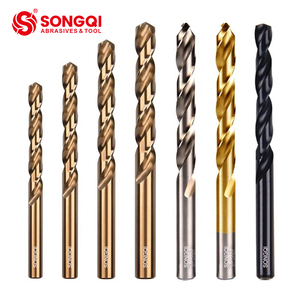
Cobalt-alloyed high-speed steel (5% Co in M35, 8% Co in M42) provides superior red-hardness and elevated wear resistance under severe thermal loads. During hand-held or air-motor drilling into tough materials such as stainless steel, chrome-moly, and work-hardening titanium alloys, cobalt drills retain sharp cutting edges at temperatures exceeding 600°C. Standard 135° split-point geometry eliminates tool "walking," doing away with center punching while decreasing thrust requirements.
2. Ultra-Fine Sub-Micron Solid Tungsten Carbide
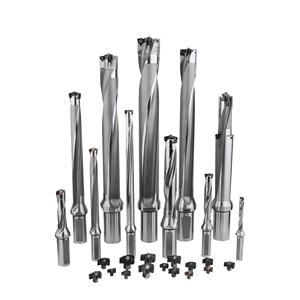
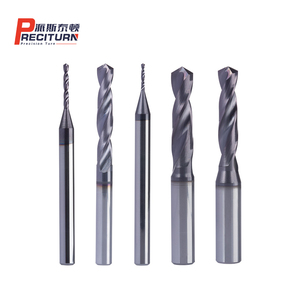
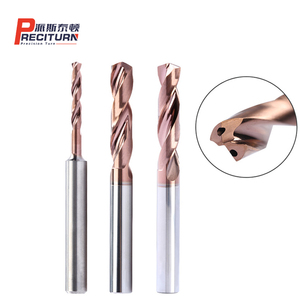
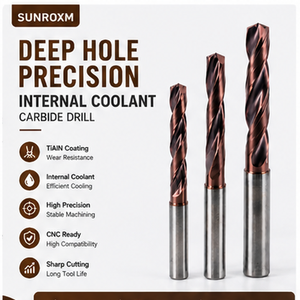
For high-volume automated CNC machining and abrasive composite trimming, solid carbide tools engineered from sub-micron tungsten carbide grains (0.4µm–0.6µm) offer superior hardness (HRA 92–94) and high transverse rupture strength. Advanced internal coolant hole geometries (3XD to 50XD deep-hole drills conforming to DIN 6535/6537) flush chips efficiently out of deep structural spars while mitigating thermal expansion at the cutting zone.
3. Specialized Double Margin & Composite Geometries
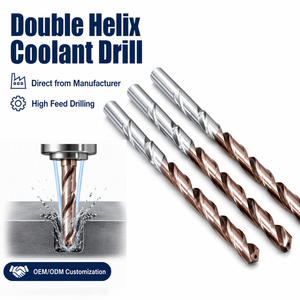
Standard twist drills can experience chatter and hole-ovality in thin-walled aluminum skins or multi-material stacks. Double margin drills introduce a second margin on each land, maintaining constant contact with the hole wall. This secondary support stabilizes the drill bit, resulting in reamer-quality surface finishes (Ra < 0.8µm) and exceptional hole roundness without requiring a dedicated secondary reaming pass.
Engineering Matrix: Substrate & Application Selection Guide
Optimizing tool life and hole tolerance requires selecting the ideal tool geometry and substrate for each work material. The engineering reference matrix below details starting operating parameters across key aerospace materials:
| Workpiece Substrate |
Recommended Tool Type |
Point Geometry |
Coolant Strategy |
Key Machining Objective |
| 2024 / 7075 Aluminum Skin |
Solid Carbide or M35 Cobalt Double Margin Drill |
118° - 135° Split Point |
Flood or MQL (Mist) |
Eliminate burr formation and hole ovality; maximize chip clearance. |
| Titanium (Ti-6Al-4V) |
M42 Cobalt 8% or TiAlN Solid Carbide Coolant Drill |
135° Heavy-Duty Split Point |
High-Pressure Internal Coolant |
Prevent work-hardening; manage thermal load; high constant feed. |
| Inconel® & Stainless Steel |
Solid Carbide Internal Coolant Drill (5XD-12XD) |
135° Reinforced Web Point |
High-Pressure Flood / Through-Tool |
High wear resistance; prevent tool chipping under severe shear stress. |
| CFRP / Composite Laminate |
Solid Carbide Brad Point / Diamond Coated Router |
Brad Point / Dagger Tip |
Dry Vacuum Extraction |
Prevent top-layer fiber pulling, exit burrs, and inter-laminar delamination. |
| CFRP / Titanium Stack |
Solid Carbide Dagger Drill / Drill-Reamer Combo |
Multi-Stepped Dagger Geometry |
MQL or Air Blast |
Single-pass hole production; minimize transition wear at stack boundary. |
Future Purchasing Trends in Aviation Cutting Tools
As aerospace OEMs accelerate build rates for modern narrow-body and wide-body commercial aircraft, procurement dynamics across global supply chains are undergoing structural shifts. Tool crib managers and supply chain directors are adopting strategic procurement frameworks designed to mitigate risk and increase total productivity:
1. Shift from Unit Cost to "Cost-Per-Hole" Metric
Modern aerospace procurement departments are stepping away from evaluating cutting tools strictly on initial purchase price. Instead, advanced buyers calculate total cost-per-hole, factoring in tool longevity, regrind potential, machine downtime, and scrap rates. Premium solid carbide internal-coolant drills with TiAlN coatings may carry a higher initial unit cost, but they reduce cycle times by 40% and yield lower total manufacturing costs over high-volume production runs.
2. Rise of Single-Pass "One-Shot" Tooling Solutions
Traditional multi-step hole preparation—drilling a pilot hole, expanding with a jobber drill, reaming to size, and countersinking—is being replaced by specialized custom single-pass tooling. OEM factories are designing custom drill-reamer and combination step-countersink bits that execute drilling, sizing, and chamfering in a single spindle stroke, reducing labor costs and eliminating tool-change positioning errors.
3. Demand for Vendor-Managed Inventory (VMI) & CAGE Code Compliance
Defense depots and tier-1 aerostructure plants require continuous supply chain transparency. Tool vendors with established CAGE Codes (e.g., CAGE Code 0PFP1), ISO quality registrations, and global logistics networks are preferred partners. Integrated VMI programs ensure that high-demand SKUs—such as NAS 965 threaded shank drills and Cleco temporary sheet metal fasteners—are stocked locally for immediate dispatch to MRO lines.
Global Industry Development Trends (2025–2030)
Looking toward the next decade of aerospace engineering, several macro trends will drive the evolution of aviation tool manufacturing:
High-Pressure Cryogenic Machining
Integration of supercritical CO2 and liquid nitrogen coolant channels directly inside carbide drill shanks to eliminate oil-based coolants and cut heat accumulation when machining titanium superalloys.
Nano-Crystalline Diamond Coatings
CVD real-diamond coatings tailored for next-generation thermoplastics (PEEK, PEKK) and highly abrasive carbon-carbon composite structures, offering up to 10x longer service life than uncoated carbide.
Robotic & Portable Air-Motor Tooling
Development of lightweight, high-torque modular pneumatic tools (such as the Nova® Pneumatic System) optimized for automated cobot end-effectors and manual wing-box assembly.