
Precision-engineered tungsten carbide rotary files, indexable drill toolholders, and deep-hole coolant cutting tools for aerospace, automotive, and heavy metalworking industries.
Industrial rotary files—commonly designated as tungsten carbide burrs or rotary rasps—represent essential rotary cutting tools utilized across aerospace maintenance, repair, and overhaul (MRO) facilities, automotive manufacturing die shops, and heavy foundry environments. Engineered to operate at rotational velocities exceeding 30,000 RPM, these precision tools demand exceptional metallurgical integrity, precise flute geometries, and stringent balance tolerances.
As leading China wholesale rotary files suppliers and exporters, top-tier manufacturing ecosystems leverage ultra-fine micro-grain tungsten carbide (WC-Co) formulations. Combining submicron tungsten carbide grains (0.4 µm to 0.8 µm particle distribution) with a balanced 6% to 12% cobalt binder matrix yields cutting heads characterized by exceptional hardness (HRA 91.5 to 93.0) and superior transverse rupture strength (TRS > 3,800 N/mm²). This structural equilibrium ensures optimal resistance against micro-chipping under intermittent shock loads during heavy deburring, contouring, and weld removal.
Information Gain Insight: The structural longevity of a rotary file depends heavily on shank-to-head brazing integrity. Modern China production lines utilize automated high-frequency induction brazing with silver-copper-nickel sandwich alloys, guaranteeing joint shear strength that exceeds 800 MPa under dynamic torsional forces.
When selecting rotary files for high-nickel aerospace superalloys (such as Inconel 718 or Titanium Ti-6Al-4V) versus general structural steel (ASTM A36), substrate metallurgy dictates failure modes. Submicron carbide grades retain sharp cutting edges under severe thermal stress, eliminating premature edge rounding. In high-speed die grinder applications, maintaining dimensional stability under friction heating prevents micro-welding of workpiece chips to the tooth flutes.
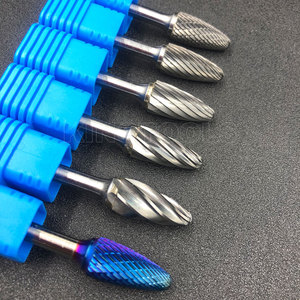
Maximizing chip evacuation efficiency and surface finish quality requires matching specific tooth flute profiles to target workpiece materials. Chinese manufacturing facilities produce standardized international geometries conforming to ISO 7755 standards alongside customized engineered cuts:
Features a right-hand spiral flute designed for cast iron, hardened steel, copper, and ferrous metals. Provides long continuous chips and smooth surface finish.
Engineered with intersecting flutes that break chips into small granular pieces. Significantly reduces operator strain, minimizes chatter, and increases control.
Designed with wide open flutes and sharp rake angles to prevent chip loading when machining soft, ductile materials like aluminum, brass, and plastics.
| Shape Designation | Profile Geometry | Primary Industrial Applications | Optimal Operating Speed (RPM) |
|---|---|---|---|
| SA (Cylindrical) | Flat end without end cut / with end cut | Surface milling, right-angle corner contouring | 15,000 – 30,000 RPM |
| SC (Cylindrical Radius End) | Cylindrical head with smooth radius nose | Internal fillet radiusing, deburring deep slots | 12,000 – 28,000 RPM |
| SF (Tree Pointed Nose) | Narrow arched shape ending in a point | Grinding narrow contours, deep pocket deburring | 15,000 – 35,000 RPM |
| SL (Taper Radius End) | Conical taper featuring round radius apex | Beveling, countersinking internal pipe joints | 10,000 – 25,000 RPM |
| SD (Ball Shape) | Spherical radius cutter head | Internal cavity blending, circular pocketing | 18,000 – 40,000 RPM |
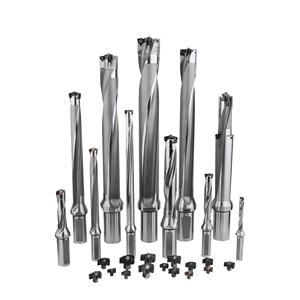
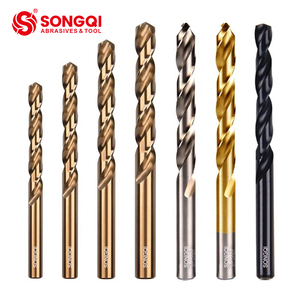
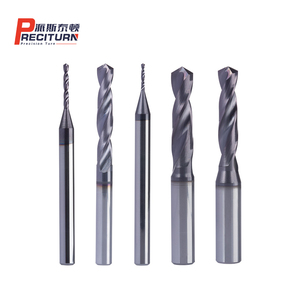
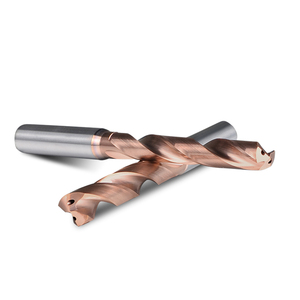
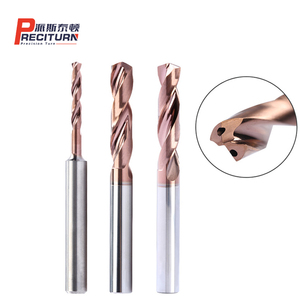
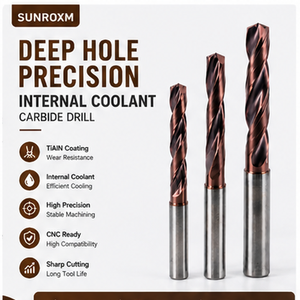
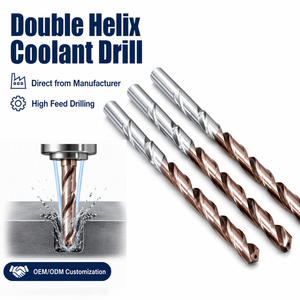
Complementing rotary files, solid tungsten carbide twist drills (ranging from jobber lengths to deep-hole 3XD, 5XD, 8XD, 12XD, and 50XD internal coolant configurations) share similar metallurgical foundations. Combining internal coolant channels with TiAlN/AlTiN physical vapor deposition (PVD) coatings lowers cutting zone temperatures by up to 250°C, extending tool lifecycle in CNC stainless steel holemaking.
As global aerospace OEMs, automotive tier-1 suppliers, and precision engineering buyers modernize supply chain operations, the procurement landscape for China wholesale rotary files and carbide tooling is undergoing structural transformations:
Manual die-grinding is increasingly yielding to automated robotic arm deburring cells equipped with compliant force-control spindles. This shift requires rotary files featuring extreme concentricity tolerances (< 0.003mm TIR) and zero dynamic imbalance. Dynamic balancing according to ISO 21940 standards ensures robotic end-effectors experience minimal vibration feedback, preventing premature spindle bearing failure.
While bright-finish carbide remains standard for non-ferrous alloys, advanced PVD coatings such as Titanium Aluminum Nitride (TiAlN), Aluminum Titanium Chromium Nitride (AlTiCrN), and Diamond-Like Carbon (DLC) are becoming standard for heavy industrial procurement. DLC coatings reduce friction coefficients to < 0.1, preventing built-up edge (BUE) formation when dry-machining aerospace-grade aluminum composites.
Leading Chinese exporters are implementing closed-loop scrap recovery programs. By reclaiming used tungsten carbide tooling and re-synthesizing high-purity micro-grain WC powders via chemical zinc processing, factories reduce carbon footprints while offering B2B buyers sustainable ESG-compliant procurement pricing models.
Partnering directly with established Chinese wholesale exporters yields strategic cost and quality advantages, blending advanced 5-axis CNC grinding precision with rigorous quality management frameworks benchmarked against aerospace standards (such as CAGE Code 0PFP1 specs):
Utilizing Swiss Rollomatic and German ANCA CNC grinding centers to maintain exact helical flute lead angles and razor-sharp edge consistency across millions of units.
Laser micrometer verification guarantees shank diameter tolerances within h6 parameters, ensuring perfect collet clamping in pneumatic tools and CNC toolholders.
Complete OEM/ODM customization capabilities—ranging from customized mono tip line indexable toolholders to private-label master kits for global brand distributors.
By integrating comprehensive manufacturing workflows—from raw powder pressing and HIP sintering to automated PVD coating and dynamic balancing—our export facilities provide direct factory-gate pricing without intermediate markups. B2B clients receive fully traceable batches supported by mill test certificates (MTC), CAGE code quality protocols, and expedited global air/sea freight logistics.
Single-cut rotary files feature a single right-hand spiral flute suitable for smooth material removal on cast iron, steel, and ferrous metals. Double-cut files add cross-cutting flutes that produce smaller chips, lower operator hand fatigue, and provide superior control on stainless steel and alloy steels. Aluminum-cut files feature wide, open flutes with polished gullets that prevent soft, ductile chips from packing and clogging the cutter head when deburring non-ferrous metals.
Shank separation or tooth failure generally stems from three primary root causes: excessive radial pressure during grinding, operating below recommended surface speed (RPM), or excessive tool runout in worn collets. Running carbide rotary files at high speeds with light, consistent pressure maximizes cutting action. Ensure runout is under 0.005mm TIR and avoid jamming the tool head into deep internal corners.
Internal coolant channels deliver high-pressure fluid directly to the cutting margins. This instantly flushes chips out of deep flutes, lubricates cutting edges, and minimizes thermal shock. In deep hole applications up to 50XD, internal cooling eliminates the need for peck-drilling cycles, boosting machine throughput by 300% to 500% while extending tool life.
Standard catalog rotary files and jobber drill bits are maintained in stock for immediate dispatch. For OEM custom toolholder geometries, specialized PVD coatings (such as AlTiN or DLC), or custom laser-etched branding, minimum order quantities start at 50 to 100 units per spec. Typical manufacturing lead times for custom orders range from 12 to 20 business days.
Every single rotary file shank is ground to strict h6 tolerance limits using centerless grinding systems. Post-brazing, tools undergo automated 100% optical laser runout testing. Rotary files engineered for high-RPM pneumatic spindle applications undergo dynamic balancing (ISO 21940 standard) to guarantee total indicator reading (TIR) remains under 0.005mm.
Partner with China's leading manufacturer and supplier of precision tungsten carbide rotary files, indexable CNC drill toolholders, and deep-hole cutting systems. Speak directly with our application engineers for custom OEM quotes.
Inquire Now