
Wholesale precision-ground carbide bits, indexable toolholders, and HSS cobalt drills manufactured to stringent NAS 965 and DIN aerospace standards.
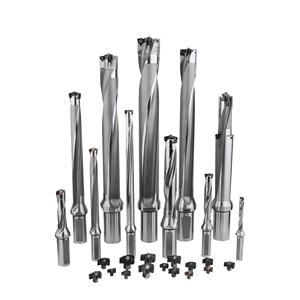
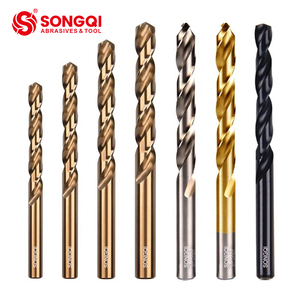
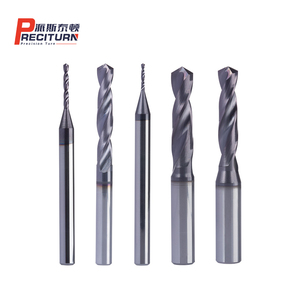
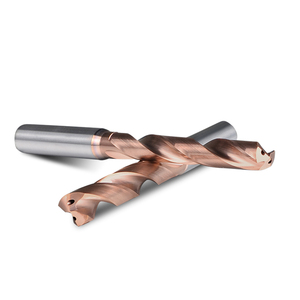
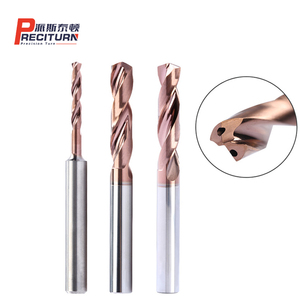
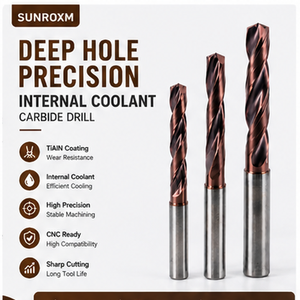
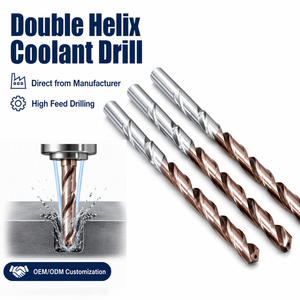
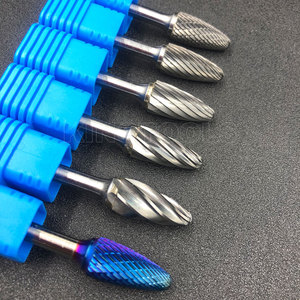
An authoritative engineering breakdown of spear-head micro-geometries designed to overcome fiber tear-out, exit delamination, and excessive friction heat in carbon-fiber structures.
Standard twist drills exert high axial thrust forces that cause matrix debonding and top/bottom laminate peeling. The primary dagger tip (typically ground at a sharp 60° to 90° angle) pierces carbon fibers progressively, while the secondary shoulder angle (120° to 135°) shears the hole boundary smoothly, entirely eliminating fiber fraying and structural micro-cracking.
Drilling multi-material hybrid stacks (CFRP layered over Ti-6Al-4V titanium alloy) presents conflicting cutting mechanics: composites require high speeds and sharp shear, whereas titanium requires low speeds and heavy thrust. Dagger drills feature optimized web thickness and polished spiral flutes to clear abrasive composite dust without packing metal chips back into the laminate layers.
Uncoated tungsten carbide rapidly degrades under the severe abrasive friction of carbon filaments. Premier China wholesale suppliers utilize Nano-PCD (Polycrystalline Diamond) or CVD diamond coatings offering hardness up to 80-100 GPa. This reduces tool edge radius growth, extending cutting lifespan by 12x to 25x over untreated tools in automated CNC production lines.
Comparative analytical dataset evaluating point geometry, failure modes, hole quality tolerance, and typical applications across primary cutting bit classes.
| Tool Geometry / Type | Point Angle Configuration | Primary Failure Mode in Composites | Hole Diameter Tolerance | Exit Delamination Risk | Ideal Application Spectrum |
|---|---|---|---|---|---|
| Carbide Dagger Drill | Dual Angle (60° Spear / 135° Chamfer) | Flank Wear / Micro-Chipping at Corner | H7 to H8 Precision | Extremely Low (< 0.05mm) | CFRP Laminates, CFRP/Titanium & Aluminium Stacks, Aircraft Skins |
| Brad Point Carbide Drill | Center Spur + Outer Cutting Spurs | Spur Radius Dullness & Thermal Overheating | H8 to H9 | Low in thin CFRP | Pure Composite Sheets, GFRP Honeycomb Panels, Non-Metallic Structural Components |
| Double Margin Twist Drill | 135° Split Point + Dual Guide Lands | Margin Heat Friction Build-up | H7 (Near Reaming Quality) | Moderate without back-up plate | Solid Aluminium 2024/7075, Hi-Lok Fastener Hole Sizing, Metallic Plates |
| Standard 118°/135° Twist Drill | Single Radius / Standard Chisel Edge | High Thrust Push-Out Delamination | H10 to H11 (Loose) | High (Fiber Fraying & Peel-Up) | General Mild Steel, Structural Hardware, Rough Hand-held Drilling |
Integrating Pan American Tool quality control standards with China's state-of-the-art 5-axis CNC grinding infrastructure to supply tier-1 aerospace distributors worldwide.
We strictly utilize ultra-fine 0.4µm - 0.6µm grain tungsten carbide rods alloyed with 10%-12% Cobalt. This optimal balance provides maximum fracture toughness against high-impact stack transitions alongside extreme wear resistance.
Every dagger tip geometry is ground on Swiss and German 5-axis CNC CNC machines equipped with real-time laser optical inspection. Mirror-polished flutes (Ra < 0.1µm) minimize resin adhesion during high-rpm machining.
Fully compliant with NAS 965 Type D, NAS 907, and NAS 937 standards. Complete batch traceability from raw powder inspection to final PVD coating guarantees reliable hole tolerance over thousands of continuous cycles.
Custom step dagger geometries, internal coolant channels, special shank lengths, and microstop threaded adapters (1/4-28 UNF) engineered from CAD drawings within 5 business days for specialized aircraft MRO tooling needs.
Anticipating technological shifts in composite manufacturing, automated orbital drilling, and sustainable B2B tooling supply chains through 2030.
As commercial aircraft OEM airframe assembly shifts toward automated end-effectors and robotic arms, dagger drills are evolving with specialized toolholder shanks and tight radial runout limits (< 0.003mm). Orbital drilling mechanics reduce cutting forces by up to 50%, allowing single-pass hole creation without reaming across wing spars and fuselage skins.
Dry drilling of carbon-fiber composites poses severe dust containment and thermal control challenges. Future procurement dictates dagger drills featuring micro internal coolant channels optimized for MQL (delivering atomized oil mist at 6-8 bar). MQL flushes abrasive dust out while keeping temperatures below the resin glass transition point (Tg ~ 180°C).
Global aerospace buying groups are shifting focus from initial unit purchase price to Cost-Per-Hole (CPH). Premium solid carbide dagger tools with specialized PCD diamond coatings deliver 20 times the hole count of cheap twist drills, yielding a 65% reduction in downtime, retooling labor, and scrapped composite structures.
Baseline spindle speeds, feed rates, and cooling protocols recommended by application engineers for handheld and automated CNC setups.
| Workpiece Substrate | Cutting Velocity (Vc: m/min) | Feed Rate (fn: mm/rev) | Cooling / Dust Control | Tool Wear Indicator |
|---|---|---|---|---|
| Standard CFRP (Toray T700 / T800 Laminate) | 90 - 150 m/min | 0.03 - 0.08 mm/rev | Vacuum Extraction / Dry or MQL Air Mist | Flank Wear > 0.15mm / Fraying at Hole Exit |
| CFRP / Titanium (Ti-6Al-4V) Hybrid Stack | 25 - 45 m/min (Limit speed for Ti) | 0.02 - 0.05 mm/rev (Constant positive feed) | Flood Coolant or High-Pressure MQL Mist | Chisel Edge Chipping / Resin Smearing |
| Glass Fiber Reinforced Polymer (GFRP) | 120 - 200 m/min | 0.04 - 0.10 mm/rev | Vacuum Extraction System | Abrasive Corner Rounding |
| CFRP / Aluminium 7075-T6 Stack | 80 - 130 m/min | 0.05 - 0.12 mm/rev | MQL Lubrication (Prevents Al buildup) | Built-up Edge (BUE) on Flutes |
Direct technical and commercial answers resolving common inquiries from tool crib managers, aerospace buyers, and machine operators.
Need custom tool geometries, CAD drawings, or competitive bulk wholesale pricing for aerospace and composite holemaking applications? Our engineering team is ready to assist.