
Engineered for extreme wear resistance, micro-grain toughness, and superior chip clearance in high-speed CNC metal processing.
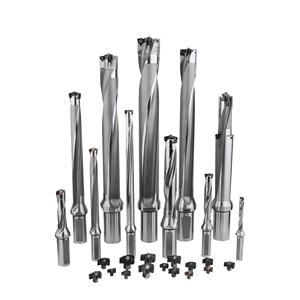
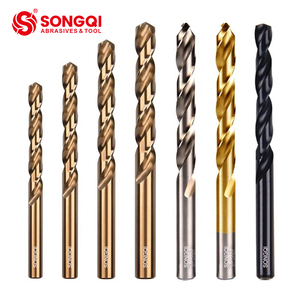
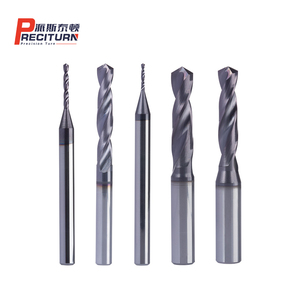
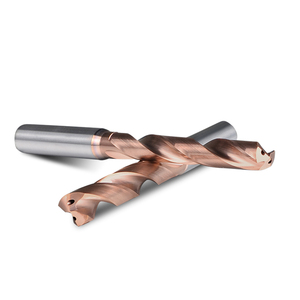
In modern high-speed CNC machining, aerospace structural assembly, and automotive powertrain production, the selection of cutting tool material dictates overall operational efficiency, surface finish integrity, and tool life predictability. As a premier China Solid Carbide Manufacturer & Global Supplier, our engineering methodology bridges advanced powder metallurgy with precision 5-axis CNC grinding technology.
Tungsten Carbide (WC-Co) is a composite material formed by embedding hard submicron carbide particles within a ductile cobalt (Co) matrix. The equilibrium between grain size, cobalt binder percentage, and hot isostatic pressing (HIP) parameters dictates the physical properties of the cutting insert or round tool.
Submicron Grain (0.4µm - 0.6µm): Delivers exceptional transverse rupture strength (TRS > 4,000 MPa) and high edge sharpness. Ideal for titanium alloys (Ti-6Al-4V), Inconel 718, and heat-resistant superalloys (HRSA) where edge toughness prevents micro-chipping.
Micro-Grain (0.8µm - 1.0µm): Optimized for balanced wear resistance and thermal dissipation in general steel machining (P-class), cast iron (K-class), and hardened steels up to HRC 65.
Strategic B2B buyers and tooling distributors are shifting from a simple "unit-cost per cutter" evaluation to a holistic Total Cost of Ownership (TCO) model. Driven by industrial automation, Industry 4.0 integration, and eco-friendly manufacturing initiatives, procurement priorities are evolving rapidly:
Off-the-shelf standard end mills and drills often fail to maximize throughput on specialized 5-axis CNC machining centers. Top tier manufacturers now provide direct CAD/CAM tooling customization—incorporating digital twin simulation to model chip formation, thermal loading, and natural harmonic resonance before physical grinding takes place.
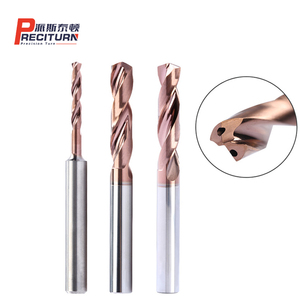
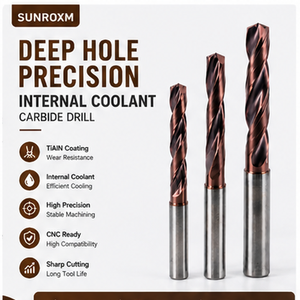
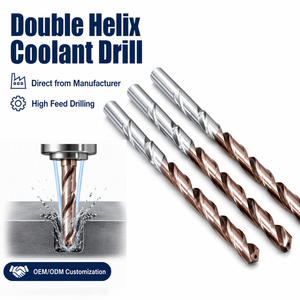
With global manufacturing standards driving toward Minimum Quantity Lubrication (MQL) and dry machining to minimize environmental footprint, solid carbide drills featuring twisted internal coolant channels (3XD, 5XD, 8XD, 12XD up to 50XD deep-hole configurations) are becoming mandatory. Internal coolant delivery directly at the shearing zone lowers temperatures by up to 350°C and accelerates chip evacuation.
Coating technology is transitioning from mono-layer TiAlN to advanced nanocomposite structures such as TiSiN (Titanium Silicon Nitride) and AlCrN (Aluminum Chromium Nitride). These nano-coatings provide ultra-high oxidation resistance (up to 1,100°C) and micro-hardness ratings exceeding 3,600 HV, effectively doubling tool life in dry milling conditions.
Talk to our senior application specialists for tailored tool geometries, custom coatings, and volume OEM quote proposals.
Contact UsThe global machine tool industry demands cutters that accommodate difficult-to-cut lightweight composite materials, stacked aerospace structures, and hardened mold steels. Key technical advancements shape our production lines:
| Technology Field | Traditional Standard | Next-Gen Innovation | Machining Impact |
|---|---|---|---|
| CFRP Composite Drilling | Standard 118° Twist Drills | Carbide Brad Point & Dagger Point Geometry | Eliminates entrance/exit delamination and fibre pull-out in carbon fibre. |
| Aerospace Stack Cutting | Single Margin Drills | Double Margin & Piloted NAS 937 Designs | Improves hole roundness and straightness; eliminates reaming passes. |
| Hardened Steel Milling | Standard TiAlN End Mills | AlCrN / DLC (Diamond-Like Carbon) Coated Carbide | Allows direct milling of hardened dies/molds up to HRC 68 without annealing. |
| High-Feed Roughing | 2-Flute / 3-Flute Straight End Mills | Variable Helix & Asymmetric Flute Indexing | Suppresses regenerative chatter; increases Metal Removal Rate (MRR) by 40%. |
Since 1986, our enterprise network has supplied precision aerospace cutting tools, aircraft drills, and pneumatic tooling to major airlines, defense maintenance repair overhaul (MRO) facilities, and precision CNC shops worldwide. Our manufacturing infrastructure is anchored by five fundamental pillars:
Our production facilities utilize top-tier 5-axis CNC grinding machines (Walter Helitronic and ANCA TX7) paired with automated robotic loading arms to guarantee flute geometry repeatability within ±0.002mm.
Every batch undergoes non-contact optical measurement via Zoller Genius 3 inspection systems and ICP-OES elemental analysis to confirm carbide grain purity and coating layer thickness consistency.
Holding defense-approved supplier status with registered CAGE Code 0PFP1, our tools conform to NAS 965 Type D, NAS 907 Type J, DIN 6535, and DIN 6537 international standards.
Get expert technical guidance on solid carbide selection, application speeds, custom ordering, and global shipping policies.
For titanium (Ti-6Al-4V) and nickel-based superalloys (Inconel 718), we recommend submicron solid carbide drills featuring a 135° split point with a reinforced core web. Operating conditions require low cutting speeds (Vc = 25–45 m/min), high constant feed rates to stay below the work-hardened layer, and flood/internal coolant delivery. The 135° split point eliminates walking and minimizes thrust forces on CNC spindles.
A double margin drill incorporates a secondary guiding margin on each land behind the main cutting edge. This design burnishes and supports the tool against the hole wall during penetration, producing exceptional hole straightness, roundness, and surface finish (Ra < 0.8µm). In stacked aluminum/titanium airframe applications, double margin drills frequently eliminate the need for subsequent reaming steps.
NAS 965 is the National Aerospace Standard defining dimensions and tolerances for threaded shank adapter drills used with compact angle-head air motors and microstop countersink cages. Type D designates the standardized 1/4"-28 UNF thread connection and specific length classes (stubby, short, long), ensuring seamless tool interchangeability across global aircraft MRO hangers.
Uncoated carbide wear rapidly when cutting abrasive carbon fibres. We employ specialized brad-point or dagger-point carbide geometries combined with CVD Diamond or DLC coatings. The sharp shear angle cuts fibres cleanly before lifting, preventing laminate delamination, burring, and resin degradation.
Standard catalogue items ship within 24–48 hours from our inventory. Custom OEM designs (special radii, chamfers, step drills, or customized PVD coatings) typically have an MOQ of 10 to 50 pieces with engineering drawing sign-off and production lead times of 2 to 3 weeks.
Yes, we ship globally across North America, Europe, the Middle East, and Asia-Pacific. Full export documentation, Certificate of Conformance (CoC), material traceability reports, and customs clearing assistance are provided for standard and contract procurement orders.
Optimize your machining throughput, extend tool life, and reduce tooling expenditure with custom-engineered solid carbide solutions.
Contact Us