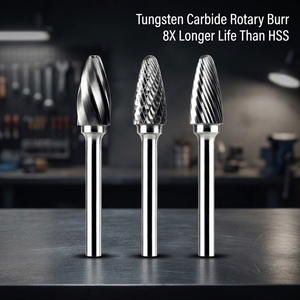
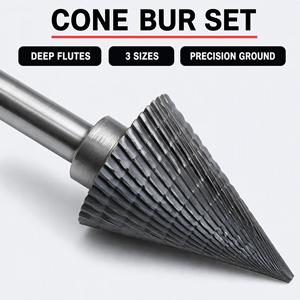
Industrial Metallurgy & Precision Cutting Tools

China Top Rotary Burs Suppliers & Exporter

Engineered Micrograin Tungsten Carbide Rotary Burs, Advanced Cut Geometries, and Technical Sourcing Whitepaper for Global Aerospace, Automotive & Industrial Manufacturing

Direct OEM Catalogue & Export Stock

High-Performance Tungsten Carbide Rotary Burs

Precision-ground using 5-axis CNC machines with HIP-sintered carbide substrates. Designed for extreme durability, low chatter, and optimal chip evacuation across ferrous and non-ferrous metals.
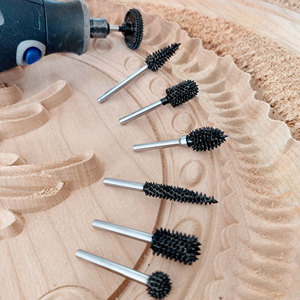
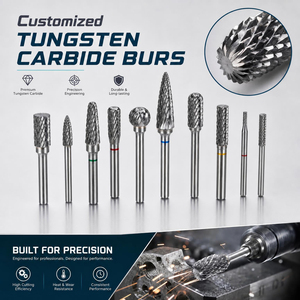
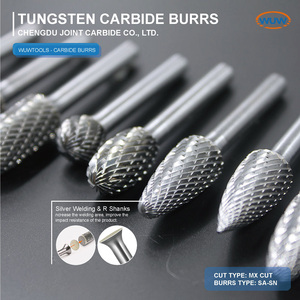
Extreme Coarse Tungsten Carbide Rotary Burr With High Hardness

Extreme Coarse Tungsten Carbide Rotary Burr With High Hardness OEM Customizable For Wood Carving Rotary Tools

  • Substrate: Micrograin WC-Co
  • Cut Type: Extreme Coarse / Fast Mill
  • Application: Rapid Stock Removal
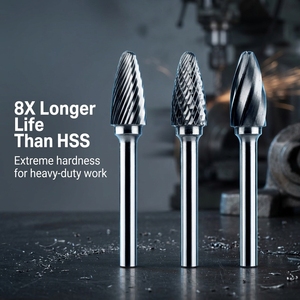
Double Cut Tungsten Carbide Burs for Burr Cutting Machine

Double Cut Tungsten Carbide Burs for Burr Cutting Machine Carbide Rotary Bur and Aluminium Cut Files Rasps Product Category

  • Flute Design: Diamond Cross-Cut
  • Surface Finish: Reduced Swarf Size
  • Compatibility: Die Grinders & CNC
Factory Price Tungsten Carbide Rotary Burr Die Grinder Bits

Factory Price Tungsten Carbide Rotary Burr Die Grinder Bits Electric Polished Cutting Tool

  • Shank Diameter: 6mm / 1/4" h6 Fit
  • Finish: Electric Mirror Polished
  • Material: Hardened Alloy Steels
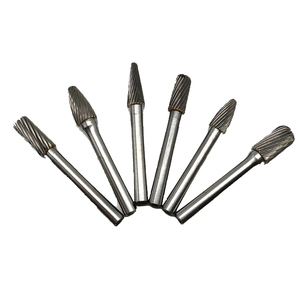
Anti-rust Hand Tools Flame Burs Rounded Cone Rotary Burr

Quick Easy sharp Anti-rust Hand Tools Flame Burs Rounded Cone Rotary Burr Tungsten Carbide

  • Shape: SH Flame / Rounded Cone
  • Coating: Anti-Rust Passivated
  • Access: Tight Radius Deburring
Carbide Rotary Burr High Hardness OEM Customized Funlin SF

Carbide Rotary Burr High Hardness OEM Customized Funlin SF For DIY Carving Projects

  • Profile: SF Tree Radius End
  • Hardness: 91.5 - 92.5 HRA
  • Customization: Laser Marking & Branding
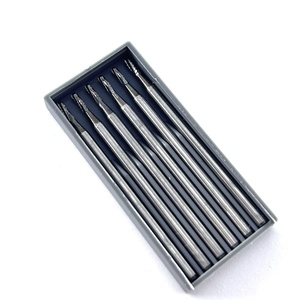
Ruifeng Straight Dome End Spiral Cut Carbide Burs

Ruifeng Straight Dome End Spiral Cut Carbide Burs for Lab Use Tools Equipment Rotary Jewelry Carving Diamond Bit

  • Application: Dental Lab & Fine Jewelry
  • Cut Type: Spiral Precision Cut
  • Concentricity: TIR < 0.01mm
Carbide Rotary Burrs High Hardness OEM Customized

Carbide Rotary Burrs High Hardness OEM Customized For Woodworking And Metal Cutting

  • Dual Utility: Hardwood & Metals
  • Braze Strength: Ag-Cu-Ni High Temp
  • Safety: Silver-Braze Reinforced
High Speed Steel Rotary Burr Double Cut for Metal Grinding

High Speed Steel Rotary Burr Double Cut for Metal Grinding Wood Carving Chamfering Deburring

  • Material: M2 / M35 Cobalt HSS
  • Feature: High Toughness Chipping Proof
  • Target: Aluminum & Mild Steel
92.5 HRA
Submicron Carbide Hardness
< 0.015 mm
Runout Accuracy (TIR)
5-Axis CNC
Flute Grinding Precision
ISO 7755
Standard Shape Compliance
Industry Whitepaper & Technical Reference

Engineering Standards for Sourcing Tungsten Carbide Rotary Burs from China

As global manufacturing demands higher surface precision, faster deburring cycle times, and enhanced tool longevity, selecting a top-tier China rotary bur supplier requires a granular understanding of metallurgical composition, manufacturing processes, and quality assurance frameworks. Tungsten carbide rotary burs (ISO 7755 standard) serve as critical rotary cutting bits in aerospace MRO, automotive powertrain casting deburring, shipbuilding weld dressing, and automated robotic finishing operations.

This technical whitepaper provides industrial buyers, procurement managers, and manufacturing engineers with the actionable metrics needed to evaluate, benchmark, and source high-efficiency tungsten carbide burs directly from China's leading OEM exporter facilities.

1. Metallurgical Foundations: Powder Metallurgy & Grain Structure

The operational lifespan and chipping resistance of a rotary bur are fundamentally governed by the alloy formulation of its cemented carbide matrix (WC-Co). Premium China rotary bur manufacturers utilize virgin sub-micron or micrograin tungsten carbide powders blended with cobalt binder systems.

  • Grain Size Metrics: Micrograin structures (0.5 µm to 0.8 µm) yield a superior balance between hardness (91.5–93.0 HRA) and transverse rupture strength (TRS > 3,500 N/mm²). This prevents premature tooth micro-chipping under high impact loads during weld seam blending.
  • Hot Isostatic Pressing (HIP) Sintering: Top suppliers employ 100-bar HIP sintering furnaces. HIP sintering eliminates internal micro-porosity, guaranteeing uniform density throughout the carbide blank and preventing catastrophic breakage under high rotational torque.
  • Shank Material & Silver Induction Brazing: Rotary burs larger than 6mm head diameter utilize a composite design: a tungsten carbide head joined to a hardened steel shank (40Cr or 8620 alloy steel, hardened to 45–48 HRC). The join strength depends on high-frequency silver-copper-nickel (Ag-Cu-Ni) induction brazing, achieving shear stress resistance exceeding 350 MPa.

Submicron Substrate

Formulated with ultra-fine WC grain sizes for peak edge sharpness, minimizing thermal degradation when deburring tough alloys like Inconel 718 and Stainless 316L.

Automated 5-Axis CNC

Ground on Swiss Rollomatic and German Walter Helitronic 5-axis CNC grinders, delivering precise rake angles and perfectly consistent flute geometry across large batch production.

Strict TIR Control

Every tool undergoes 100% automated optical inspection (AOI) to guarantee Total Indicated Runout (TIR) under 0.015mm, eliminating spindle vibration and operator fatigue.

2. Flute Geometry & Application Matching Matrix

Selecting the optimal cut style is essential for achieving maximum stock removal efficiency, chip control, and surface finish compliance. Sourcing partners must offer specialized geometries tailored to specific workpiece materials:

Cut Geometry Target Material Applications Cutting Characteristics Surface Finish Result
Double Cut (Cross Cut) Cast iron, carbon steel, stainless steel, alloy steels (< 60 HRC) Cross flutes create small granular chips, reducing tool chatter and operator exertion. Fine to Medium Smooth Finish
Single Cut (Standard Spiral) Cast iron, copper, brass, ferrous alloys, heavy stock removal Right-hand spiral flute provides long continuous chip removal with high aggression. Rapid Roughing / Moderate Finish
Non-Ferrous Cut (NF / Aluminum) Aluminum, magnesium, plastics, soft non-ferrous alloys, CFRP Deep wide flutes with high rake angle to prevent chip loading and material welding. Clean High-Rake Finish
Coarse / Fast Mill Cut Hardwood, epoxy resins, composite laminates, rubber compounds Open chip breakers allow rapid stock evacuation without heat buildup. Coarse Shaping Profile

3. ISO 7755 Shape Designations & Recommended Operating Speeds (RPM)

Rotary burs are standardized internationally under ISO 7755 (DIN 8033). Understanding these shapes enables purchasing teams to match exact tooling requirements for complex geometries:

  • SA (Cylindrical): Flat face, clean side wall contouring and right-angle edge deburring.
  • SB (Cylindrical End Cut): Features end teeth for simultaneous bottom face and side wall grinding.
  • SC (Cylindrical Radius End): Rounded nose for machining internal fillets and curved grooves.
  • SD (Ball Shape): Spherical geometry for radius grinding, concave profiling, and internal pocketing.
  • SF (Tree Radius End) & SG (Tree Pointed): Ideal for narrow contours, tool die repair, and compound curves.
  • SL (Taper Radius End): Tapered sides with a radius nose for deburring deep narrow pockets.

Recommended Surface Speed vs Rotational Speed Chart

Operating a carbide rotary bur at its optimal Peripheral Surface Speed (SFM) ensures peak metal removal rates while preventing tooth breakage caused by under-speeding (which leads to tool bouncing and chipping).

Bur Diameter (mm / Inch) Aluminum & Soft Non-Ferrous (RPM) Mild Steel & Cast Iron (RPM) Stainless Steel & High-Temp Alloys (RPM)
3mm (1/8") 45,000 – 60,000 RPM 30,000 – 45,000 RPM 25,000 – 35,000 RPM
6mm (1/4") 25,000 – 40,000 RPM 18,000 – 30,000 RPM 15,000 – 22,000 RPM
10mm (3/8") 18,000 – 30,000 RPM 13,000 – 22,000 RPM 10,000 – 16,000 RPM
12mm (1/2") 15,000 – 25,000 RPM 11,000 – 18,000 RPM 9,000 – 14,000 RPM
16mm (5/8") 12,000 – 20,000 RPM 8,000 – 14,000 RPM 7,000 – 11,000 RPM
OEM Sourcing Confidence

Why Partner with China's Premier Rotary Bur Exporters

Combining state-of-the-art CNC grinding infrastructure, rigorous quality assurance, and end-to-end supply chain integration to give global distributors and enterprise buyers an unbeatable market edge.

Custom OEM/ODM Manufacturing

Full customization of bur heads, long shank extensions (up to 300mm / 12"), non-standard fluting, custom coatings (TiAlN, DLC, AlCrN), and private-label laser marking.

ISO 9001 Quality System

Complete traceability from raw powder batch certification to finished product inspections. Dynamic balance testing ensures stable high-speed performance up to 70,000 RPM.

Global Logistics & Stock Programs

Rapid dispatch for standard ISO bur sets, tailored distributor master cartons, protective plastic micro-capsules, and seamless shipping via air freight, ocean freight, and express routes worldwide.

Strategic Sourcing Insights

Future Trends in Rotary Bur Manufacturing & Global Sourcing (2025–2030)

The global industrial deburring landscape is transitioning from manual hand-held air tool grinding to automated, robotic, and high-precision CNC deburring cells. Sourcing partners in China are adapting to these trends by implementing advanced manufacturing technologies:

1. Advanced Physical Vapor Deposition (PVD) Coatings

While bright-finished carbide burs remain standard for general machining, nano-structured PVD coatings are growing rapidly for demanding applications:

  • TiAlN (Titanium Aluminum Nitride): Provides extreme thermal oxidation resistance, enabling dry deburring of tough stainless steel and high-temp superalloys at temperatures up to 900°C.
  • DLC (Diamond-Like Carbon): Features an ultra-low friction coefficient (< 0.1), preventing aluminum adhesion and galling during automated high-volume die casting deburring.

2. Robotic Arm Compatible Geometries

Robotic deburring units demand tool consistency and predictable radial cutting forces. Leading China exporters now supply high-precision burs with reinforced core dimensions, vibration-dampening unequal flute indexing, and ultra-tight shank tolerances (h6 classification) to integrate seamlessly with automated EOAT (End-of-Arm Tooling).

3. Circular Carbide & Sustainable Powder Sourcing

Top China suppliers are adopting green manufacturing initiatives, integrating recycled carbide scrap processing into raw material refining. Reclaimed micrograin tungsten carbide reduces carbon footprint by over 65% while maintaining strict purity levels compliant with global aerospace standards.

4. Total Cost of Ownership (TCO) Sourcing Strategy

Procurement teams are shifting away from evaluating cost per unit toward analyzing Cost Per Burred Edge. High-grade China rotary burs engineered with submicron substrates deliver 30% to 50% longer working life, drastically reducing tool changeover downtime and yielding lower total manufacturing costs.

Procurement & Technical Support

Frequently Asked Questions (FAQ)

Get expert answers on tooling selection, custom OEM requirements, brazing safety standards, and international order fulfillment.

What is the difference between Single Cut and Double Cut rotary burs?
Single cut rotary burs feature a continuous right-hand spiral flute designed for rapid stock removal, long chip clearing, and heavy machining on cast iron, steel, and copper. Double cut (or cross cut) burs have crisscrossing flutes that break chips into small granules, offering smooth control, reduced operator hand strain, and a finer surface finish on hard materials.
How do you prevent carbide head breakage at the brazed joint during heavy grinding?
Head separation is prevented by utilizing high-frequency silver-copper-nickel (Ag-Cu-Ni) induction brazing combined with controlled post-braze annealing. Our automated brazing process guarantees 100% capillary fill along the shank joint, achieving a joint shear strength exceeding 350 MPa. Additionally, operators must avoid applying excessive leverage or dwelling on a single spot during high-RPM operation.
Can I order custom shank lengths or specialized coatings for OEM applications?
Yes. As a direct China manufacturer and exporter, we offer complete OEM customization. We manufacture long shank extension burs up to 300mm (12 inches) for deep cavity deburring, along with specialized PVD coatings (TiAlN, DLC, AlCrN) and custom shank diameters (1/8", 1/4", 3mm, 6mm, 8mm) with laser-etched part numbers and logo branding.
Which cut geometry is recommended for aluminum and soft non-ferrous metals?
For aluminum, brass, bronze, magnesium, and soft plastics, always choose Non-Ferrous (NF) / Aluminum Cut burs. These burs feature wide, deep flutes with sharp, high-rake cutting edges that allow fast chip evacuation and prevent aluminum swarf from melting, welding, and clogging the teeth.
What quality inspection standards are applied before international export?
Every production batch undergoes 100% Total Indicated Runout (TIR) testing (guaranteed < 0.015mm), automated optical flute geometry checks, dynamic balance testing for high-speed stability, and destructive torque-shear testing on silver-brazed joints to ensure strict compliance with ISO 7755 standards.
What is the typical lead time and Minimum Order Quantity (MOQ) for wholesale orders?
Standard catalog items (ISO standard shapes in double/single cut) are stocked for immediate dispatch within 3–5 business days. Custom OEM orders, long shank extensions, or specific PVD-coated orders typically require 15–20 manufacturing days. MOQs start as low as 50 pieces per item size for standard lines, with flexible volume pricing tiers for global distributors.

Partner with China's Leading Rotary Bur Exporter

Looking for reliable OEM tooling manufacturing, custom long-shank burs, or factory-direct wholesale pricing? Contact our application engineering team today for immediate technical consultation and custom price quotes.