
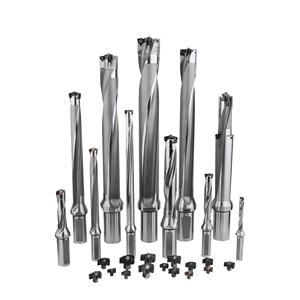
Advanced modular indexable drill system with ultra-rigid mono tip line holder for high-speed CNC hole making.
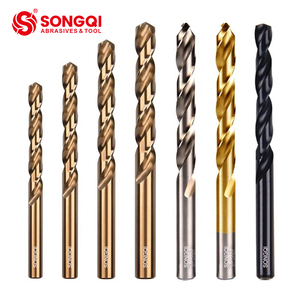
Industrial-grade M35 5% Cobalt parallel shank twist drill engineered for stainless steel, alloy metals, and titanium drilling.
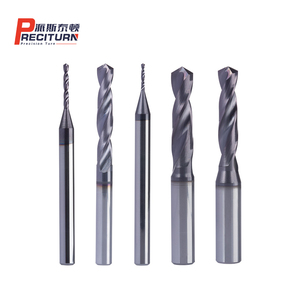
High-precision sub-micron grain tungsten carbide drill bits designed for high-tolerance CNC machining applications.
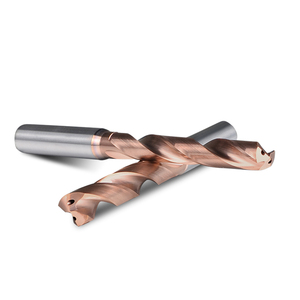
Premium jobber length tungsten carbide drills delivering exceptional wear resistance and chatter-free high-feed drilling.
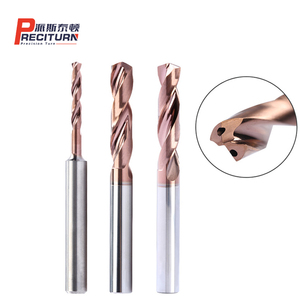
Ultra-long deep hole drilling bits ranging from 3XD up to 50XD with reinforced core and DIN standard straight shanks.
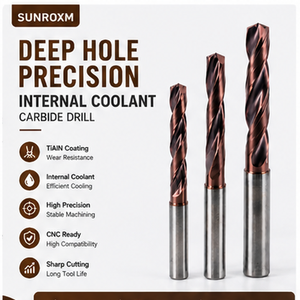
Nanostructured TiAlN PVD coated internal coolant drill bits engineered for continuous chip flushing in hardened steel.
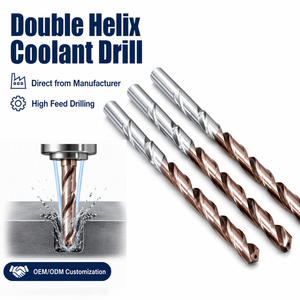
Dual internal coolant duct design maximizing thermal dissipation and chip evacuation during heavy stainless steel machining.
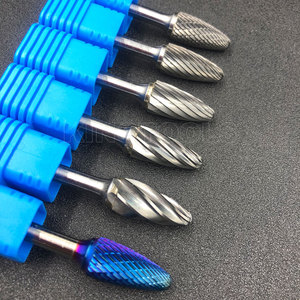
Heavy-duty core countersink cutters with 6mm shank and tungsten carbide burr geometry for deburring and edge chamfering.
Why Leading Global Aerostructure Manufacturers, Automotive Tier-1 Suppliers, and Heavy CNC Machining Hubs Standardize on Our Tooling Solutions.
Our production facility operates strictly under ISO 9001:2015 standards, producing insert bits, microstop countersink tooling, and double-margin drills compliant with NAS 965 Type D, NAS 907 Type J, and DIN 6537 specifications for critical structural assemblies.
We source pure Virgin Swedish ultra-fine grain tungsten carbide powders (0.4µm - 0.6µm) with 10%-12% Cobalt binder ratios, resulting in tools with transverse rupture strength exceeding 4,000 MPa and extreme hardness up to 93.5 HRA.
Utilizing Swiss Platit PVD coating equipment, our insert bits feature multi-layer TiAlN, AlCrN, and Diamond-Like Carbon (DLC) coatings, maintaining thermal resistance up to 1,100°C and reducing cutting friction coefficients down to 0.15.
An authoritative analysis of chip formation dynamics, internal coolant hydraulics, and tool wear physics in high-efficiency drilling operations.
In modern high-speed CNC manufacturing, hole-making accounts for over 40% of all metal-cutting operations. Achieving minimal cost-per-hole while maintaining strict geometric tolerances requires a comprehensive alignment between insert bit metallurgy, coating tribology, and toolholder rigidity. As a premier China Insert Bits Manufacturer & Factory, our R&D initiatives focus heavily on resolving the fundamental causes of tool failure: thermal cracking, flank wear, built-up edge (BUE), and micro-chipping during high-feed drilling in challenging materials like Inconel 718, Titanium Ti-6Al-4V, and 316L Stainless Steel.
The foundation of cutting tool longevity resides in the sintering phase of tungsten carbide (WC). Standard commercial bits utilize medium-grain carbide (1.5µm - 2.5µm), which succumbs quickly to grain pull-out under heavy impact loading. Our factory utilizes Sinter-HIP (Hot Isostatic Pressing) technology at 1,450°C and 100 bar pressure. This process eliminates internal micro-voids, increasing density to 14.5 g/cm³.
For indexable insert bits and solid carbide 3xD-50xD deep-hole drills, balancing hardness (HRA) and fracture toughness (K1c) is paramount. By fine-tuning Vanadium Carbide (VC) and Chromium Carbide (Cr3C2) grain inhibitors, we restrict carbide grain growth during sintering, yielding a homogeneous microstructure that withstands aggressive shear stress during interrupted cutting.
Thermal management at the cutting zone directly dictates tool life. Dry or external flood cooling is utterly insufficient when drilling depths exceed 3xD, as coolant cannot penetrate against the exiting flow of hot metal chips. Our solid carbide drills and indexable insert toolholders incorporate helical internal coolant channels optimized via Computational Fluid Dynamics (CFD).
By shifting from standard circular coolant holes to specialized kidney-shaped (elliptical) internal ducts, we increase coolant volume flow by 42% and pressure retention by 35%. This high-pressure fluid stream (up to 70 bar / 1,000 PSI) serves two critical engineering functions:
Conventional 118° drill points exert massive axial thrust forces, requiring center punching or pilot holes to prevent drill "walking". Our precision 5-axis CNC grinding centers utilize 135° self-centering split point geometry engineered according to DIN 6537 standards. The chisel edge is thinned down to a micro-blade, reducing axial thrust requirements by up to 50% compared to standard point configurations.
| Tool Family & Geometry | Target Substrate Material | Max Depth / Speed (Vc) | Coolant / Pressure Requirement | Primary Industrial Benefit |
|---|---|---|---|---|
| M35 5% Cobalt HSS Twist Drill | Carbon Steel, Structural Steel, Brass | 5xD | 25-35 m/min | External Flood / MQL (1-5 bar) | Cost-effective high-flexibility drilling for general workshop tooling. |
| Solid Carbide 135° Split Point | Stainless Steel (304/316), Cast Iron | 3xD - 12xD | 80-140 m/min | Internal Coolant (20-40 bar) | Exceptional hole roundness, H7 precision fit, zero pilot drilling needed. |
| TiAlN Coated Deep Hole Carbide | Hardened Alloy Steel (>55 HRC) | 12xD - 50XD | 60-110 m/min | High-Pressure Internal (>50 bar) | Eliminates pecking cycles in ultra-deep mold base and oil industry drilling. |
| Indexable Mono Tip Toolholder | Heavy Steel Plate, Structural Frames | 2xD - 5xD | 120-220 m/min | Through-Spindle Internal (15-30 bar) | Lowest cost-per-hole; quick-change insert tips without toolholder disassembly. |
| Carbide Brad Point / Dagger Bit | CFRP, GFRP, Carbon Fiber Stacks | 3xD - 5xD | 150-300 m/min | Dry Vacuum / Air Blast | Zero delamination, clean entry/exit, prevents fiber pull-out in aerospace skins. |
Strategic foresight for procurement managers, tooling engineers, and global supply chain directors preparing for Industry 4.0 integration.
Procurement strategies are rapidly shifting toward modular indexable insert drill bodies. Modern factories reduce raw tungsten consumption and lower tooling inventory costs by replacing only the worn carbide insert tip rather than discarding the entire toolholder shank, reducing total cost of ownership (TCO) by 35%.
Next-generation insert bits will integrate embedded RFID chips and sensor-driven toolholders. These smart tools interface directly with CNC machine controls via IO-Link, transmitting real-time data on cutting temperatures, vibration frequencies, and flank wear to prevent unexpected tool breakage during unattended machining.
With global raw material supply chains tightening, tier-1 buyers demand sustainable manufacturing practices. Our factory leads the industry with closed-loop tungsten carbide recycling programs, repurchasing worn insert bits and re-sintering refined powder to reduce carbon emissions by over 60% per unit produced.
The historical trajectory of hole-making tools highlights a constant struggle between cutting speed, temperature resistance, and mechanical toughness. In the early 20th century, High-Speed Steel (HSS) replaced plain carbon steel, enabling cutting speeds up to 18 m/min. The introduction of M35 (5% Cobalt) and M42 (8% Cobalt) alloys represented a significant leap, allowing continuous cutting of tougher alloy steels.
However, the modern era of automated CNC machining demanded a quantum leap in productivity. Solid tungsten carbide bits emerged as the definitive standard, pushing cutting speeds beyond 150 m/min. Today, our research is centered on nanocomposite PVD coatings like AlTiN/Si3N4, where nanolayering prevents crack propagation at a microscopic scale. This technological evolution enables modern machine shops to achieve high-feed rates while maintaining dimensional stability over thousands of continuous drilling cycles.
Expert Guidance for Machine Tool Operators, Tool Crib Directors, and Supply Chain Officers
Upgrade your CNC machining efficiency with custom-engineered solid carbide drills, indexable insert systems, and high-performance industrial cutting tools built to ISO and NAS standards.
Get a Quote