
Engineered for high-feed metalworking, titanium alloys, stainless steel, and automotive CNC automated production lines.
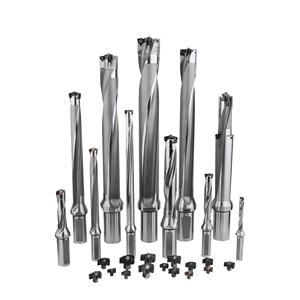
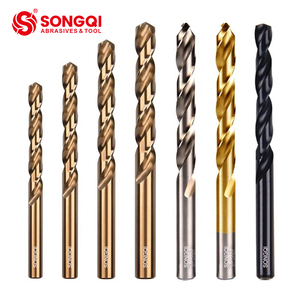
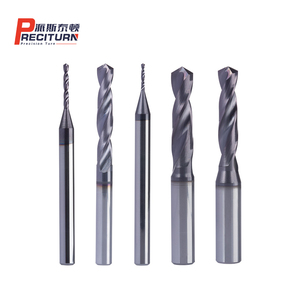
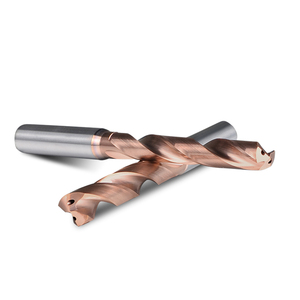
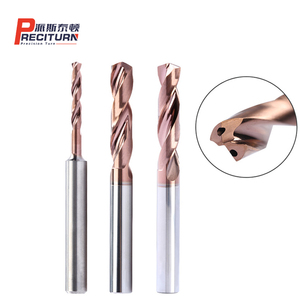
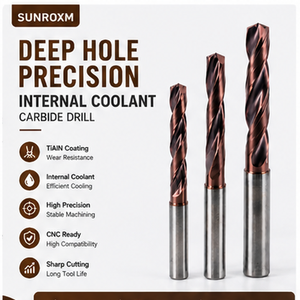
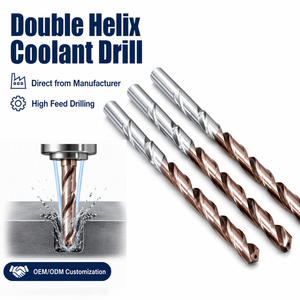
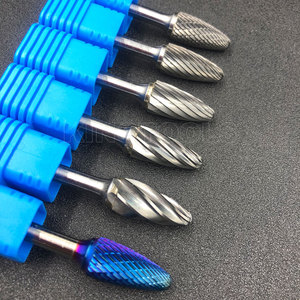
Why Tier-1 global manufacturers source high-speed steel and micro-grain carbide drills from top Chinese exporters.
In high-precision manufacturing, hole making remains one of the most critical metal-cutting operations. Selecting the correct drill bit chemistry, flute profile, and surface coating directly influences operational efficiency, tooling longevity, and hole quality tolerances (H7-H8 fit). As a leading exporter of High-Speed Steel (HSS) and tungsten carbide tools, China’s tooling industry has transitioned into advanced metallurgical engineering, delivering standard-compliant tools for demanding industries such as aerospace, automotive powertrains, energy equipment, and precision electronics.
The operational performance of HSS drill bits is fundamentally governed by their alloy composition and subsequent thermal treatment (hardening and tempering phases). Modern industrial buyers evaluate drill bits based on red-hardness—the capability of the cutting edge to retain structural integrity at elevated temperatures exceeding 500°C–650°C.
Uncoated HSS tools suffer from thermal oxidation and chip friction when subjected to high surface speeds. Modern export-grade HSS drills employ Physical Vapor Deposition (PVD) to apply micro-thin wear barriers that reduce coefficient friction and resist thermal transfer into the tool body.
| Coating Technology | Composition | Micro-Hardness (HV) | Max Temp (°C) | Coefficient Friction | Primary Industrial Application |
|---|---|---|---|---|---|
| TiN (Titanium Nitride) | TiN | 2,300 HV | 600°C | 0.40 | General Purpose Structural Steels, Plastics, Brass |
| TiAlN (Titanium Aluminum Nitride) | TiAlN (Nanocomposite) | 3,300 HV | 800°C | 0.30 | High Speed / Dry Stainless Steel, Cast Iron, CNC Machining |
| AlTiN (Aluminum Titanium Nitride) | AlTiN (High Al) | 3,600 HV | 900°C | 0.25 | Hardened Alloys Titanium, Inconel, Mold Steels (>45 HRC) |
| DLC (Diamond-Like Carbon) | sp3 Carbon Matrix | 4,000–5,000 HV | 400°C | 0.10 | Non-Ferrous Copper, CFRP, High-Silicon Aluminum |
Combining world-class 5-axis CNC grinding facilities with rigid quality assurance and export logistics.
Utilizing high-end Walter Helitronic and ANCA 5-axis CNC grinding systems to ensure ultra-precise point geometries, split-point concentricity within 0.002mm, and optimized flute surface finishes that eliminate chip jamming.
All HSS and carbide tools strictly conform to international engineering standards, including DIN 338, DIN 1897, DIN 6535, NAS 965, and ANSI specifications, ensuring complete tooling interchangeability across global production platforms.
Custom OEM engineering capabilities covering specific point angles (118°, 135° split point, brad point, dagger points), specialized margin widths (double-margin design), and internal coolant-through configurations for automated cell integration.
Exporting to over 50 countries with comprehensive logistics support, customs documentation, CAGE Code compatibility for aviation maintenance (MRO), and protected packaging protocols to ensure zero-defect global delivery.
Direct factory procurement reduces tool acquisition costs by 30% to 50% compared to Western brands while matching tool life performance through optimized metallurgy and nano-composite PVD coatings.
Every shipment is accompanied by complete mill test certificates (MTC), heat-treatment trace logs, hardness verification reports, and optical CMM inspection parameter sheets for 100% quality traceability.
Strategic insights for procurement managers, tooling engineers, and global distributors.
With high-speed machining (HSM) dominating automotive and aerospace components, the demand for internal coolant-through drills (3XD, 5XD, 8XD, up to 50XD) has surged. Internal coolant channels deliver high-pressure fluid directly to the cutting edge, reducing thermal shock and instantly evacuating chips. China's tooling suppliers are investing heavily in sintering technologies that produce helical coolant channels inside micro-grain solid carbide and powder metallurgy HSS blanks.
Conventional ingot-cast HSS suffers from carbide segregation during cooling, leading to brittle microscopic regions. Powder Metallurgy HSS (PM M4, PM 30, PM 60) solves this problem by atomizing liquid alloy into fine powder, followed by hot isostatic pressing (HIP). PM-HSS offers isotropic mechanical properties, dramatically higher toughness, and superior wear resistance, bridging the gap between conventional M35 HSS and tungsten carbide.
Global procurement teams are moving away from fragmented sourcing models toward integrated Chinese OEM manufacturing partners capable of delivering custom shank designs (such as NAS 965 threaded shanks, ISO 9766 indexable shanks, and DIN 6535 HA/HB flat shanks) alongside standardized drill bits. This approach lowers total procurement overhead while ensuring batch-to-batch consistency across multi-national plants.
Technical guidance from our senior cutting tool engineers and export specialists.