
1. Strategic Overview: China's Escalating Role in High-Precision Aerospace Tooling Manufacturing
The global commercial aviation and defense manufacturing sectors are experiencing an unprecedented surge in demand for high-reliability, tolerance-critical cutting tools. As modern airframes transition from legacy aluminum sheet metals to advanced heat-resistant superalloys (HRSA) such as Titanium Ti-6Al-4V, Inconel 718, and Carbon-Fiber Reinforced Polymers (CFRP), the technical requirements placed on drilling, reaming, countersinking, and routing tools have intensified exponentially. Evaluating the global manufacturing supply chain reveals that leading Chinese aircraft tool manufacturers have established world-class manufacturing eco-systems. Powered by multi-axis CNC grinding centers, nano-composite PVD/CVD coating technology, and stringent metallurgical quality control, China has emerged as a premier sourcing hub for tier-1 aerostructure manufacturers, commercial airlines, and MRO (Maintenance, Repair, and Overhaul) facilities worldwide.
Sourcing aircraft tools from China is no longer merely a cost-efficiency initiative; it represents a strategic alignment with state-of-the-art metallurgical engineering and flexible custom tooling manufacturing capabilities. Chinese precision manufacturers deliver tooling fully compliant with rigorous international aerospace norms including NAS 965 (National Aerospace Standard for threaded shank adapter drills), DIN 6535/6537, and specialized OEM standards for Hi-Lok® and rivet installation system tolerances.
2. Engineering Deep-Dive: Material Metallurgies & Advanced Tool Geometries
Achieving defect-free hole generation in aerospace manufacturing requires matching specific cutting tool substrates and tip geometries to workpiece material characteristics. Below is an authoritative technical analysis of material-to-tool selection for modern aerospace production:
Titanium Alloys (Ti-6Al-4V)
Requires M42/M35 Cobalt HSS or ultra-fine micro-grain solid carbide with a 135° split point. Heavy web construction and polished flutes prevent chip welding and eliminate work-hardening during drilling cycles.
CFRP Composite Laminates
Demands solid carbide brad-point or dagger drill geometries. The specialized shearing action cuts carbon fibers before exit, completely preventing top/bottom layer delamination, burr generation, and resin fiber pull-out.
Inconel & Stainless Steel
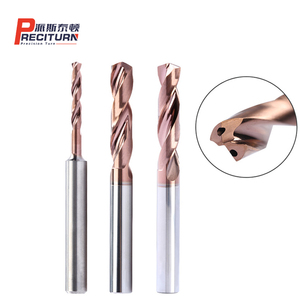
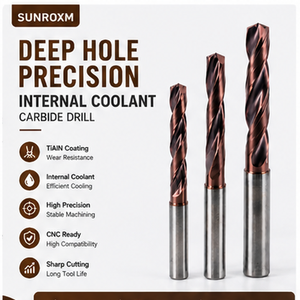
Utilizes TiAlN or AlTiN nano-coated 2-flute/3-flute internal coolant drills. High temperature oxidation resistance allows stable performance under extreme friction conditions without tool point chipping.
Technical Matrix: Tool Selection & Operating Parameters for Aerospace Hole Making
| Aerospace Workpiece Material | Recommended Substrate & Coating | Point Geometry / Standard | Optimal Speed & Feed Strategy | Key Machining Advantages |
|---|---|---|---|---|
| Aluminium Alloys (2024-T3 / 7075-T6) | Uncoated / DLC Coated Solid Carbide or M35 Cobalt | 118° - 135° Split Point / Double Margin (NAS 937) | High RPM, steady feed, flood coolant or high-pressure MQL | Eliminates hole ovality; second margin supports straighter hole wall finish. |
| Titanium Alloys (Ti-6Al-4V Grade 5) | Micro-Grain Carbide + AlTiN / TiAlN PVD Coating | 135° Self-Centering Point, Reinforced Core Flute | Low cutting speed (SFM), high constant feed pressure | Prevents work-hardening; split point eliminates walk on curved wing skins. |
| Inconel 718 / Rene 41 Superalloys | German HSS M35 (5% Co) / M42 (8% Co) Cobalt | 135° Split Point, Heavy Duty Web Radius | Low SFM, rigid clamping, positive feed, continuous coolant flow | Retains hot hardness up to 650°C; resists flank wear and thermal cracking. |
| Carbon Fiber Laminates (CFRP) | Diamond-Like Carbon (DLC) / Diamond Coated Solid Carbide | Brad-Point / Dagger Point / Taper Router Geometry | High RPM, moderate feed, vacuum dust extraction | Prevents entry/exit delamination, edge fraying, and inner wall fibre fuzzing. |
| CFRP / Titanium Stack Assemblies | Sub-micron Grain Solid Carbide with Special Step Geometry | Combined Dagger & Double Margin Step Point | Controlled dual-feed rates based on material transition point | Single-pass drilling without tool change; maintains strict H8 hole tolerances. |
3. Procurement Trends & Strategic Sourcing in Aerospace Tooling (2025–2030)
As commercial aviation supply chains strive to recover throughput rates, purchasing directors and tooling engineers are shifting their procurement strategies toward suppliers that offer integrated value, rapid customization, and total cost of ownership (TCO) optimization. Key procurement trends shaping the aircraft tooling sector include:
- Transition to One-Shot Drilling & Reaming: Aerostructures manufacturing lines are increasingly replacing two-step operation setups (drilling followed by reaming) with high-precision double-margin drills and piloted combination cutters. This single-pass capability cuts cycle times by up to 40% while achieving strict micro-inch surface finishes.
- Demand for Modular & Interchangeable Tooling Systems: Portable air drills and right-angle motors (such as modular pneumatic systems) require standardized threaded shank adapter drills (NAS 965 Type D). Modular tooling setups enable quick changeovers directly on the hangar floor, drastically reducing maintenance downtime during aircraft AOG (Aircraft On Ground) situations.
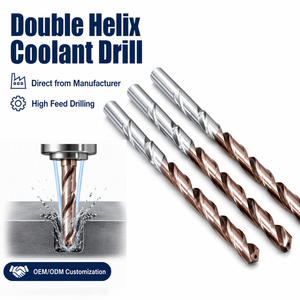
- Expansion of High-Aspect Deep-Hole Coolant Technology: CNC machining centers are adopting micro-internal coolant twist drills with depth-to-diameter ratios ranging from 3XD to 50XD. Internal coolant holes deliver lubricant directly to the cutting zone, flushing chips out immediately and extending tool life in deep spar hole drilling.
- Supply Chain Diversification & Direct Factory Procurement: Aerospace buyers are expanding vendor portfolios by directly partnering with verified Chinese OEM manufacturers who offer end-to-end control from tungsten powder sintering to 5-axis CNC grinding and optical 3D inspection.
4. Technological Evolution: Advanced Manufacturing Processes Behind China's Leading Suppliers
The competitive advantage of leading Chinese aircraft tools manufacturers lies in heavy investments in state-of-the-art production and testing infrastructure. Understanding the manufacturing workflow highlights why top global aviation brands rely on Chinese sourcing:
5-Axis CNC Precision Grinding
Utilizing high-end Swiss Rollomatic and German ANCA multi-axis CNC grinding machines, tool profiles achieve micro-tolerances within ±0.002mm, ensuring perfectly symmetric cutting edges and split point geometry.
Physical Vapor Deposition (PVD) Coatings
Advanced PVD coating chambers apply multi-layer TiAlN, AlTiN, and DLC coatings. Coating thickness and surface adhesion are strictly controlled to maximize heat resistance and wear protection.
Zoller Optical & Metrology Inspection
100% optical inspection via Zoller Genius tool presetter machines verifies helical angle, relief angle, concentricity, and point symmetry before packaging, ensuring zero-defect delivery.
5. Comprehensive Enterprise Advantages & Quality Assurance Standards
When selecting a Chinese manufacturing partner for aircraft tools, enterprise credentials and standard compliance are critical. Leading suppliers differentiate themselves through robust manufacturing systems:
- AS9100D & ISO 9001:2015 Quality Certification: Rigorous quality management systems designed specifically for aviation, space, and defense organizations.
- Comprehensive NAS Specification Coverage: Production capabilities spanning NAS 965 Type D threaded shank adapter drills, NAS 907 cobalt aircraft jobber drills, and NAS 937 double margin configurations.
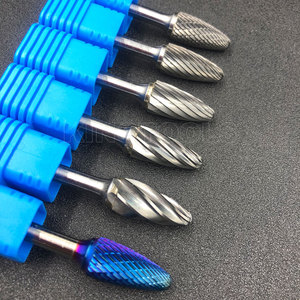
- Custom Tooling Prototyping in 7-10 Days: Rapid OEM/ODM design services allowing custom stepped drills, special countersink pilot sizes, and custom burr shapes tailored to unique airframe geometries.
- Global Logistics & Export Infrastructure: Experienced in global air-freight logistics, customs documentation, and protective anti-corrosion packaging for international dispatch.