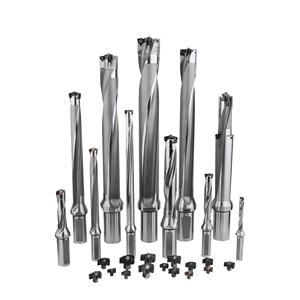

Factory-direct OEM/ODM micro-grain carbide and cobalt cutting tools engineered to exceed Boeing BAC5423, Airbus AIPS, and NAS 965 structural standards.
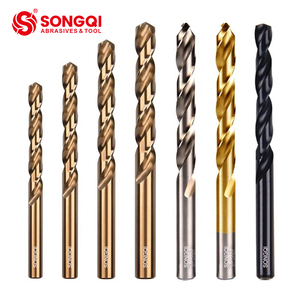
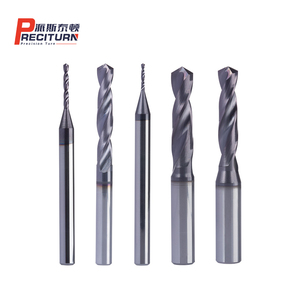
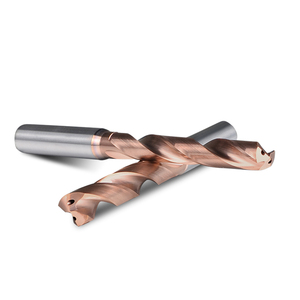
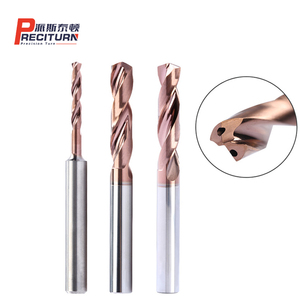
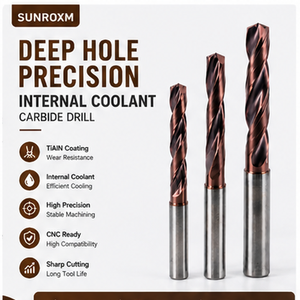
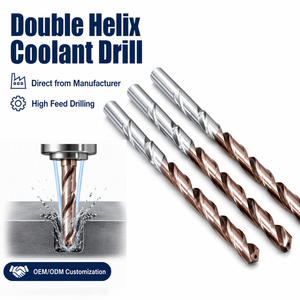
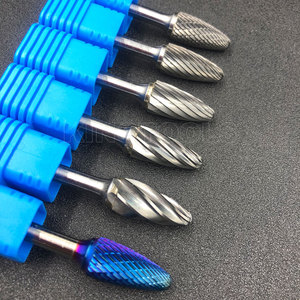
The global commercial aviation and defense manufacturing ecosystem is undergoing an unprecedented shift. As aerostructure OEMs, Tier-1 system integrators, and airline MRO (Maintenance, Repair, and Overhaul) facilities ramp up production rates for narrowbody and widebody platforms, the demand for precision cutting tools has reached critical intensity. Modern airframes rely heavily on advanced structural materials—specifically Carbon Fiber Reinforced Polymers (CFRP), high-strength titanium alloys (such as Ti-6Al-4V), nickel-based superalloys (Inconel® 718), and heat-treated 7075-T6 aluminum alloys. Machining these heterogeneous, highly abrasive, and heat-sensitive materials demands tooling engineered to exacting specifications.
China has established itself as an indispensable powerhouse in precision tooling manufacturing. Leading Chinese aerospace tooling factories have evolved from high-volume hardware producers into high-tech engineering hubs equipped with 5-axis CNC grinding centers (including Walter Helitronic and ANCA TX7 platforms), state-of-the-art PVD/CVD nanocomposite coating chambers (such as Oerlikon Balzers), and laser measuring systems (Zoller Genius). By integrating ultra-fine sub-micron tungsten carbide substrates (0.4μm grain size) with specialized geometries like double-margin lands and dagger-point tips, China's elite aerospace tooling manufacturers deliver tool life, hole quality, and thermal tolerance matching top European and American brands at significantly optimized lifecycle costs.
Built upon three decades of specialized aerospace tooling heritage, our OEM manufacturing facilities deliver uncompromising reliability across critical structural drilling, countersinking, and deburring applications.
We utilize Premium M42 (8% Cobalt) HSS and ultra-fine micro-grain tungsten carbide (WC-Co) matrix alloys. Our metallurgical formulation balances extreme hot-hardness (up to 92.5 HRA) with superior transverse rupture strength (TRS > 4,000 MPa) to eliminate micro-chipping in abrasive CFRP/Titanium stacks.
Full compliance with National Aerospace Standards, including NAS 965 (Type D threaded shank adapter drills), NAS 907 (Type J 135° split point aircraft jobber drills), NAS 937, and NAS 938 double margin specifications. Direct interchangeability with standard microstop countersink cages and pneumatic right-angle motors.
Every single cutter undergoes 3D non-contact laser measurement for edge radius, helix angle symmetry, concentricity, and runout within 0.002mm tolerance. Full traceability reports provided with CAGE Code 0PFP1 certification standards for tier-1 defense and commercial aerospace buyers.
Optimized cutting parameters, recommended geometries, and coating selections for hand-held pneumatic drills and CNC automated structural assembly.
| Workpiece Substrate | Primary Tooling Solution | Optimal Edge Geometry | Coating / Surface Tx | Surface Speed (Vc) & Feeds (Fn) | Key Machining Benchmark |
|---|---|---|---|---|---|
| 7075-T6 / 2024-T3 Aluminium Skins | M35/M42 Cobalt Jobber Drills, Double Margin Drills | 118°–135° Split Point, High Helix (35°) | Bright Polished / TiN Coated | Vc: 60 - 90 m/min Fn: 0.08 - 0.25 mm/rev |
Prevents built-up edge (BUE); eliminates reaming stage in Hi-Lok® installations. |
| Titanium Alloy (Ti-6Al-4V Grade 5) | Solid Carbide Coolant-Through, NAS 965 Threaded Shank | 135° Heavy-Duty Split Point, Radial Relief | AlTiN / TiAlN Nanocomposite | Vc: 25 - 45 m/min Fn: 0.04 - 0.12 mm/rev |
High hot-hardness resists rapid thermal crater wear; eliminates drill walking. |
| Inconel® 718 / Rene 41 Superalloys | M42 8% Cobalt Heavy-Duty, Micro-Grain Carbide | 135° Split Point, Thick Web, Low Helix | TiAlSiN / AlTiN PVD | Vc: 12 - 25 m/min Fn: 0.03 - 0.08 mm/rev |
Positive feed pressure required to prevent work-hardening during severe shear. |
| Carbon Fiber Composite (CFRP) Panels | Carbide Brad Point Drills, Taper Routers, Dagger Drills | Brad & Spur / Dagger Cut Geometry | Diamond (PCD) / DLC Coated | Vc: 100 - 220 m/min Fn: 0.03 - 0.10 mm/rev |
Shears outer composite fibers cleanly; eliminates entry/exit laminate delamination. |
| CFRP / Titanium Stack Structures | One-Shot Solid Carbide Step Drill-Reamer | Multi-Angle Dagger Tip + 2nd Margin | PCD Diamond / AlTiN Thin-Film | Vc: 30 - 55 m/min Fn: 0.05 - 0.10 mm/rev |
Prevents hole oversized drift when transitioning between soft and hard layers. |
With modern CNC gantry drills and automated fastening systems (such as Electroimpact systems) operating at elevated speeds, external flood cooling is no longer sufficient. Procurement is rapidly shifting toward internal spiral coolant hole drills. Directing high-pressure cutting fluid (or MQL - Minimum Quantity Lubrication) straight to the cutting edge evacuates hot chips instantaneously, lowering thermal distortion in deep structural titanium ribs by up to 40% and doubling tool life.
Aerospace assembly lines spend substantial labor costs on multi-pass operations: pilot drilling, step drilling, final reaming, and countersinking. Next-generation procurement strategies emphasize custom step-geometry drill-reamers capable of producing standard H7/H8 hole tolerances in single passes through hybrid CFRP/Aluminium stacks. Utilizing dual-margin carbide construction, these tools eliminate separate reaming setups, reducing cycle times by 65% per fastener hole.
Uncoated micro-grain carbide rapidly degrades when cutting highly abrasive carbon fibers. Modern procurement specifications mandate Polycrystalline Diamond (PCD) veined inserts or Physical Vapor Deposition (PVD) Diamond-Like Carbon (DLC) nanocomposite coatings. These coatings provide ultra-low friction coefficients (<0.1) and extreme surface hardness (up to 80 GPa), shielding the cobalt binder from chemical degradation and matrix micro-fracture.
Sustainability initiatives within global aerospace groups mandate closed-loop raw material management. Top Chinese factories now supply complete lifecycle management—offering precision 5-axis regrinding and recoating services that restore worn solid carbide and cobalt tools to 98% of original OEM cutting geometry, yielding massive cost reductions while securing critical tungsten alloy raw material supply chains.
The manufacturing landscape for aerospace cutting tools is experiencing rapid technological convergence driven by Industry 4.0 digitisation and advanced metallurgy:
Progress in powder metallurgy has yielded sub-micron tungsten carbide powder with grain sizes fine-tuned down to 0.4 microns. Coupled with hot isostatic pressing (HIP), this creates tool bodies with near-zero porosity, giving cutters unprecedented toughness when subjected to severe interrupted cuts during wing spar machining.
Hand-held aircraft maintenance relies heavily on modular air tools like the Nova® pneumatic line. The industry standard has shifted toward modular drive motors featuring interchangeable angle heads (45°, 90°, 360° rotation) and flat-offset drives, allowing technicians to replace worn gears without discarding complete drive units.
To eliminate Foreign Object Debris (FOD) risks on assembly floors, modern aerospace tooling families incorporate laser-etched matrix codes or micro-RFID chips embedded in drill shanks. This enables automated tool crib check-in/check-out and precise tracking of cumulative cut cycles prior to mandatory sharpening.
Addressing critical engineering, certification, tolerance, and OEM supply questions for global airline MROs and aerostructure manufacturers.
Connect directly with our engineering team for NAS-compliant tooling catalogs, custom CAD step drill development, or bulk OEM volume quotes.