
In modern aerospace manufacturing, MRO assembly lines, and high-stress structural riveting operations, the bucking bar serves as the fundamental reactive force tool required to properly upset solid aircraft rivets. As global OEMs transition toward high-density alloys and composite-to-metal structural joins, selecting an engineered, CE certified bucking bar becomes critical to ensuring structural joint integrity and occupational safety.
The efficiency of a bucking bar depends entirely on mass-to-volume ratio and recoil energy distribution. Traditional steel bucking bars require substantial manual force and larger physical sizes, creating severe accessibility constraints inside cramped aircraft wing ribs, spar caps, and tail cones. Premium tungsten heavy alloy (W-Ni-Fe / W-Ni-Cu) bucking bars provide up to 50% more mass in the exact same physical envelope compared to steel, dramatically increasing momentum transfer into the rivet shank while reducing spring-back bounce.
Hand-Arm Vibration Syndrome (HAVS) and repetitive strain injuries (RSI) pose massive financial and operational liability risks to aerospace manufacturers. CE certified bucking bars undergo rigorous vibrational emission testing under EU Directive 2002/44/EC standards. High-density tungsten acts as a natural shock absorber, damping high-frequency impact kinetic waves produced by pneumatic riveting hammers, protecting technicians from long-term neurological and vascular damage.
Airframe riveting demands absolute precision flushness without clenching, micro-cracking, or panel skin deformation. Precision manufacturers use sub-micron 5-axis CNC grinding and wire EDM machining to craft bucking bars with compound bevel angles, offset radii, and polished faces. This guarantees uniform rivet tail expansion across 2024-T3 aluminum skins, titanium structural frames, and carbon-fiber composite sandwich panels.
Comprehensive metallurgical comparative analysis designed for aerospace tooling planners, quality assurance directors, and MRO procurement officers.
| Material Parameter | High-Density Tungsten Alloy (W-Ni-Fe) | Cold-Drawn 4140 Hardened Alloy Steel | Ergonomic Impact Benefit |
|---|---|---|---|
| Nominal Density (g/cm³) | 17.0 – 18.5 g/cm³ | 7.85 g/cm³ | +135% higher inertia per cubic inch; fits tight access spots. |
| Kinetic Shock Recoil Reduction | 45% to 60% Reduction | Baseline (High Recoil Rebound) | Protects structural skin from double-bucking damage; lowers HAVS hazard. |
| Face Hardness Range | 30 – 38 HRC (Tough, Non-Chipping) | 48 – 55 HRC (Brittle Under Shock) | Prevents micro-marring of rivet heads and tool surface fracturing. |
| CE Compliance Standard | EN ISO 28927-10 Vibration Damping | Standard Mechanical Safety Only | Mandatory requirement for tier-1 EU & international aerospace lines. |
| Thermal Expansion (10⁻⁶/K) | 4.5 (Ultra-Stable) | 12.2 | Maintains micro-inch dimensional tolerances during continuous driving. |
| Typical Airframe Application | Confined Spars, Wing Ribs, Titanium/CFRP Stacks | Open Airframe Skins, Ground Support Equipment | Eliminates structural panel disassembly due to tool clearance limitations. |
As the commercial aerospace sector accelerates production rates for narrow-body and wide-body platforms while expanding next-generation MRO capacities, bucking bar manufacturing and export standards are undergoing rapid evolution.
Aviation safety boards and labor union regulations worldwide are imposing strict exposure limits on hand-arm vibration. MROs and airframe assembly plants are systematically phasing out traditional steel bucking bars in favor of CE certified tungsten alloy models. Procurement contracts increasingly mandate documented vibration damping values before vendor approval.
Modern aircraft structures feature increasingly complex geometries, tight curvature radiuses, and deep internal channels. Procurement teams are moving away from off-the-shelf standard shapes toward supplier-customized bucking bars engineered directly from 3D STEP files. Modular bucking systems with interchangeable tungsten heads are gaining massive traction in defense MRO depots.
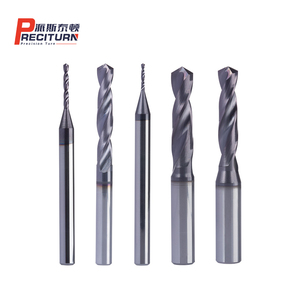
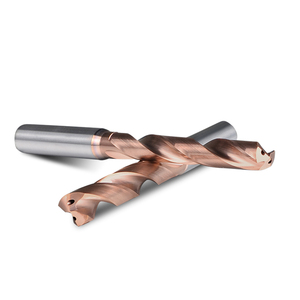
With aircraft like the Boeing 787 and Airbus A350 utilizing over 50% carbon-fiber composite structures by weight, riveting techniques must prevent delamination around fastener holes. Bucking bars are now designed alongside specialized solid carbide composite drills, brad-point cutters, and countersink cages to maintain unified hole-to-rivet tolerance systems.
Leveraging over three decades of aerospace manufacturing excellence, state-of-the-art CNC grinding facilities, and rigorous CE/ISO quality management frameworks.
Every bucking bar exported from our production line carries full European CE marking, accompanied by comprehensive mechanical test certificates, material traceability reports, and vibration mitigation documentation meeting international aviation requirements.
As a verified defense and government tooling supplier (CAGE Code 0PFP1), our products comply with standard military and aerospace specifications, including NAS 965, NAS 907, NAS 937, and NAS 938 guidelines for precision drilling, reaming, and riveting.
We maintain end-to-end quality control over our tungsten heavy alloy powder sintering, heat treatment, wire EDM cutting, and mirror-finish polishing, guaranteeing zero internal voids and exceptional surface hardness consistency.
Operating from consolidated export hubs, we supply major commercial airlines, third-party MRO stations, aerostructure plants, and military depots across North America, Europe, Asia-Pacific, and the Middle East with streamlined customs documentation.
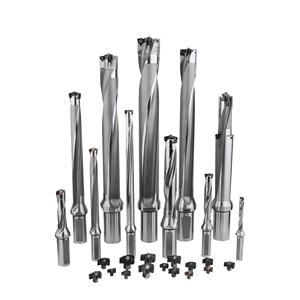
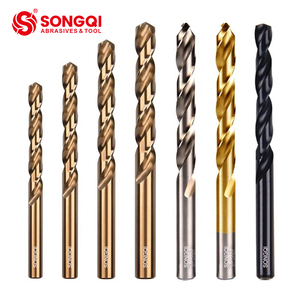
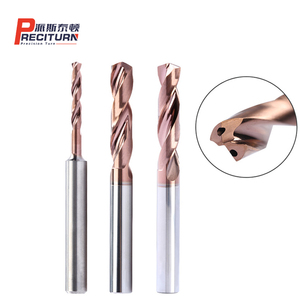
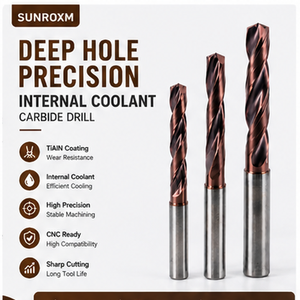
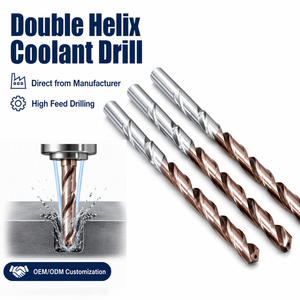
Beyond bucking bars, our catalog integrates over 5,000 active aerospace line items, including cobalt & carbide drills, double margin drills, microstop countersink cages, chucking reamers, and Nova® pneumatic tools for a complete assembly ecosystem.
Our experienced application engineers assist clients in selecting ideal bar weights, center-of-gravity offsets, and face profiles for specific rivet part numbers (MS20426, MS20470, BACR15CE, etc.), ensuring optimal joint quality.
Connect directly with our aerospace tooling specialists to review custom drawings, request CE certification packages, or place bulk factory orders.