
Engineered to international CE safety guidelines and rigorous aerospace standards for extreme durability in alloy steels, titanium, and carbon composite structures.
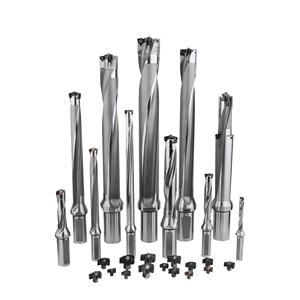
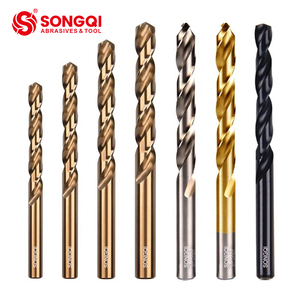
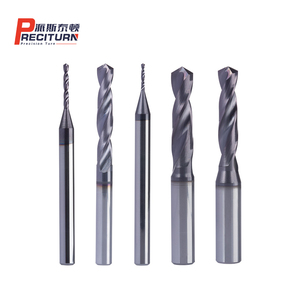
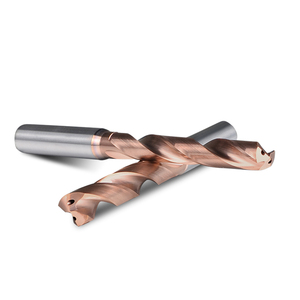
Combining nearly four decades of engineering domain expertise with international CE safety certifications, delivering extreme tooling precision for structural assembly, OEM manufacturing, and MRO stations worldwide.
Our pneumatic aircraft drills, microstop cages, and solid carbide rotary tools are fully compliant with European Machinery Directive 2006/42/EC, ISO 12100 safety standards, and strict NAS (National Aerospace Standards) specs including NAS 965 Type D, NAS 907, and NAS 937.
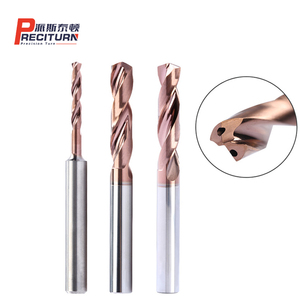
We utilize ultra-fine micro-grain tungsten carbide (0.4μm) paired with advanced Physical Vapor Deposition (PVD) TiAlN, AlCrN, and DLC (Diamond-Like Carbon) multi-layer coatings to withstand surface temperatures exceeding 1,100°C when machining superalloys.
Registered under CAGE Code 0PFP1, our production facility maintains absolute batch traceability from raw ingot inspection to final optical tool measurement, supporting commercial aviation, defense depots, and heavy industrial original equipment manufacturers.
An authoritative analysis of tool wear mechanics, split-point drill dynamics, dynamic air consumption, and composite hole integrity written for manufacturing engineers and master machinists.
Industrial air drills, such as our modular Nova® Pneumatic System, operate utilizing multi-vane air motors engineered to maintain high rotational torque under heavy axial loading. Unlike electric motors that build internal heat when stalled, pneumatic motors run cooler under increased load, exhausting expanding air through internal mufflers to actively thermal-regulate tool housings.
Proper CFM (Cubic Feet per Minute) volume combined with regulated 90 PSI pressure ensures consistent RPM during penetration through work-hardening metals like Titanium Ti-6Al-4V or Inconel 718, preventing work-hardening of the substrate caused by tool dwelling.
Standard 118° chisel-edge twist drills suffer from high axial thrust and tend to "walk" across curved structural skins before engaging. Our aerospace-grade M42 Cobalt (8% Cobalt content) and solid tungsten carbide drills feature a precision CNC-ground 135° split point (NAS 907 Type J geometry).
This four-facet geometry reduces web thickness at the center point to zero, enabling instant penetration without center punching, dramatically lowering feeding force by up to 40%, and delivering rounder, burr-free entry holes across stacked sheet assemblies.
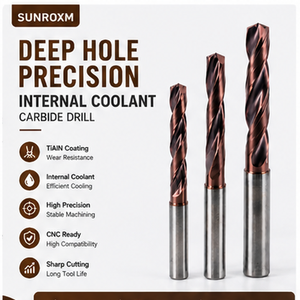
For high-production CNC machining, chip evacuation is the critical limiting factor in deep-hole generation. Solid carbide drills with internal helical coolant channels deliver high-pressure fluid directly to the cutting zone (up to 70 Bar).
This hydrostatic pressure flushes swarf out of deep flutes instantly, prevents thermal cracking of the TiAlN coating, and allows continuous single-pass drilling at L/D ratios of 12XD, 30XD, and up to 50XD without peck-drilling cycles, reducing total machining cycle times by more than 65%.
Standardized operational speeds, feeds, and geometry recommendation matrix established by our application engineering department.
| Workpiece Substrate | Recommended Tool Class | Point Geometry / Flute Design | Cutting Speed (SFM) | Coolant Strategy | Primary Failure Mechanism |
|---|---|---|---|---|---|
| 2024-T3 / 7075-T6 Aluminium | Solid Carbide / High-Flute HSS-Co | 118° - 135° Split Point, Polished Flutes | 250 - 450 SFM | Air-Mist / Soluble Oil | Built-up Edge (BUE) / Flute Clogging |
| Titanium Alloys (Ti-6Al-4V) | M42 Cobalt 8% / Coated Carbide | 135° Split Point, Heavy Web Construction | 40 - 75 SFM | High-Pressure Flood / Through-Coolant | Thermal Wear / Chipping due to Work-Hardening |
| Inconel 718 & Duplex Stainless | Micro-Grain Carbide (AlCrN Coated) | 135° 4-Facet Split Point, Reinforced Land | 25 - 50 SFM | 70 Bar Internal Coolant Flush | Chisel Edge Friction & Heat Degradation |
| CFRP (Carbon Fiber Reinforced Polymer) | Solid Diamond-Coated / DLC Carbide | Brad & Spur / Dagger Point Geometry | 300 - 600 SFM | Dry / Vacuum Extraction (No Oil) | Delamination & Exit Fiber Splintering |
| CFRP / Titanium Stack Structures | Double-Margin Carbide Dagger Drills | Step-Angle Dual Geometry, Double Margin | 60 - 120 SFM | Minimum Quantity Lubrication (MQL) | Hole Oversizing & Interface Burrs |
| High-Tensile Structural Steel | Indexable Carbide Drill Toolholders | Mono-Tip Insert / Internal Coolant Holes | 180 - 320 SFM | Standard Soluble Synthetic Emulsion | Insert Flank Wear / Thermal Cracking |
Key technological shifts reshaping aerospace tool crib management, factory floor automation, and international supply chain standards.
Modern assembly lines are rapidly transitioning to CE-certified smart pneumatic tools equipped with embedded torque-sensors, cycle counters, and RFID inventory tags. These intelligent air drills communicate wirelessly with factory MES (Manufacturing Execution Systems) to ensure every fastener hole and countersink depth meets exact specification, logging real-time data for full digital twin airframe records.
Procurement teams are moving away from dedicated single-purpose air drills toward modular pneumatic systems like our Nova® platform. Modular air motors with quick-disconnect 45°, 90°, 360° swiveling angle heads dramatically reduce capital expenditures while allowing technicians to access micro-clearance wing boxes and fuselage stringers without maintaining dozens of redundant tools.
With aircraft structure designs utilizing up to 50% carbon fiber composite bonded directly to titanium spars, tooling procurement now favors hybrid "one-shot" drill-reamers. These specialized solid carbide tools complete pilot drilling, hole expansion, and reaming in a single continuous pass, eliminating tool-change downtime and preventing layer separation at material boundaries.
The core factor determining tool longevity in high-feed CNC drilling is tungsten carbide grain size uniform distribution. Traditional carbide tools utilize 1.0μm to 2.0μm grain sizes, which suffer from binder phase degradation under extreme thermal loads.
Our factory utilizes imported sub-micron 0.4μm tungsten carbide powder blended with 10% to 12% Cobalt binder content. This ultra-fine micro-structure yields an extraordinary transverse rupture strength (TRS) exceeding 4,200 N/mm² and hardness ratings up to HRA 93.2. As a consequence, our tools demonstrate up to 300% longer tool life when cutting abrasive materials compared to commodity HSS cutters.
Achieving CE certification on industrial pneumatic machinery requires meeting rigorous European safety criteria under Directive 2006/42/EC. Our air tool factory implements stringent testing protocols across three main operational domains:
Acoustic & Vibration Mitigation: Internal dual-stage expansion chambers reduce acoustic output below 78 dBA while internal dampening rings isolate motor vibration.
Over-Speed Safety Governors: Built-in pneumatic centrifugal governors automatically choke inlet air flow if internal load drops suddenly, preventing abrasive disc shatter or drill bit whip.
Ergonomic Dead-Man Controls: Safety-lock throttles prevent unintended motor activation during tool positioning or bit replacement.
Direct answers from our senior application engineering team regarding certifications, customized tooling orders, air supply requirements, and global distribution logistics.
A: CE certification confirms that our pneumatic tools fully satisfy essential health, safety, and environmental protection requirements set by European Directives (including Machinery Directive 2006/42/EC). For industrial facilities, this guarantees mandatory operator safety compliance, lower vibration levels, structural casing safety margins, and seamless passage through international customs clearance.
A: Most industrial pneumatic aircraft drills operate optimal dynamic performance at 90 PSI (6.2 Bar) clean, lubricated air pressure. Air consumption typically ranges between 2.5 CFM to 4.0 CFM for standard 0.5 HP motors, and up to 12.0 CFM for heavy-duty 1.0 HP pneumatic angle drills. Operating tools under dynamic pressure drops below 80 PSI will cause stall under load and premature cutter wear.
A: NAS 965 Type D defines the standard 1/4-28 UNF thread configuration, outer diameter tolerances, and length classifications (stubby, short, long, extra-long) for threaded shank drills. This aerospace specification allows instant mounting onto right-angle drill motors and microstop depth-control cages used in cramped airframe cavities.
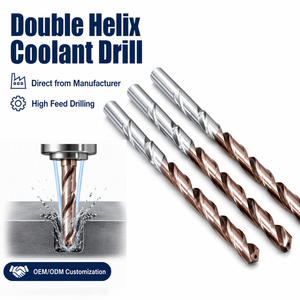
A: A double-margin drill features two guiding lands on each helix margin instead of one. The secondary margins ride along the internal wall of the drilled hole, stabilizing the drill against side-deflection. This generates exceptionally round, straight holes with superior surface finish (Ra < 0.8μm), often eliminating the separate reaming operation required prior to Hi-Lok® fastener installation.
A: For hand-held drilling, select M42 Cobalt (8% Cobalt) with a 135° split point to resist heat buildup. For rigid CNC machining, choose solid micro-grain tungsten carbide with a TiAlN coating and internal coolant channels. Operate at low surface speed (40–60 SFM) with high, positive feed pressure to prevent the material from work-hardening under the cutting edge.
A: Composite delamination is prevented by using solid carbide brad-and-spur or dagger point drills designed to shear outer fibers inward before penetrating the core. Combine high spindle RPM with moderate feed rates, support the back of the composite sheet with a rigid backing plate, and monitor edge wear to retire cutters before flute rounding occurs.
A: Yes. As a direct factory manufacturer, we engineer custom carbide and HSS drill geometries, special step-angles, custom shank diameters, overall lengths up to 500mm, and specialized PVD coatings tailored to your exact manufacturing requirements. Engineering blueprints and sample prototypes can be produced within short lead times.
A: Pan American Tool Corporation operates under CAGE Code 0PFP1. We provide complete certificate of origin documentation, commercial invoices, ISO compliance certificates, mill test reports, and compliant packing for air and ocean freight to distributors, airlines, and OEM manufacturing plants across all global territories.
Connect directly with our engineering sales team to receive technical product spec sheets, full CAD models, volume wholesale price breaks, or custom tooling quotes for your production line.