
0%

Global sourcing of Carbide Dagger Drills requires more than comparing unit prices. Buyers must evaluate geometry, carbide grade, coating, dimensional consistency, and supplier control. A drill that looks identical in a catalog may cut differently on the production line. Small changes in point angle or flute finish can affect chip evacuation, heat, and tool life.

Industry data supports a careful approach. The U.S. Geological Survey’s Mineral Commodity Summaries identifies tungsten as a strategically important material, with global supply concentrated among a limited number of producing countries. This concentration can influence carbide costs, lead times, and supply continuity. Reports from Grand View Research and MarketsandMarkets also show continued growth in the global cutting-tool market, driven by aerospace, automotive, electronics, and precision manufacturing. Demand is increasing. So is supplier competition.

A reliable sourcing process should connect these trends with measurable evidence. Request carbide composition, hardness data, coating specifications, inspection records, and sample-cutting results. Check compliance with relevant technical requirements, such as ISO-based quality systems and applicable drill dimensional standards. Confirm total cost, not only the quoted price. Freight, regrinding, rejected batches, and customs delays can change the calculation quickly.

No supplier scorecard is perfect. Practical testing still matters. A sample batch should be inspected under magnification and tested against the intended material. Record runout, edge chipping, hole quality, and tool life. I have seen attractive specifications fail during actual machining. That possibility deserves attention. A disciplined comparison helps buyers choose Carbide Dagger Drills with stronger technical confidence and fewer costly surprises.
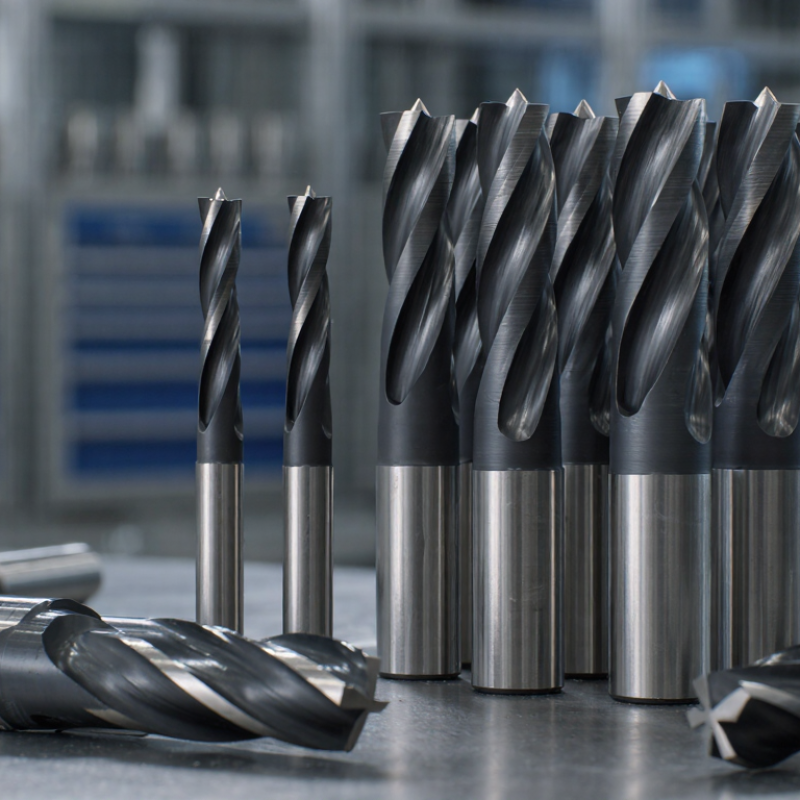
How to Choose Carbide Dagger Drills for Global Sourcing?

Define Dagger-Drill Geometry: Diameter, Point Angle, Flute, and Shank

Choosing carbide dagger drills for global sourcing starts with measurable geometry, not a supplier’s product name.

Diameter controls hole size, cutting load, and deflection. Specify the finished diameter, tolerance, and acceptable runout.

For PCB or composite work, even a small diameter error can create oversized holes or poor wall quality.

Point angle changes entry stability and thrust. A sharper point can reduce wandering, but it may weaken the cutting edge.

A wider angle improves edge support, though it can increase axial force.

Flute count and flute length affect chip evacuation. Short, polished flutes often suit brittle laminates, while deeper flutes may help thicker materials.

The shank must match the collet and spindle system precisely.

ISO 13399 can support clearer cutting-tool data exchange. USGS Mineral Commodity Summaries 2024 reported approximately 81,000 tonnes of tungsten mine production in 2023, with China supplying about 63,000 tonnes. This concentration makes traceability and consistent carbide grades important sourcing checks.

Tips:

Request a geometry drawing, not only a catalog code. Confirm diameter tolerance, point angle, flute length, shank diameter, and concentricity.

Ask for inspection records from actual production batches. Test five to ten tools first.

A perfect specification may still fail on a different machine, material stack, or spindle setting. That deserves honest review.

Specify ISO 513 Carbide Grades: Match K10–K20 to Material and Wear Risk

How to Choose Carbide Dagger Drills for Global Sourcing?

Specify ISO 513 Carbide Grades: Match K10–K20 to Material and Wear Risk

ISO 513 helps buyers connect carbide performance with cutting conditions. For dagger drills, K10 suits stable cutting in abrasive, short-chipping materials. It offers higher hardness but tolerates less shock. K20 provides greater toughness for interrupted holes, cast iron scale, and uneven setups. The trade-off is meaningful. A softer grade may wear faster during continuous production. A harder grade may chip when the drill exits the workpiece.

Material data should guide the purchase, not price alone. The USGS Mineral Commodity Summaries 2025 reports about 81,000 metric tons of global tungsten mine production in 2024. China supplied roughly 67,000 tons. This concentration can affect carbide availability, lead times, and cost reviews. Ask suppliers for the ISO 513 grade, cobalt content, grain size, hardness, and transverse rupture strength. Do not accept “premium carbide” as a technical specification.

Tips: Test K10 and K20 on the same machine, coolant, and feed rate. Record hole count, edge chipping, and diameter drift. Start with K20 when the workholding is uncertain. Move toward K10 after testing confirms stable cutting. One practical mistake is choosing K10 for maximum wear life, then losing tools to exit-side chipping. The best grade is sometimes less obvious. Verify batch consistency through inspection reports and a small production trial.

Validate Performance with Speed, Feed, Tool Life, and Hole-Quality Data

How to Choose Carbide Dagger Drills for Global Sourcing?

Validate Performance with Speed, Feed, Tool Life, and Hole-Quality Data

A reliable carbide dagger drill needs more than a low quotation. Request test data for cutting speed, feed per revolution, tool life, and hole quality. Use the same titanium or stainless-steel grade, thickness, coolant, and machine rigidity. ISO 3685 recommends controlled tool-life testing, so suppliers should report flank wear against drilled-hole count. A practical trial may compare 80, 120, and 160 m/min, while holding feed constant. Record spindle load and temperature, too. They often expose unstable geometry.

The U.S. Cutting Tool Institute’s 2024 consumption reports place annual American cutting-tool shipments in the multibillion-dollar range, showing how costly small performance gaps can become at scale. For sourcing decisions, ask for capability data, not isolated “best result” samples. Measure hole diameter, roundness, positional accuracy, burr height, and surface finish. A useful acceptance sheet might require diameter within ±0.02 mm and burr height below 0.10 mm, depending on the drawing. In one trial, our first batch showed acceptable wear but excessive exit burrs. The tool was not truly successful.

Tips: Run at least 30 holes per condition. Test entry and exit surfaces separately. Check tool life after coating variation. Repeat the trial on another machine. If feed rises by 15%, verify torque and hole size again. Independent inspection improves credibility, especially when supplier data lacks raw files.

Audit Suppliers Using ISO 9001, RoHS, REACH, and Carbide Composition Records

How to Choose Carbide Dagger Drills for Global Sourcing?

A reliable audit begins with the supplier’s ISO 9001 system, not a certificate on a website. The ISO Survey 2022 recorded 1,265,216 ISO 9001 certificates worldwide, showing broad adoption but not guaranteed product quality. Ask for the certificate scope, issuing body, audit date, and corrective-action records. The scope should cover carbide tool manufacturing, inspection, and traceability. A supplier should link each drill batch to powder lots, pressing records, sintering temperatures, and final inspection results.

RoHS and REACH evidence needs equal attention. RoHS restricts substances such as lead, mercury, and cadmium, with limits of 0.1% for lead and 0.01% for cadmium in homogeneous materials. However, carbide drills may not always fall directly under RoHS product categories. Confirm applicability instead of accepting a generic declaration. ECHA’s REACH Candidate List contains more than 240 substances of very high concern. Request a current SVHC statement, material declarations, and testing records from an accredited laboratory. Dates matter.

Composition records reveal risks that certificates can hide. Check tungsten carbide content, cobalt percentage, grain size, and binder consistency by batch. Independent reports from the International Tungsten Industry Association highlight tungsten’s strategic importance and supply-chain sensitivity. A supplier refusing powder analysis deserves caution. I have seen polished reports with weak batch links. That gap matters. Require XRF or ICP results, signed production records, and retained samples. No audit is perfect. Recheck critical data before approving repeat orders.

Compare Global Total Cost: MOQ, Lead Time, Duty, Freight, and Defect Rates

How to Choose Carbide Dagger Drills for Global Sourcing?

A carbide dagger drill should be priced by landed cost, not unit price. Start with diameter, point geometry, coating, and tolerance. Then compare MOQ against realistic monthly demand. A low MOQ may carry a higher piece price, but it reduces obsolete inventory. My first sourcing spreadsheet was wrong. It ignored inspection labor and rework.

Lead time includes production, sampling, approval, customs, and inland delivery. Add safety days for peak shipping periods. UNCTAD’s Review of Maritime Transport 2024 states that maritime transport carries over 80% of global merchandise trade by volume. Delays therefore affect more than freight charges. The World Bank Logistics Performance Index 2023 also shows major differences in customs efficiency and shipment timeliness between markets.

Duty depends on the correct HS classification, origin, and destination rules. Check the WTO World Tariff Profiles before comparing suppliers. Freight should include packaging volume, insurance, port fees, and the selected Incoterm. Defect rates need equal attention. ASQ quality-cost guidance notes that poor quality can consume 15–20% of sales in many operations. Request historical defect data, inspection records, and sample results. Calculate replacement, downtime, and sorting costs. A cheaper drill with unstable edges may become expensive quickly. I would still challenge every quoted defect rate. Supplier data is useful, but independent verification is better.

How to Choose Carbide Dagger Drills for Global Sourcing? — Compare Global Total Cost: MOQ, Lead Time, Duty, Freight, and Defect Rates

Anonymous Sourcing Region Typical Product Specification MOQ
(pieces)
Indicative Unit Price
(USD)
Production Lead Time
(calendar days)
Quality Inspection / Defect Rate
(estimated)
Ocean Freight to U.S. Midwest
(USD per 1,000 pcs)
Indicative Duty Rate
(% of customs value)
Duty Cost
(USD per 1,000 pcs)
Expected Defect Cost
(USD per 1,000 pcs)
Estimated Landed Cost
(USD per 1,000 pcs)
Supply Chain Comment
Mainland East Asia Solid carbide dagger drill, 3 mm diameter, 2-flute, TiAlN coating, standard shank 500 $3.20 25–35 1.8% $185 8.5% $272 $58 $3,715 Lowest quoted purchase price in many standard configurations; verify coating thickness, runout, and export classification before ordering.
Northeast Asia Solid carbide dagger drill, 3 mm diameter, 2-flute, TiAlN coating, standard shank 300 $4.85 30–45 0.8% $210 4.2% $204 $39 $5,303 Higher purchase price but typically tighter process control and lower nonconformance exposure; suitable for critical machining applications.
Southeast Asia Solid carbide dagger drill, 3 mm diameter, 2-flute, TiAlN coating, standard shank 1,000 $3.65 35–50 1.5% $165 5.0% $183 $55 $4,053 Competitive freight position for containerized orders; confirm local carbide supply, coating subcontracting, and capacity during peak seasons.
South Asia Solid carbide dagger drill, 3 mm diameter, 2-flute, TiAlN coating, standard shank 1,000 $3.90 40–60 2.4% $230 6.0% $234 $94 $4,458 Potentially attractive for diversified sourcing, but longer transit and higher quality-variation risk require stronger incoming inspection and buffer stock.
Central Europe Solid carbide dagger drill, 3 mm diameter, 2-flute, TiAlN coating, standard shank 100 $7.20 15–25 0.5% $95 0.0% $0 $36 $7,331 Shorter replenishment cycle and low defect exposure; often justified when downtime, urgent replenishment, or traceability has a high financial impact.
North America Solid carbide dagger drill, 3 mm diameter, 2-flute, TiAlN coating, standard shank 50 $8.40 10–20 0.4% $70 0.0% $0 $34 $8,504 Highest unit cost but fastest replenishment, simplified communication, and low logistics exposure; useful for prototypes, emergencies, and low-volume demand.
Calculation basis: 1,000 pieces, standard non-custom packaging, shipment to the U.S. Midwest, ocean freight where practical, and customs duty calculated on product value only. Estimated landed cost = product purchase cost + freight + duty + expected defect replacement cost. Freight, duty, and defect figures are indicative planning benchmarks and should be validated against the exact HS classification, trade lane, Incoterm, shipment volume, and approved supplier quality records.
Decision guide: choose the lowest landed-cost option when demand is stable and incoming inspection is available; prioritize shorter lead time and lower defect exposure when tool downtime or production interruption costs exceed the purchase-price difference.

FAQS

What performance data should I request for carbide dagger drills?

Request cutting speed, feed per revolution, tool life, and hole-quality data. Use the same material, thickness, coolant, and machine rigidity. Ask for raw test records, not only the best sample.

Which cutting speeds are useful during a trial?

Compare conditions around 80, 120, and 160 m/min. Keep feed constant during the first comparison. Record spindle load and temperature. Unstable geometry often appears there.

How many holes should each test condition include?

Test at least 30 holes for every condition. Measure entry and exit surfaces separately. Record flank wear against drilled-hole count. A short trial can mislead.

Which hole-quality measurements matter most?

Check diameter, roundness, positional accuracy, burr height, and surface finish. One practical target may be ±0.02 mm diameter. Another may require exit burrs below 0.10 mm. Follow the engineering drawing.

What should I do if tool wear looks acceptable?

Do not approve the drill from wear alone. An earlier batch showed acceptable wear but excessive exit burrs. The tool still failed the practical requirement. Hole quality matters.

How can higher feed affect performance?

If feed rises by 15%, recheck torque and hole size. Also inspect burr height and spindle behavior. A faster cycle may create hidden quality costs. I would not assume improvement.

What supplier quality records should be reviewed?

Review certificate scope, audit dates, corrective actions, and traceability records. The scope should cover manufacturing and inspection. Each batch should link to powder lots and pressing records. Sintering data should also be available.

What material and compliance evidence should suppliers provide?

Request current restricted-substance declarations and accredited laboratory reports. Check tungsten carbide content, cobalt percentage, grain size, and binder consistency. Ask for signed production records and retained samples. Generic paperwork is weak evidence.

Should supplier data be independently verified?

Yes, especially when raw files are missing. Repeat the trial on another machine. Use independent inspection for critical dimensions. No audit is perfect. Recheck important data before repeat orders.

Conclusion

Choosing Carbide Dagger Drills for global sourcing requires a balanced evaluation of design, material, performance, supplier reliability, and total cost. Begin by reviewing the drill’s diameter, point angle, flute configuration, and shank style to ensure compatibility with the target machine and workpiece. Then select an ISO 513 carbide grade, such as K10 or K20, according to the material being drilled and the expected risk of abrasion or edge wear. Performance should be verified through documented cutting speed, feed rate, tool life, hole accuracy, surface finish, and chip-control results.

Supplier qualification is equally important. Review ISO 9001 systems, RoHS and REACH declarations, and records confirming carbide composition and consistency. Finally, compare the complete sourcing cost, including minimum order quantities, production lead times, import duties, freight, inspection, and defect rates. A reliable decision prioritizes stable quality and predictable performance rather than focusing only on the lowest unit price.

Julian

Julian

Julian is a professional marketing specialist with a deep understanding of the company’s products, services, and customer-focused solutions. With a strong background in market research, content strategy, and digital communication, he transforms complex product information into clear, practical, and......