Choosing Carbide Brad Point Drills for global sourcing requires more than comparing catalog prices. The right drill must match the material, machine, hole diameter, and production volume. A clean 6 mm hole in hardwood can demand different geometry from a hole in laminated panels or abrasive composite boards. Small details matter.
W. Edwards Deming, a respected manufacturing quality authority, stated, “Quality comes not from inspection, but from the improvement of the production process.” This principle fits Carbide Brad Point Drills closely. Buyers should examine carbide grade, brad-point sharpness, spur design, shank accuracy, coating, and concentricity. Supplier samples should be tested on the buyer’s actual equipment. Cutting speed, feed rate, heat, vibration, and hole breakout should be recorded. Pictures are not enough.
Global sourcing adds another layer. Confirm dimensional tolerances, material declarations, batch traceability, packaging strength, and production consistency. Ask whether the supplier can repeat the same geometry across future orders. A polished sample may hide unstable manufacturing. That happens.
The best supplier is not always the cheapest one. It may be the factory that explains tool life clearly, shares inspection records, and admits design limitations. Buyers should compare total cost per usable hole, not only unit price. A trial order remains essential, even when the supplier appears experienced. I would also review communication speed and technical support, because unclear answers can become expensive production delays. Reliable sourcing is built through evidence, testing, and honest technical discussion.
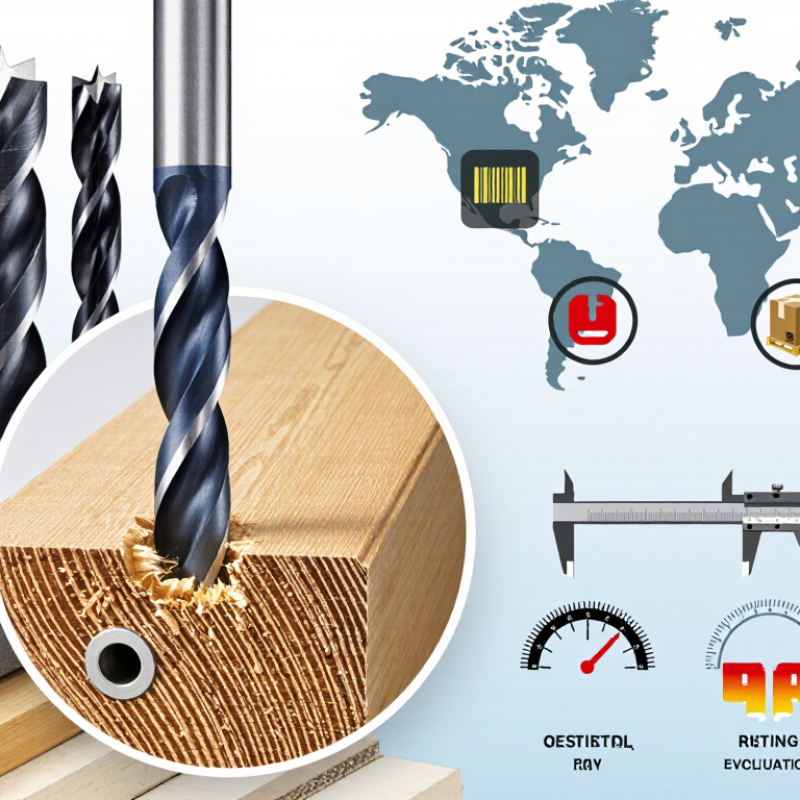
Carbide brad point drill performance begins with geometry, not marketing language. The center spur stabilizes entry, while the outer brads score the hole edge before the cutting lips remove material. This sequence reduces breakout in laminated panels and solid hardwood. A sharper point gives cleaner starts. It can also chip sooner.
Carbide grade matters because hardness and toughness rarely improve together. The U.S. Geological Survey’s Mineral Commodity Summaries 2024 estimated global tungsten mine production at about 81,000 metric tons in 2023. Tungsten carbide relies on this material for wear resistance, but powder quality, binder content, and sintering control affect real cutting life. Ask suppliers for carbide grade data, edge preparation details, and hardness testing methods. “Carbide” alone is not enough.
Cutting performance depends on more than the drill itself. A 2023 machining report from the U.S. Department of Energy highlighted energy losses linked to inefficient cutting and process conditions. In sourcing trials, compare hole diameter, entry splintering, drilling force, and edge wear after a fixed number of holes. Use the same spindle speed, feed rate, panel density, and cooling conditions. I have seen a polished tool underperform when its point geometry did not match the material. That result is easy to overlook. Trial records should include microscope images and rejected-hole counts. Small details expose large inconsistencies.
Choosing carbide brad point drills for global sourcing starts with the material, not the catalog photograph. Solid wood needs a sharp center spur and outer cutting lips. These features reduce wandering and leave cleaner entry holes across changing grain. The U.S. Forest Service Wood Handbook reports that wood moisture changes dimensional stability, so buyers should test drilling at expected factory humidity. A 6 mm drill can behave differently in dry oak and damp beech.
Composite panels require a tougher approach. MDF and particleboard contain resin, wax, and fine mineral particles that accelerate edge wear. The FAO Yearbook of Forest Products reported global wood-based panel production above 400 million cubic meters in recent years. That scale makes consistent tool life important. For these panels, specify micrograin carbide, polished flutes, and a brad geometry designed for low breakout. Melamine-faced boards may need a sharper cutting edge and reduced feed pressure. Slow is not always safer.
For plywood, match the point angle and flute design to veneer thickness. Laminated materials can separate when the drill pushes instead of cuts. Phenolic and glass-filled composites are more abrasive, so carbide grade and edge support deserve written test criteria. Ask suppliers for hole-count data, runout limits, and sample results at your actual spindle speed. ISO 230-1 recognizes machine-tool accuracy factors such as runout and positioning variation, yet buyers often blame the drill first. I have made that mistake. Material certificates help, but a short production trial remains more convincing. A small flaw in the test plan can become thousands of poor holes.
Choosing carbide brad point drills for global sourcing requires more than comparing price and diameter. Point geometry controls entry accuracy, cutting stability, and chip evacuation in wood-based panels. A sharp center spur helps prevent wandering, while outer spurs create cleaner edges. For laminated boards, a balanced point can reduce breakout on the visible surface. In practice, the best geometry depends on feed rate, material density, and machine rigidity.
Shank selection also affects production reliability. Round shanks suit standard chucks and offer flexible use across different machines. Reduced shanks allow larger cutting diameters in limited chuck capacities. Confirm the shank diameter, length, and runout tolerance before placing a bulk order. Small differences can cause vibration. That problem is easy to overlook.
Size planning should reflect both the finished hole and the material thickness. A supplier should provide dimensional tolerances, not only nominal measurements. Sample testing across several diameters can reveal inconsistent grinding or poor concentricity. I have found that one successful sample does not always represent a full production batch. Inspection records and traceable test conditions make supplier comparisons more reliable.
Surface finishes deserve practical attention. Polished flutes may improve chip movement in resin-heavy panels, while wear-resistant coatings can support longer service life. However, a coating cannot correct weak carbide or inaccurate geometry. Ask for coating thickness, adhesion testing, and performance data from comparable materials. Packaging also matters during international shipping. Even good drills may arrive with damaged points if separators are inadequate.
Choosing carbide brad point drills for global sourcing requires more than comparing catalog photos. Manufacturer capability matters. Ask how carbide tips are brazed, ground, and inspected. A reliable factory should explain runout limits, shank tolerance, point geometry, and coating options. Request recent inspection records, material certificates, and sample measurements. A drill that looks sharp may still wander in hardwood.
Quality standards should match the application, not only the supplier’s claims. Check diameter tolerance, tip symmetry, edge sharpness, and surface finish under magnification. For production trials, test several pieces in the same wood panel. Record hole diameter, entry tear-out, heat, and tool life. Small differences become expensive at scale. Certification helps, but it does not replace physical testing.
Pricing should include carbide content, grinding accuracy, coating, packaging, freight, and inspection costs. Ask for tiered quotations at several volumes. Minimum order terms deserve equal attention. A low MOQ may carry a higher unit price, while a large MOQ can trap cash in slow-moving sizes. Negotiate mixed diameters, staged shipments, or a pilot order. Do not assume the first sample represents full production. That assumption is risky. Suppliers can provide good prototypes, then miss consistency during larger runs. Keep acceptance criteria in writing, and review rejected samples honestly.
When sourcing carbide brad point drills globally, treat the sample as evidence, not a promise. Measure the tip diameter, shank size, cutting symmetry, and surface finish with calibrated tools. Drill identical hardwood blocks at a fixed speed and feed rate. Record entry quality, hole diameter, heat marks, and edge wear. Repeat testing after storage, because one fresh sample can hide process variation. It happens. My early checks focused too much on sharpness. That was a weak assumption.
Packaging should protect the point from impact, moisture, and mixed-size errors. Ask for inner protection, carton dimensions, gross weight, and clear identification labels. Confirm that each package matches the approved sample. Inspect a trial shipment for bent tips, loose inserts, damaged cartons, and unreadable markings. Small packaging defects can create large receiving problems. Include photographs in the inspection record.
Certifications require careful verification, not casual acceptance. Check the issuing organization, certificate number, validity period, and covered product range. Confirm that test reports match the actual drill material and coating, when applicable. A generic document may look professional but provide little assurance. Request traceable batch records and inspection results before production. For shipping, confirm the destination’s labeling, customs documents, pallet requirements, and moisture controls. Clarify who handles export paperwork and transport damage. Delivery estimates can change. Build reasonable buffer time, especially for first orders.
Verification priorities for samples, packaging, certifications, and international shipping. The values represent the number of practical evidence items to collect in each sourcing stage.
A complete sourcing review should confirm cutting performance, carbide and shank specifications, dimensional consistency, protective packaging, applicable quality documentation, and destination-specific shipping paperwork before approving production.
Ask how carbide tips are brazed, ground, and inspected. Request runout limits, shank tolerances, point geometry, and coating options. Recent inspection records matter. Material certificates help too.
Measure diameter tolerance, tip symmetry, edge sharpness, and surface finish under magnification. A sharp-looking drill may still wander in hardwood. Check several pieces, not one.
Drill identical hardwood blocks at fixed speed and feed rates. Record hole diameter, entry tear-out, heat marks, and tool life. Repeat the test with multiple samples. Small differences grow expensive.
No. Certification supports confidence, but physical testing shows actual performance. Verify the issuing organization, certificate number, validity, and product range. A generic document may offer little assurance. That is easy to miss.
Compare carbide content, grinding accuracy, coating, packaging, freight, and inspection costs. Request tiered prices for several order volumes. The lowest unit price may hide extra expenses.
Compare unit pricing with cash tied up in inventory. A low minimum order may cost more per piece. A large minimum can leave slow-moving diameters on your shelves. Consider mixed sizes, staged shipments, or a pilot order.
Treat samples as evidence, not promises. Measure tip diameter, shank size, cutting symmetry, and surface finish with calibrated tools. Test samples after storage as well. One fresh sample can hide variation.
Confirm protection against impact, moisture, and mixed-size mistakes. Request inner protection, carton dimensions, gross weight, and clear labels. Inspect trial cartons for bent tips, loose inserts, and unreadable markings. Photographs strengthen the inspection record.
Confirm destination labeling, customs documents, pallet requirements, and moisture controls. Clarify responsibility for export paperwork and transport damage. Delivery dates can change. Keep a reasonable buffer, especially for the first order.
Choosing the right Carbide Brad Point Drills for global sourcing requires a clear understanding of their design, cutting performance, and intended applications. Buyers should match drill specifications to the materials being processed, including hardwood, softwood, plywood, laminated panels, composites, and other engineered materials. Important factors include point geometry, cutting edge design, shank type, diameter range, overall length, and surface finish, as these influence drilling accuracy, tool life, chip removal, and resistance to wear.
A reliable sourcing process should also compare manufacturers based on production consistency, quality control systems, testing procedures, pricing, and minimum order requirements. Before placing a larger order, request samples to evaluate drilling results and dimensional accuracy. Packaging should protect the tools during international transportation, while certifications and technical documents should be reviewed for market requirements. Finally, confirm labeling, shipping terms, documentation, lead times, and after-sales communication to ensure a smooth and dependable global supply process.